North American Trade Diplomacy: Sheinbaum vs. Canada’s Approach
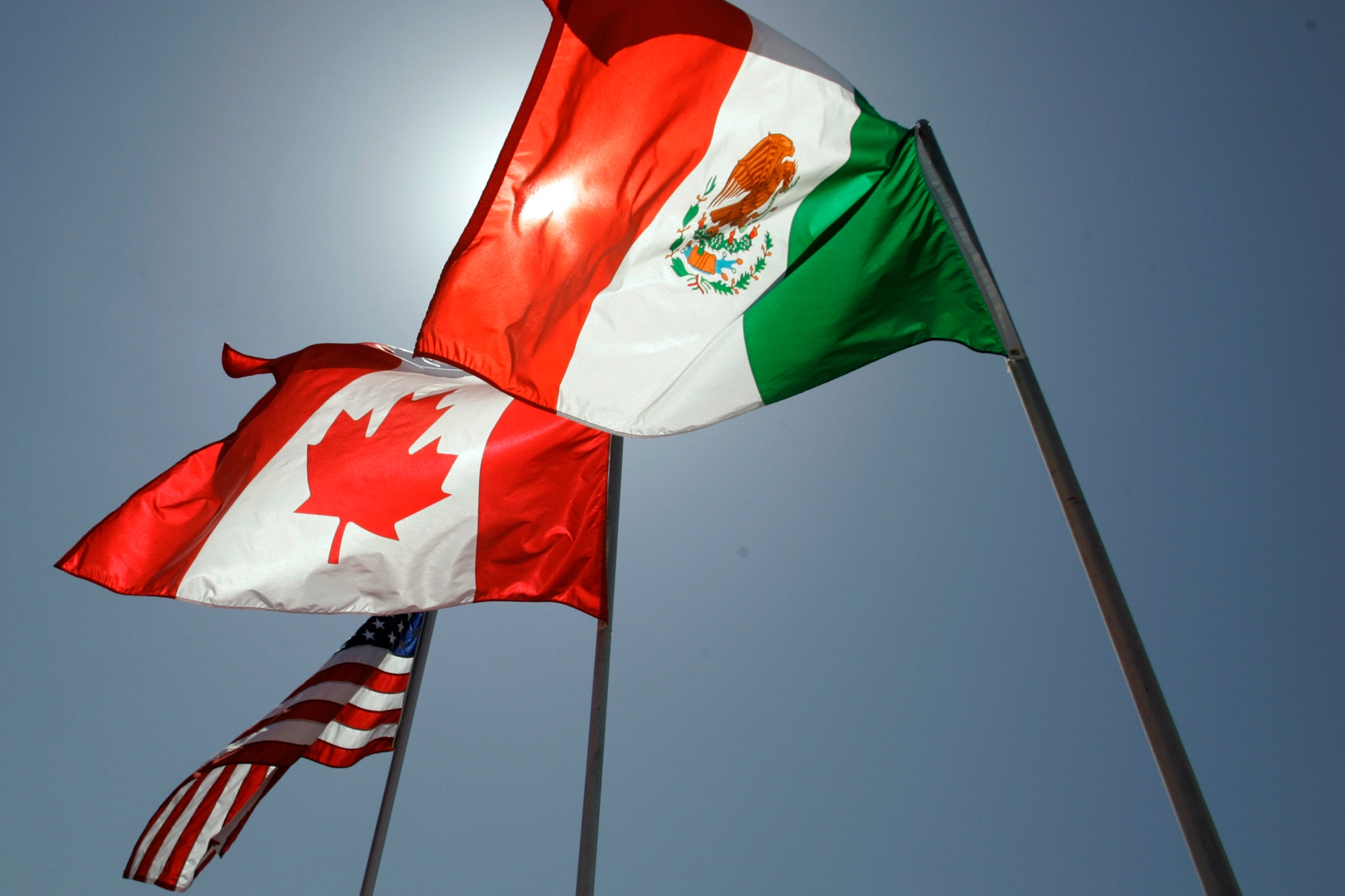
(Analysis) In the escalating trade tensions between the United States and its neighbors, Mexican President Claudia Sheinbaum has emerged as a diplomatic virtuoso, while Canada’s approach has provoked further antagonism from the Trump administration.
Meanwhile, Brazil watches closely, appearing to favor Mexico’s strategic engagement over Canada’s confrontational stance.
Mexican President Claudia Sheinbaum has demonstrated remarkable diplomatic acumen in her dealings with the Trump administration, twice successfully persuading the U.S. President to postpone potentially devastating tariffs on Mexican exports.
Most recently, on March 6, Trump announced a delay on tariffs for goods compliant with the USMCA until April 2, affecting approximately half of Mexico’s $505 billion in exports to the United States.
“Mexico is not within that scope because, for 30 years, we have had two trade agreements establishing that we don’t have any tariffs on them, and they don’t have any tariffs on us,” Sheinbaum explained at a massive rally in Mexico City, where she addressed 350,000 supporters according to local authorities.
Her strategic approach combines firm defense of Mexican sovereignty with pragmatic engagement:
Data-Driven Persuasion: Sheinbaum has effectively used U.S. Customs and Border Protection statistics showing a 75% decrease in fentanyl seizures over the past six months to counter Trump’s claims about drug trafficking.
Meaningful Action: She deployed 10,000 National Guard troops to Mexico’s northern border and facilitated the extradition of 29 individuals linked to drug cartels to the U.S., including notorious drug lord Rafael Caro Quintero.
Redirecting Responsibility: While taking concrete steps to address U.S. concerns, Sheinbaum has tactfully highlighted America’s role in the border crisis, questioning the origins of firearms used by cartels and emphasizing U.S. demand for illegal drugs.
Trump publicly acknowledged this productive relationship, stating he delayed tariffs “out of respect for President Sheinbaum” and praised their “very good” relationship. This diplomatic success has contributed to Sheinbaum’s remarkable 85% approval rating within Mexico.
Canada’s Confrontational Approach
In stark contrast, Canada has opted for a more confrontational strategy that appears to be backfiring.
Ontario Premier Doug Ford announced a 25% surcharge on electricity exports to 1.5 million Americans in Minnesota, New York, and Michigan, with a threat to “shut the electricity off completely” if the United States escalates further.
“I will not hesitate to increase this charge. If the United States escalates, I will not hesitate to shut the electricity off completely,” Ford declared at a Toronto news conference, adding that Ontario‘s tariff would remain despite Trump’s one-month pause on certain tariffs.
This aggressive stance extends to the highest levels of Canadian government. Former Prime Minister Justin Trudeau announced retaliatory tariffs on CA$155 billion (US$106 billion) worth of American goods and publicly called Trump’s decision “very dumb,” claiming the U.S. President seeks “a total collapse of the Canadian economy” to facilitate annexation.
The hostile rhetoric has been met with equally antagonistic responses from Trump, who has referred to Trudeau as “Governor Trudeau” and called Canada “the 51st State,” creating a downward spiral in diplomatic relations.
Brazil’s Strategic Alignment
Observing this contrasting dynamic, Brazil appears to be following Mexico’s more measured approach. Brazilian Vice President Geraldo Alckmin recently called for dialogue to address Trump’s tariff measures.
“Brazil is not a problem for the United States. What we seek is understanding, because foreign trade should be a relationship of mutual benefit,” Alckmin stated in an interview with CBN radio.
This aligns with Brazilian Foreign Minister Alexandre Padilha’s declaration that Brazil won’t retaliate against Trump’s 25% tariffs on steel and aluminum, which affect Brazilian exports.
“Brazil does not encourage and will not enter into any trade war. We will always be in favor of strengthening free trade,” Padilha emphasized.
Simultaneously, Brazil is pursuing closer ties with Mexico, seeking to forge a groundbreaking free trade agreement with negotiations planned for 2025.
This timing is strategic, as it precedes Mexico’s renegotiations of the USMCA agreement with the United States and Canada in 2026.
“This would demonstrate Mexico’s efforts to diversify its trade partnerships and reduce dependence on the United States,” noted Francisco Cannabrava, Brazil’s Director of Mercosur Affairs.
Economic Stakes and Global Implications
The economic consequences of this trade dispute are substantial. Mexico sent approximately $505 billion worth of goods to the U.S. in 2024, accounting for around 30% of its GDP, while Canada exported over $412 billion, representing about 20% of its GDP.
The Peterson Institute for International Economics estimates that 25% tariffs would reduce Mexico‘s GDP by 1.7% and Canada’s by 1.2% over five years, with inflation rising by up to 2.3% and 1.7% respectively. Economists warn that sustained tariffs could plunge both economies into recession.
Trump’s latest concession exempts goods that qualify for USMCA preference until April 2. This affects roughly 49% of Mexico’s exports to the U.S. and 38% of Canada’s exports.
However, the 25% tariff on steel and aluminum imports is still scheduled to take effect on March 12. This threatens significant sectors in both Mexico and Canada.
The Diplomatic Chess Game Continues
As this high-stakes diplomatic chess game unfolds, Sheinbaum’s balanced approach has proven effective, earning both domestic and international praise.
Her ability to defend Mexican sovereignty while maintaining productive dialogue with Trump demonstrates remarkable political agility.
Meanwhile, Canada’s provocative tactics risk escalating tensions further, potentially causing greater economic damage to both nations. Brazil, observing these contrasting strategies, seems to be aligning with Mexico’s more nuanced approach.
This approach focuses on engagement rather than confrontation. With USMCA renegotiations looming in 2026, the economic wellbeing of millions is at stake.
The different diplomatic strategies employed by Mexico and Canada will continue to shape the economic landscape of North America. These strategies will also influence how other nations engage with the Trump administration.
More: Brazil news in English, every day from The Rio Times.
This article was drafted with automated assistance and reviewed before publication. How we use AI · Report an error · Editorial responsibility: Matthias Camenzind, Editor-in-Chief