Tax Residency in Brazil for Expats: Changing Your Fiscal Domicile (2026)
Key Facts
—Two triggers. create Brazilian tax residency. Arrival on a long-stay visa — VITEM XI (retirement), VITEM XIV (digital nomad), work, family reunion — makes you a resident from the day you land. Arrival on a tourist or business stay makes you a resident from the 184th day of presence in any rolling 12-month period.
—Worldwide income. A Brazilian fiscal resident owes Brazilian income tax on all global income — foreign salary, foreign pensions, foreign rental, foreign investment yields, foreign business income. Brazilian-source income alone is no longer the basis; the whole picture is.
—Carnê-Leão. is the monthly self-assessment programme for income received from abroad. It must be paid by the last business day of the month following the receipt. Foreign salary credited in March is taxed and paid via Carnê-Leão by the last business day of April. Late payment carries interest and fines from day one.
—DIRPF. the annual Declaração de Ajuste Anual — is filed every year between 1 March and 31 May for the prior calendar year. Foreign assets, accounts and properties must be declared in the Bens e Direitos section above modest thresholds, regardless of whether they generated income.
—Double-taxation treaties. Brazil has bilateral treaties (DTTs) with around 35 countries — including most of the EU, Canada, Japan, China, Mexico and most of South America. There is no DTT with the United States, the United Kingdom, Australia or Germany (terminated in 2005). For non-treaty countries, unilateral foreign-tax-credit relief is the default mechanism, and structuring becomes more important.
—Closing your fiscal domicile at home is separate. Becoming a Brazilian tax resident does not automatically end your tax obligations in your home country. The exit procedures — the UK Statutory Residence Test, the German Abmeldung, the French exit declaration, the US continued citizenship-based regime — have to be handled separately, and they vary widely.
—Get a contador in year one. Brazilian tax filings are unforgiving on form, deadline and missing-declaration penalties. A qualified Brazilian accountant (contador) with cross-border experience costs typically R$3,000–R$8,000 a year for a foreign-source-income filer and saves multiples of that in avoided penalties and missed deductions.
Tax residency in Brazil for expats is the single most consequential transition in the long-term move. It changes which government has the first claim on global income, which forms get filed in which language, which deductions apply and which assets must be declared. Most arrivals discover the implications only at filing time — eight or ten months after the residency clock started running — by which point the planning window is closed. This is the structural map of how Brazilian tax residency works and what it takes to shift fiscal domicile cleanly.
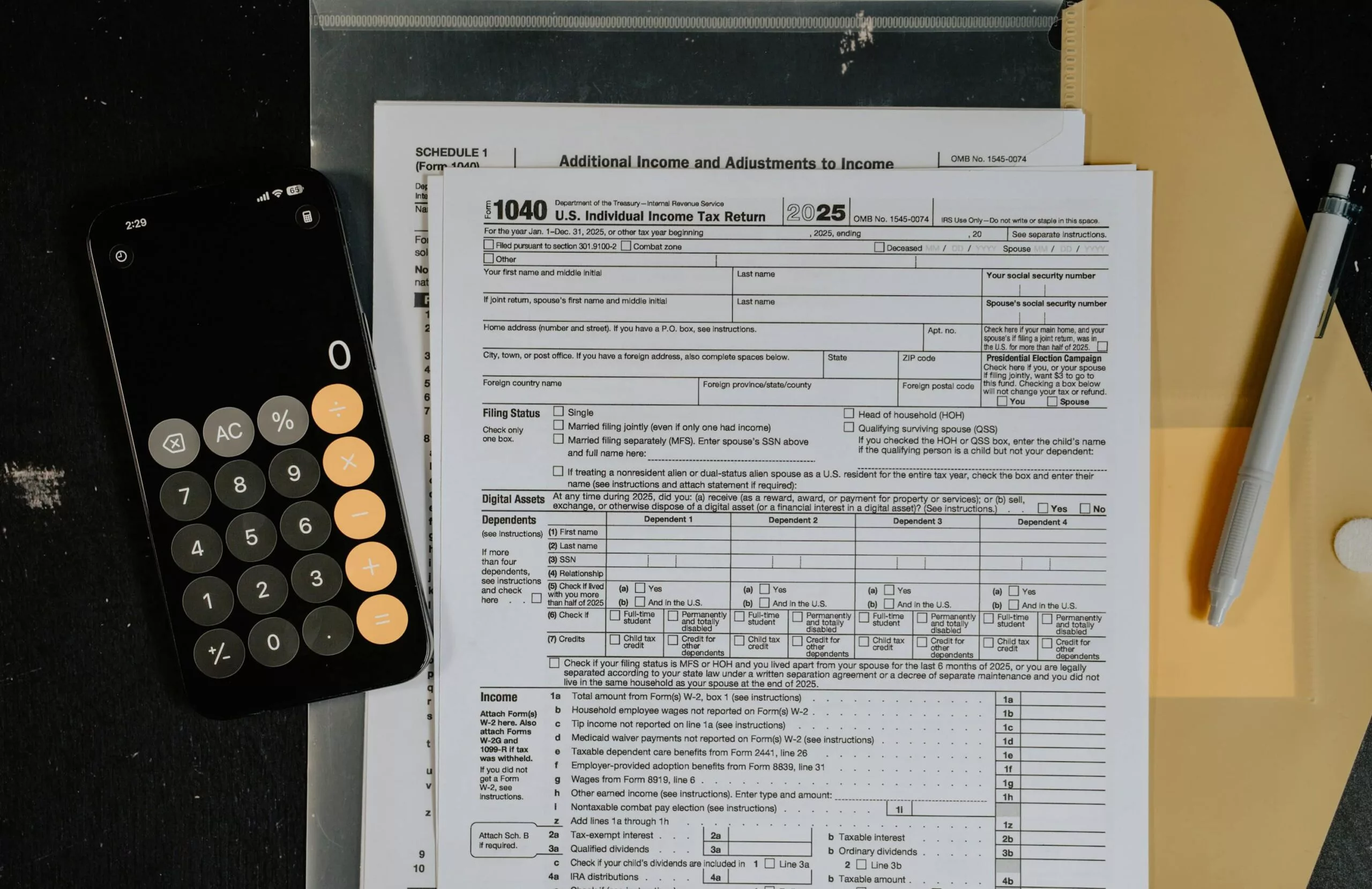
Tax residency in Brazil for expats: the two triggers
Brazilian tax residency is defined by Receita Federal’s Normative Instruction 208 of 2002, with subsequent amendments. The rule has two parallel triggers, and a new arrival becomes a resident from whichever comes first.
The first trigger is the long-stay visa. Anyone who arrives in Brazil on a permanent visa, a work visa (VITEM II), a digital nomad visa (VITEM XIV), a retirement visa (VITEM XI), an investor visa, a researcher visa, or a family reunification visa becomes a Brazilian tax resident on the date of arrival, not on the day they register with Polícia Federal and not when they receive the RNM card. The visa category itself signals long-stay intent, and Receita Federal’s position is that fiscal residency begins immediately.
The second trigger is the day-count rule. Visitors arriving without a long-stay visa — the typical 90-day tourist or business stay granted at the border — become tax residents from the 184th day of physical presence in any rolling 12-month period. The count is cumulative across multiple entries: someone who enters for 90 days, leaves, returns 60 days later for another 90, and stays a further 4 days will cross the threshold on that fourth day and become a fiscal resident retroactively from the date of the most recent entry.
A third path is possible but rare: declaring fiscal residency voluntarily, by filing a declaration of intent. This is sometimes used by investors who want to consolidate their tax position in Brazil ahead of structuring a Brazilian business, or by retirees who want to start the residency clock on a date of their choosing rather than the automatic trigger. It is uncommon and almost always done on professional advice.
The practical upshot for tax residency in Brazil for expats is that the residency clock is rarely under the new arrival’s control. If you land on a digital nomad visa, you are a fiscal resident from day one whether or not you intend to file anything that year. If you arrive as a visitor and stay long enough to cross 183 days, the residency starts from your most recent entry, not from the day you crossed the threshold.
What changes when you become a Brazilian tax resident
The single defining change is the move from source-based taxation to worldwide income taxation. A non-resident in Brazil owes Brazilian income tax only on income with a Brazilian source — rental from a Brazilian property, dividends from a Brazilian company, salary from a Brazilian employer — and that tax is generally withheld at a flat 25% rate at the point of payment. There is no annual return to file in most cases.
A resident, by contrast, owes Brazilian income tax on every category of income, regardless of where in the world it is earned. Foreign salary, foreign business income, foreign rental, foreign investment yields, foreign pension payments, foreign capital gains, foreign cryptocurrency disposals, foreign-trust distributions — all of it goes into the Brazilian tax base. Income earned in your former country is now Brazilian-taxable, with relief mechanisms applying afterwards depending on whether a double-taxation treaty exists.
The progressive Brazilian individual income tax rates apply. As of the 2025 brackets, the table moved from a starting exemption around R$2,259/month to marginal rates of 7.5%, 15%, 22.5% and a top bracket of 27.5% above roughly R$4,664/month. An income-tax reform approved by the Chamber of Deputies in late 2025 is set to expand the exempt band substantially — up to R$5,000 per month under the proposed text — with a compensating tax on very high earners. The exact mechanics for the 2026 calendar year depend on the final text and its publication date, and the Receita Federal site is the authoritative reference for the bracket in force at any moment.
The second change is asset declaration. Brazilian residents must declare in the annual DIRPF, under the Bens e Direitos section, all of their assets — Brazilian and foreign — above modest thresholds. Foreign bank accounts above USD 1,000 equivalent, foreign properties, foreign shareholdings, foreign cryptocurrencies above R$5,000 equivalent per type, and foreign trusts all have to appear. The declaration is informational; tax is only due if the asset generates income or is sold at a gain, but failure to declare a known asset is itself penalised separately.
The third change is the obligation to file. From the year residency begins, an annual DIRPF return becomes mandatory if any of the standard thresholds are crossed — taxable income above R$30,639.90 in 2025 numbers, taxable assets above R$800,000 at year-end, taxable rural income above R$153,199.50, or sale of assets subject to capital gains. Most expat arrivals meet at least one of these thresholds simply by holding a foreign brokerage account or property.

Carnê-Leão and the monthly cadence
For foreign-source income received during the year, Brazilian residents are required to self-assess and pay income tax monthly through a programme called Carnê-Leão, named for the lion (leão) that is Receita Federal’s mascot. The deadline is the last business day of the month following receipt of the income. Foreign rental of EUR 2,000 credited to a French account on 10 March is taxable in Brazil and the corresponding Carnê-Leão tax has to be paid by 30 April.
The tool is the Carnê-Leão Web portal — a free Receita Federal application accessed through a gov.br digital certificate. Income is entered in BRL at the exchange rate published by Banco Central for the day of receipt. The system calculates the IR due, generates a DARF (the federal-tax payment slip), and the payment is made via internet banking or Pix. The receipt is stored automatically and feeds the year-end DIRPF.
Late payment of Carnê-Leão carries interest at the SELIC rate plus a fine: 0.33% per day up to a cap of 20% of the principal, plus monthly SELIC interest from the second month onward. On modest sums, the absolute fine is small; on a six-figure foreign income, missing twelve months of Carnê-Leão can easily exceed R$20,000 in fines and interest by the time the DIRPF is filed.
Carnê-Leão applies only to certain categories of foreign income — principally rental and other recurring receipts that are not subject to Brazilian withholding. Capital gains on foreign asset sales are taxed separately at 15% to 22.5% depending on the gain band, reported and paid in the month following the sale via a different DARF code, and reconciled in the DIRPF. Foreign salary received as an employee in a foreign country is also taxable in Brazil for a Brazilian resident; the mechanism depends on the country of source and the existence of a double-taxation treaty.
The annual DIRPF return
The annual return is the consolidation point. Between 1 March and 31 May each year, every resident with filing obligations submits the Declaração de Ajuste Anual do Imposto sobre a Renda da Pessoa Física — the DIRPF — covering income, assets, deductions and Carnê-Leão payments made during the prior calendar year. Filing is mandatory online through the Receita Federal’s desktop software or the Meu Imposto de Renda mobile app.
For a newly arrived expat, the first DIRPF is typically the largest single piece of administrative work in the residency year. Income from before the residency-trigger date is not Brazilian-taxable and is excluded; income from after the trigger goes in. Assets are declared at their cost of acquisition (not market value), with adjustments only when income or gains are realised. Pre-existing foreign assets brought into Brazilian residency carry over at their historic cost, expressed in BRL at the exchange rate of acquisition.
Deductions are limited and procedural. Dependants (spouse, children, parents under specified conditions) generate a small deduction per person. Medical expenses are deductible without cap if paid to qualifying providers. School fees up to a per-dependant ceiling. Private pension contributions to a PGBL up to 12% of taxable income. Charitable donations to specified social-benefit funds within limits. Mortgage interest is not deductible for individual residential property in Brazil.
Two filing formats exist: the Modelo Completo, which itemises all deductions, and the Modelo Simplificado, which applies a fixed 20% deduction up to a cap. The software calculates both and recommends whichever gives the lower tax. For expat profiles — with foreign assets, multiple income streams and cross-border deductions — the Modelo Completo almost always wins, and the additional structural detail in the return is in any case necessary for the foreign-asset declaration.
Double-taxation treaties: who Brazil has them with
Brazil has bilateral double-taxation treaties (DTTs) with around 35 countries. The list includes most of the European Union — Austria, Belgium, Denmark, Finland, France, Hungary, Italy, Luxembourg, the Netherlands, Norway, Poland, Portugal, Slovakia, Spain, Sweden — plus Canada, Japan, China, Korea, Singapore, India, Israel, Mexico, the United Arab Emirates, Switzerland (under a newer 2018 treaty in force since 2022), Russia, Turkey, the Philippines, and most of South America (Argentina, Chile, Peru, Ecuador, Uruguay, Venezuela, Trinidad and Tobago).
The notable absentees are the United States, the United Kingdom, Australia, and Germany. Brazil and Germany had a treaty that Germany terminated unilaterally in 2005, citing disputes over the interpretation of certain articles. Brazil and the United States have a Tax Information Exchange Agreement (TIEA, signed in 2007 and in force since 2013) but no full DTT, and a treaty has been under discussion for decades without conclusion. Brazil and the UK similarly have a TIEA but no DTT.
Where a DTT exists, the treaty allocates taxing rights between the two states by income category — salary, dividends, interest, royalties, capital gains, pensions, property income — and provides relief mechanisms (exemption or credit) to prevent the same income from being taxed twice. The detail matters: a Portuguese pension paid to a Brazilian resident is taxed under the Brazil-Portugal DTT in Portugal at source up to a defined rate, then included in the Brazilian DIRPF with a credit for the Portuguese tax paid, up to the Brazilian tax that would otherwise be owed.
Where no DTT exists, Brazilian law allows unilateral foreign-tax-credit relief: tax paid abroad on income that is also taxable in Brazil can be credited against the Brazilian tax due, up to the amount of the Brazilian tax. The credit is per-country and per-income-category, with documentation requirements. For US citizens resident in Brazil, this is the most common mechanism — US federal income tax paid on US-source income (interest, dividends, pension distributions) is creditable against the Brazilian tax on the same income, subject to the cap.
For US citizens specifically, the absence of a Brazil-US DTT does not mean double taxation in practice, but it does mean more administrative friction. The US continues to tax Americans on worldwide income regardless of where they live (citizenship-based taxation), so an American resident in Brazil files both a Brazilian DIRPF and a US Form 1040 every year, claiming the Foreign Tax Credit (Form 1116) or the Foreign Earned Income Exclusion (Form 2555) on the US side. FATCA reporting (Form 8938) and FBAR reporting (FinCEN Form 114) of foreign accounts continue to apply throughout.
Closing your fiscal domicile at home: country-specific notes
Becoming a Brazilian tax resident is half the move. The other half is ending fiscal residency in your former country, and the procedure depends entirely on which country that is.
United Kingdom. Tax residency is determined by the Statutory Residence Test (SRT), introduced in 2013, which combines day-counts in the UK with “ties” (family, accommodation, work, 90-day rule, country tie). Most expats moving to Brazil aim for “split-year treatment” in the year of departure — treated as UK resident up to departure date and non-resident after — if conditions are met. HMRC’s P85 form notifies departure for PAYE refund purposes. UK-source pension and property income remains UK-taxable as a non-resident, with relief depending on the DTT (or absence of one).
Germany. The Abmeldung — the formal deregistration at the local Einwohnermeldeamt — ends German tax residency on the registered departure date, provided no continuing German income remains. The Finanzamt is notified separately. With no current Brazil-Germany DTT, German-source income (rental, pension) received after the move is taxed in Germany under non-resident rules and again in Brazil, with unilateral relief.
France. Fiscal residency ends on the date of physical departure provided the family follows and the centre of economic interests moves. The Déclaration de revenus for the year of departure is split into a pre-departure and post-departure period. France and Brazil have a DTT in force since 1972, providing relief mechanisms for most income categories.
United States. US tax residency for citizens is permanent and ends only with renunciation of citizenship, which carries its own “exit tax” consequences. For green-card holders, US residency continues until the green card is formally surrendered (Form I-407). Americans moving to Brazil retain their full US filing obligation indefinitely; the planning instead focuses on the Foreign Earned Income Exclusion, Foreign Tax Credit, and minimising US-tax exposure on income that becomes Brazilian-resident-taxable.
Canada. Tax residency is determined by “residential ties” (home, spouse, dependants). Severing residency triggers a “departure tax” — a deemed disposition of most non-Canadian-real-estate assets at market value, with the resulting capital gain taxable in the departure year. Canada and Brazil have a DTT in force since 1986.
The pattern across these jurisdictions is that closing the old fiscal domicile is rarely automatic. It requires affirmative steps in the old country — deregistration, a final return, sometimes a departure tax — that have to be planned alongside the Brazilian arrival, ideally with cross-border tax advice on both ends.
Common first-year mistakes
The recurring failures across new arrivals are predictable. First, missing the first Carnê-Leão: the assumption that nothing is owed in the year of arrival because no DIRPF is yet due. The DIRPF is annual; Carnê-Leão is monthly. Foreign income received in the residency year accrues a Carnê-Leão obligation the month after receipt, irrespective of when the annual return is filed.
Second, under-declared foreign assets. Receita Federal has access to data from over 100 countries through the OECD Common Reporting Standard (CRS) and from the United States through FATCA. A foreign brokerage account, a foreign savings account, or a foreign pension that is not declared in the Bens e Direitos section is detected automatically and triggers a malha fiscal review.
Third, incorrect FX conversion. Foreign income must be converted to BRL at the Banco Central PTAX rate on the date of receipt, not the year-end rate, not the average rate, and not the date of the bank statement. Foreign assets are declared at the BRL value of the cost of acquisition, using the PTAX rate of the acquisition date. Getting this wrong is the single most common technical error on first DIRPF filings.
Fourth, treating the digital nomad visa as a tax-free regime. The VITEM XIV nomad visa makes you a Brazilian tax resident from arrival and exposes your foreign salary or foreign business income to full Brazilian taxation. Several digital-nomad blogs describe Brazil as a low-tax destination for nomads; this misreads the regime. There is no special tax break for VITEM XIV holders; the visa simply allows long-stay presence.
Fifth, not engaging a contador early. Brazilian tax compliance is form-driven and procedural in ways that are not intuitive to foreigners used to less codified systems. A qualified contador with cross-border experience — ideally with a referral from someone in the same source country — pays for itself in the first year through correctly classified income, correctly declared assets, and avoided penalties.
Key Facts
—Day of arrival (long-stay visa). Brazilian tax residency begins. Carnê-Leão obligation starts on any foreign income received from this date forward.
—Within 90 days. register at Polícia Federal under SINCRE if you hold a long-stay visa. Obtain or confirm your CPF if not already done.
—End of the first month following foreign-income receipt. file the first Carnê-Leão via the Receita Federal Carnê-Leão Web portal. Generate and pay the DARF.
—1 March – 31 May (the year after the residency year began). file the first DIRPF covering the residency portion of the prior calendar year. Declare worldwide income, foreign assets in Bens e Direitos, and reconcile Carnê-Leão payments made.
—Throughout the year. retain foreign bank statements, brokerage statements, payment receipts and Banco Central PTAX rate records. The DIRPF requires source documentation for every line, and reconstruction after the fact is harder than capture as you go.
—Year of departure (if leaving Brazil). file a Comunicação de Saída Definitiva do País by the last business day of February of the year following departure, and the Declaração de Saída Definitiva with the DIRPF in the regular filing window, to formally end Brazilian fiscal residency.
— All forms, payment slips and software are available free at gov.br/receitafederal. The Carnê-Leão Web portal requires a gov.br account at the silver (prata) or gold (ouro) verification level.
This is reporting, not tax, legal or accounting advice. Rules, thresholds and bracket numbers change year to year and the application to any specific situation depends on facts not covered here. Confirm current requirements with the Receita Federal and a qualified Brazilian accountant (contador) and, where cross-border, a tax adviser in your source country.
The reform has become an election argument. Fernando Haddad has made Brazil’s tax overhaul a São Paulo campaign fight, which means the rate table a foreign resident plans around is contested rather than settled. The substance has not moved — income tax cut at the bottom, dividends now taxed — but the timetable and the exemptions attached to it are political property until October.
The carve-outs are arriving regardless. The Senate cleared data-centre tax breaks, the courts reinstated the oil export tax after overturning an industry injunction, and B3 shed a US$440 million tax bill. Read together they describe a system in which litigation still decides as much as legislation — the same channel foreign residents use for domicile and income-sourcing disputes.
The regional comparison has tightened too: Argentina’s tax take rose 33.5 percent but was flat in real terms, the sort of number that decides whether a mobile resident stays put. Fiscal domicile still turns on days present, but the sourcing half is where this year’s changes land.
More: Brazil news in English, every day from The Rio Times.
Frequently Asked Questions
Does arriving on a digital nomad visa make me a Brazilian tax resident?
Yes. The VITEM XIV digital nomad visa is a long-stay visa, and Brazilian tax residency begins on the date of arrival. From that date your worldwide income — including the foreign salary or foreign self-employment income that qualifies you for the visa — is subject to Brazilian income tax, with monthly Carnê-Leão payments and an annual DIRPF return. The visa allows you to stay legally; it does not exempt you from the tax regime that accompanies legal long-stay.
I’m American — does the absence of a US-Brazil tax treaty mean I’ll be taxed twice on the same income?
Not in practice. Brazil grants unilateral foreign-tax-credit relief: US federal income tax paid on US-source income that is also Brazilian-taxable can be credited against the Brazilian tax due, up to the amount of Brazilian tax. On the US side, the Foreign Tax Credit (Form 1116) credits Brazilian tax paid against US tax due. The two systems do not align perfectly — differences in income classification, currency, deductions and tax-year definitions create friction — but the result is that the same dollar of income is rarely taxed twice in the absolute sense. Working with a tax adviser experienced in both systems is the standard path.
What happens if I just don’t file the DIRPF in my first year?
Penalties accrue immediately. Failure to file by 31 May triggers a fine of 1% per month of the tax due (capped at 20%), with a minimum fine of R$165.74 regardless of whether tax is owed. More damaging, the CPF is flagged as “irregular” in Receita Federal’s system, which blocks routine actions: opening a Brazilian bank account, obtaining a CNPJ, buying property, getting a passport renewal. The fix is to file the missing return and pay the fine; the irregularity flag clears typically within 30 days of compliance.
Can I keep my offshore investment accounts after becoming a Brazilian tax resident?
Yes — foreign account ownership is fully legal for Brazilian residents. The obligations are to declare each account in the Bens e Direitos section of the DIRPF (above the USD 1,000 equivalent threshold per account), to pay Brazilian tax on the income generated under Carnê-Leão or the relevant capital-gains regime, and to report holdings above USD 1 million equivalent in aggregate via the separate CBE declaration to Banco Central. Reporting obligations have tightened in recent years through CRS, but ownership itself remains unrestricted.
When is my first DIRPF due if I arrive in Brazil in mid-2026?
Your first DIRPF covers calendar year 2026 and is due between 1 March 2027 and 31 May 2027. It reports income from the date your Brazilian residency began (the date you arrived on a long-stay visa, or the 184th day if you arrived as a visitor) through 31 December 2026. Pre-residency income is excluded. Foreign assets held on 31 December 2026 are declared at their cost of acquisition in BRL. If you received foreign income during 2026, Carnê-Leão was already due monthly during 2026 and is reconciled in this return.
Next in the series
- 25 — Permanent Residency: The Final Step (coming soon)
- 26 — Retirement in Brazil: Pensions, Taxes and Double-Taxation Treaties (coming soon)
- 27 — Brazil Visa Guide 2026: Every Option for Living and Working in Brazil
- This article was produced by The Rio Times’ automated newsroom system. How we use AI · Report an error · Editorial responsibility: Matthias Camenzind, Editor-in-Chief
Expat Guide to Brazil
What The Rio Times publishes for foreigners who live in or move to Brazil.
Start here
- Do US Citizens Need a Visa for Brazil? Yes, US$80.90 E-Visa
- Brazil Education and Healthcare Explained
- Brazil Security and Crime Explained 2026
- Brazil Rent and Power Bills After 4.58% Inflation
City guides
Rio de Janeiro, São Paulo, Florianópolis, Salvador, Belo Horizonte, Curitiba, Porto Alegre, Brasília
Coming up in Brazil
- Copa Sudamericana Semi-Final Return Legs: Times and US TV 20 Oct
- Pussycat Dolls in São Paulo, Brazil: Reunion Show at Nubank Parque on October 20, 2026 20 Oct
- What to Do in Porto Alegre in October 2026 21 Oct
- Brazil Runoff Date and Results Time: 25 October, 4 p.m. ET 25 Oct
Understand Brazil
Latest in this story · updated October 19, 2026Fresh reporting on this topic, refreshed automatically as new stories are published.
- Oct 19Brazil Events Calendar: Carnival, Réveillon and Festivals
- Oct 19Brazil Sorghum Exports Hit 790,800 Tons
- Oct 18What to Do in Rio in October 2026
- Oct 17What to Do in Belo Horizonte in October 2026: Quilombo Cinema, Gypsy Culture and Bocelli
- Oct 16Brazil Economy Grows 0.3% in August
- Oct 13Who Qualifies for Brazil’s MEI Debt Relief
- Oct 12Brazil Education and Healthcare Explained
- Oct 6Brazil Finds Stolen Radioactive Material After 4 Days