FGV Study Shows Emergency Aid Lifted 13.1 Million Brazilians Out of Poverty
RIO DE JANEIRO, BRAZIL – The number of people with a per capita income below half the minimum wage in the country fell by 13.1 million, from year-end 2019 through July 2020 during the novel coronavirus (Covid-19) pandemic, according to a study by the Getúlio Vargas Foundation (FGV).
Coordinated by Professor Marcelo Neri, the study ‘The Immediate Impact of the Covid Pandemic on the Brazilian Economic Classes’ points out that this number represents a drop of 20.69 percent in this income bracket, which is equivalent to a much higher rate than that observed in Brazil in the periods following the implementation of stabilization plans such as the Cruzado in 1986 and the Real in 1994.
“The study shows that – using the first income bracket, which is up to half a minimum wage per person, an important bracket not only for measuring poverty but also the criterion for social protection, which was used in granting emergency aid – there was a 20.69 percent drop in the proportion of the population in this segment. So these people went up. We see that 13.1 million people have moved out of poverty,” said Professor Marcelo Neri, in an interview with Agência Brasil.

The study, based on data in the National Household Sample Survey Covid-19 (PNAD Covid) from the IBGE (Brazilian Institute of Geography and Statistics), comparing the year 2019 until July 2020, also showed that in full pandemic the portion with per capita income above two minimum wages or family income around R$7,700 (US$1,540), lost 5.8 million people.
“This number dropped, so there is good news for those who are down and bad news for those who are up. This good news for those who are under is linked to the emergency help,” he highlighted.
According to the study, the bracket earning up to half a minimum wage totaled 52.1 million Brazilians in July 2020, about 24.62 percent of the total population. In 2019, there were 65.2 million poor, corresponding to 31.04 percent of the population, which attests to the identified drop in the poverty rate during the pandemic. The proportion of people with incomes higher than or equal to two minimum wages per person dropped 18.35 percent, from 15.67 percent in 2019 to 12.80 percent in 2020.
According to Marcelo Neri, the two changes drive the intermediate population contingent between the two brackets. “The study has shown that 5.8 million fell from the two minimum wages per capita or more bracket. So, the middle group has grown twice the income distribution core, because people climbed and people dropped. This is around 21 million people, which is more or less the population of Argentina,” he said.
According to the Professor, the greatest impacts were seen in the Northeast, where the drop reached 28.7 percent and in the North, with a retreat of 25.12 percent. Although lower, there were also impacts in other regions in the country. The Midwest dropped 17.01 percent, the Southeast 9.67 percent, and the South 9.32 percent.
According to the study, the differences are justified by the higher value of the Bolsa Família (Family Grant) income as expressed in monthly per capita values in the most impacted regions. In the Northeast, it is R$16,6 and R$14,7 in the North. In the South, it is R$2,64 and R$3,94 in the Southeast.
“There was this great gain of poverty reduction in the North and Northeast. It is a fact to be stressed. We are talking about an adverse situation as a result of the pandemic outbreak,” he said.
The professor pointed out that in the North and Northeast there are more Bolsa Família beneficiaries. Moreover, informal or casual employment is greater in these regions. According to him, these two factors explain the difference in the impact of the aid compared to other parts of Brazil.
“People in informality began to receive the aid that is generous in relation to the average income of Brazil. The aid beneficiaries, over 80 percent, get R$1,200, more than six times the average Bolsa Família benefit, which was R$191. It was an important injection of resources,” he said.
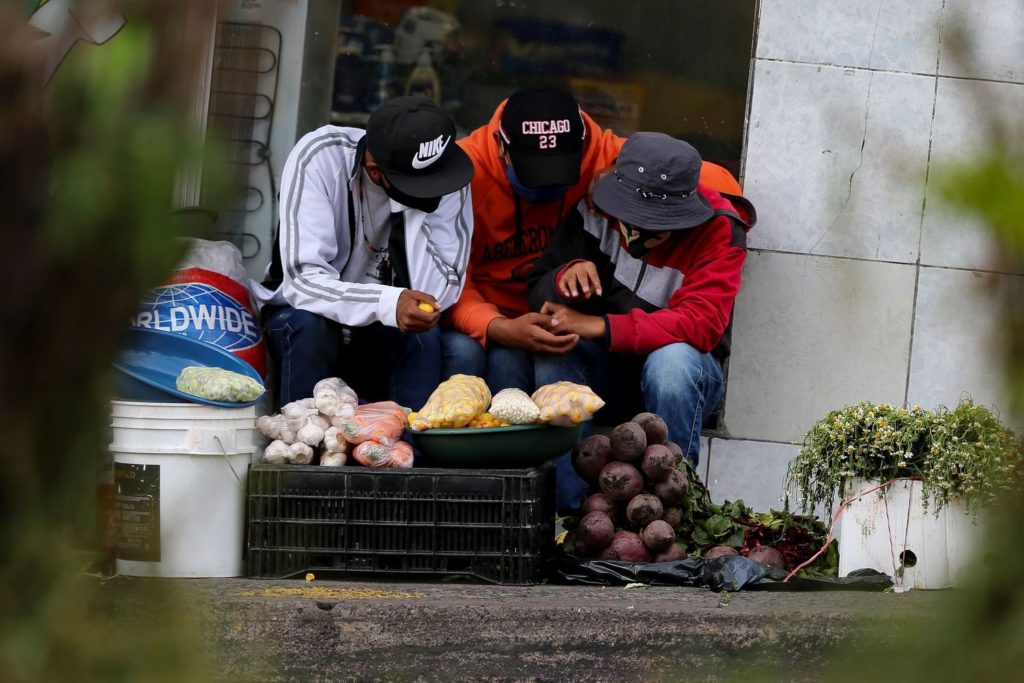
According to Neri, the study also analyzed the behavior in different classes in relation to the pandemic, and drew attention to the results on social isolation, where the individual remains at home or leaves only for essential activities, with a surprisingly stronger participation among the most impoverished, “which was not expected”.
According to him, this can also be an effect of emergency aid. “The aid not only caused poverty to immediately drop while it lasts, but on the other hand, behaviors to mitigate the impact of the pandemic. such as social isolation. were even stronger among the poor. This is another sign of the impact of the aid.”
According to the study, 27.8 percent of the bracket below half a minimum wage were strictly isolated and 48.3 percent remained at home and only left for basic needs, up four to five percentage points from the total population.
The study also assessed the use of equipment and protection products against the novel coronavirus (Covid-19), such as masks, hand sanitizer gel, and disinfectants. “In this case, we see that the poorest people used them less, as expected, but all these items – with the exception of disposable gloves, which is a more selective and rarer item – over 92 percent [of the population], even the poorest, had access to them. Although they use them less than the brackets above,” he said.
The professor said that these results refer to a temporary situation related to the aid payment period. However, the way in which the government will conduct the issue and how the benefit will be replaced must be studied, he said.
Neri recalled that the subject is under discussion by the economic team, and one of the challenges is the cost of the measure. On its current rates of R$600 or even R$1,200 for single mothers and Bolsa Família beneficiaries, the government spending amounts to approximately R$50 billion per month.
“We don’t know how this process [of removing the aid] will be. Renda Brasil (Brazil Income) is being discussed, the first stage is the aid transition still in 2020 and then what happens in 2021. This poverty reduction helps the pandemic and poverty itself, but it’s not sustainable,” he said.
Although it is fulfilling its role during the crisis, as well as keeping the economy moving, the Brazilian fiscal situation does not sustain the benefits of this magnitude, in his opinion. “In a sense, the emergency aid also helped to keep economic activity at a less unsatisfactory level,” he said, adding that the government is faced with a challenge to define what will be done after the emergency aid.
Source: Agência Brasil
More: Brazil news in English, every day from The Rio Times.
This article was produced by The Rio Times’ automated newsroom system. How we use AI · Report an error · Editorial responsibility: Matthias Camenzind, Editor-in-Chief