Latin America Steel: Gerdau Leads, Brazil’s CSN ADR Falls 5.7%
Key Facts
- US-traded CSN ADR fell 5.65% to US$0.9299, the steepest drop on the proxy board. The receipt closed back below US$1 on 31 July, after trading above the mark for most of the second half of July, and CSN’s São Paulo-listed ordinary shares fell 6.82% in the same session.
- Gerdau’s New York shares gained 2.02% to US$5.06, the board’s best performer, buoyed by resilient Brazilian construction demand and a relatively low exposure to flat-steel import pressure.
- Ternium’s US-listed stock added 1.02% to US$49.74, the second-best move on the board, with Mexican industrial output providing a floor even though Mexican steel still pays Section 232 duty at the US border.
- The SLX steel-producers ETF inched up 0.10% to US$105.59, a muted global move that masks a sharp divide between North American resilience and Latin American caution.
- Cheap Chinese steel exports remain the dominant hemispheric anxiety, depressing domestic flat-steel premiums in Brazil and triggering fresh lobbying for higher tariff barriers.
- Brazilian auto and construction demand are pulling in opposite directions, with construction showing steady offtake while vehicle output faces inventory correction, softening Usiminas’ plate orders.
Today’s Focus
Latin American steel stocks split sharply on Monday. Ternium rose on Mexican auto demand and North American regional premiums, while CSN’s New York ADR slumped nearly six per cent as investors priced in the risk that a new flood of cheap Chinese flat steel would overpower Brazil’s tariff defences. The broader SLX steel-producers ETF barely moved, rising 0.10 per cent to US$105.59, masking a deep rotation between vertically-integrated longs producers and blast-furnace flat mills.
Gerdau advanced 2.02 per cent to US$5.06, lifted by relatively steady Brazilian long-steel consumption from civil construction and by investor relief that its North American mini-mill footprint provides an earnings hedge against imported plate and hot-rolled coil. Ternium, which runs large slab and coil operations in Mexico, added 1.02 per cent to US$49.74 as Mexican auto assemblies stayed brisk and US hot-rolled coil prices held a premium above US$800 per short ton. That premium is not reached duty-free: Mexico lost its Section 232 exemption on 12 March 2025, when a 25 per cent tariff replaced the country carve-outs, and the rate was doubled to 50 per cent in June 2025. Under the proclamation that took effect on 8 June 2026, USMCA-qualifying Mexican steel pays 25 per cent on its non-US content, subject to a 15 per cent floor, against a 50 per cent headline rate on raw and semi-finished articles. That is relief, not exemption.
CSN’s 5.65 per cent slide to US$0.9299 for its ADR was the session’s standout, and it marked a sharp reversal: the receipt closed back below US$1 on 31 July, after trading above the mark for most of the second half of July, and Moody’s cut CSN to Caa1 with a negative outlook ahead of a US$1.3 billion bond exchange. The company’s ordinary shares in São Paulo fell 6.82 per cent the same day. The move reflected a cocktail of anxiety: a fresh weekly jump in Chinese hot-rolled coil export volumes at prices well below Brazilian mill cash costs, growing political pressure in Brasília to raise the common external tariff on steel, and a seasonal lull in domestic flat-steel orders from auto white-goods and machinery makers. Usiminas, headquartered in Belo Horizonte and listed on the B3 exchange in São Paulo, traded in sympathy, squeezed between high slab input costs and a domestic flat market that cannot easily absorb both local output and import tonnage. The company has since reported a 236 per cent jump in second-quarter profit to US$84 million.
Behind the price moves sits a regional industry caught between two conflicting currents. On one side, North American nearshoring and a tight scrap market are keeping EAF-based long-steel producers like Gerdau’s US mills profitable. On the other, Brazilian integrated mills that depend on export parity pricing for hot-rolled and cold-rolled coil are being undercut at home by Chinese cargoes priced at roughly a ten per cent discount to domestic list. Mexico’s advantage is relative rather than absolute: Ternium’s slab crosses the Rio Grande into Texas at a reduced Section 232 rate, not a zero one, while a Rio de Janeiro mill pays the full duty and fights an Atlantic freight disadvantage to reach the Gulf Coast on top of it.
What matters today. The day’s divergence underscores a hemispheric split where Mexican steel rides US industrial strength, while Brazilian flat mills face a mounting fight against cut-price Chinese tonnage.
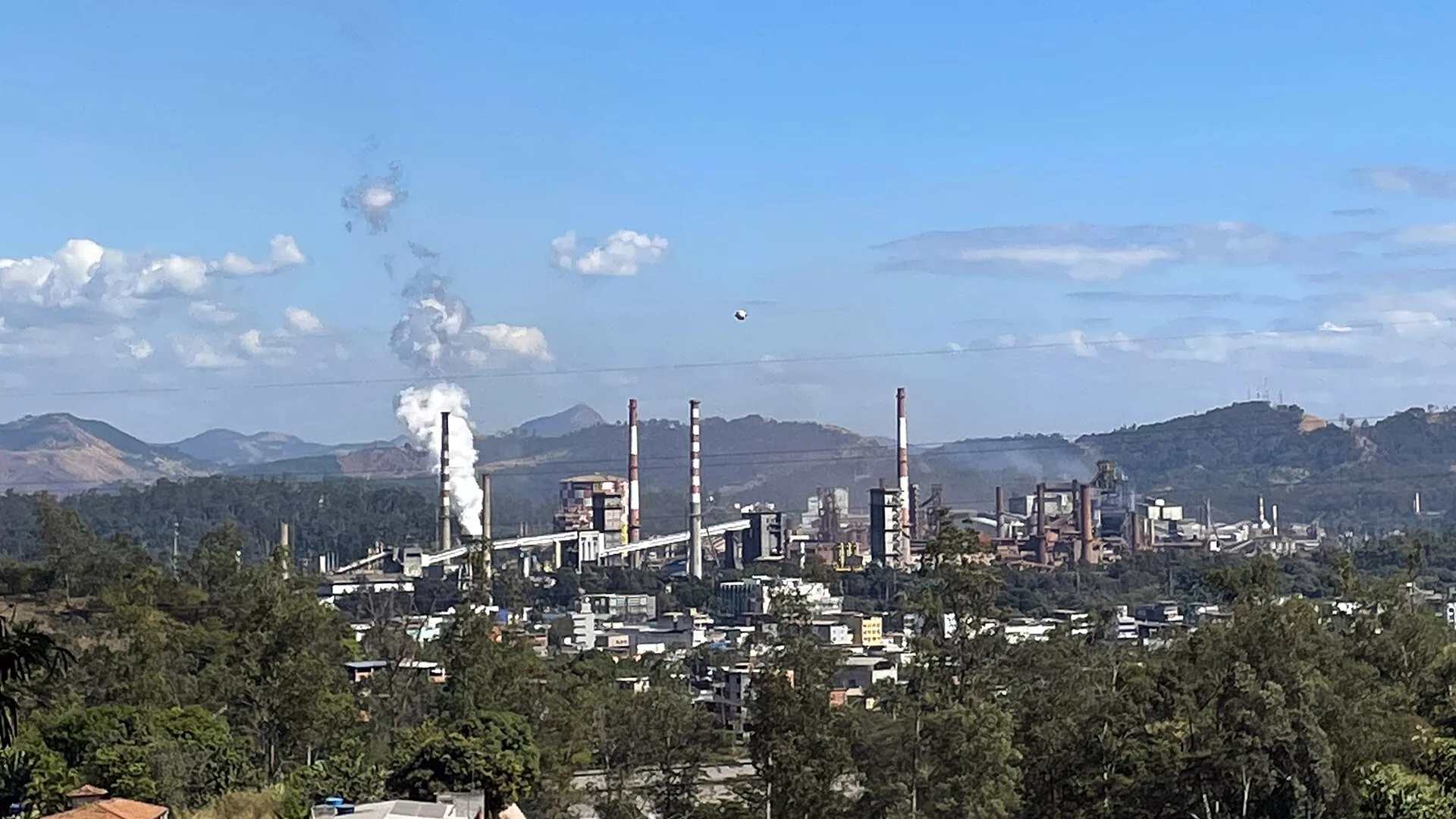

01 The session in one read
Latin American steel equities went their separate ways on Monday, a change of tone from the previous wrap, when cheap Asian imports pulled the whole board lower, sketching a hemispheric map of where demand is real and where it is merely hoped for. The SLX ETF, a basket of global steel-producer stocks, barely stirred at US$105.59, up 0.10 per cent, the stillness of a surface that conceals a fast current underneath.
Gerdau led the regional names with a 2.02 per cent rise to US$5.06, twice the day’s next-best gain, helped by steady Brazilian long-steel demand and the earnings cushion of its North American mini-mills. Ternium followed with a 1.02 per cent gain to US$49.74 as investors bet that Mexican industrial output and North American steel premiums would continue to reward the company’s vertically-integrated slab-to-coil mills. CSN’s New York depositary receipt tumbled 5.65 per cent to US$0.9299, the board’s heaviest fall.
The broad Latin American steel complex appears to be gently re-rating, with capital flowing towards mills that are short US scrap and long North American demand, and away from Brazilian blast-furnace operators that are price-takers on Chinese export parity. Chinese hot-rolled coil export volumes have accelerated through July, with most cargoes clearing at a freight-adjusted discount to domestic Brazilian transaction prices, raising the political temperature in Brasília ahead of a scheduled tariff review. The variable to watch is whether Brazil’s government accelerates an increase in the common external tariff on steel, a move that could reshape domestic flat prices and abruptly reverse the underperformance of CSN and Usiminas.
02 The board
The day’s price screen snapped a clear fault line. CSN’s ADR at US$0.9299 was the outlier, a level that prices in a challenging quarter for Brazilian flat-steel spreads between slab cost and hot-rolled coil revenue. Gerdau’s US$5.06 close, by contrast, reflected a mini-mill operator that buys scrap in reais or pesos and sells longs into markets where electric-arc furnace (EAF) capacity utilisation is running high.
Ternium at US$49.74 sits between the two, a Mexico-based slab and coil producer whose revenue leans heavily on the US spot HRC price, which has stayed above the psychological US$800 per short ton mark for several weeks. The SLX ETF’s US$105.59 print captures a global sector still wrestling with Chinese overcapacity: the fund’s top holdings include non-Latin names whose margins are also under pressure from seaborne flat steel.
| Asset | Level | Change |
|---|---|---|
| Steel (SLX ETF) | US$105.59 | +0.10% |
| Gerdau | US$5.06 | +2.02% |
| CSN (ADR) | US$0.9299 | -5.65% |
| Ternium | US$49.74 | +1.02% |
Source: RT close, 2026-08-03. Where a commodity has no spot feed, an exchange-traded tracker or leading producer is shown as a labelled proxy.
Live Market IntelligenceThe live market board
Rio Times · Live Market Intelligence
Latin America — Cross-Market Board
| Instrument | Last | Change | YoY | Prev. | High | Low | Volume |
|---|---|---|---|---|---|---|---|
| IBOV | 174,576.80 | +1.55% | +21.85% | 171,906.72 | 168,310 | 167,142 | — |
| IPSA | 11,450.75 | -0.76% | — | 11,537.98 | 11,210 | 10,984 | 1,513,213,483 |
| IPC MEX | 65,522.56 | -0.38% | +12.17% | 65,770.85 | 66,121 | 65,405 | 108,886,187 |
| MERVAL | 3,009,029 | +0.46% | +30.51% | 3,022,485 | 3,042,365 | 2,991,150 | — |
| COLCAP | 2,508.47 | -0.09% | — | 9.04 | 9.05 | 9.02 | 4,133 |
| BVL PERÚ | 60,117.56 | +0.55% | — | — | — | — | — |
| USD/BRL | 5.16 | +0.01% | -5.13% | 5.16 | 5.18 | 5.14 | — |
| EUR/BRL | 5.95 | +1.01% | -5.83% | 5.89 | 5.98 | 5.94 | — |
| USD/MXN | 17.06 | -0.24% | -8.58% | 17.10 | 17.08 | 17.01 | — |
| USD/CLP | 913.98 | +0.04% | -5.67% | 913.65 | 915.11 | 906.68 | — |
| USD/COP | 3,140 | +0.03% | -22.04% | 3,139 | 3,141 | 3,105 | — |
| USD/PEN | 3.36 | -0.66% | -4.82% | 3.38 | 3.38 | 3.35 | — |
| USD/ARS | 1,493 | +0.10% | +12.96% | 1,491 | 1,494 | 1,480 | — |
| USD/UYU | 40.27 | +1.24% | +1.80% | 39.77 | 40.27 | 40.23 | — |
| USD/PYG | 5,939 | +1.68% | -19.54% | 5,841 | 5,939 | 5,925 | — |
| USD/BOB | 11.64 | -0.76% | +72.04% | 11.73 | 11.72 | 11.64 | — |
| USD/DOP | 58.34 | +1.25% | -3.44% | 57.62 | 58.34 | 58.04 | — |
| USD/CRC | 445.92 | +0.89% | -9.71% | 441.97 | 448.50 | 445.92 | — |
Live Company IntelligenceGerdau S.A — the full investor dossier
Valuation & profitability
Price & risk
$15.7852-wk high
$26.44
Revenue trend · 6y
Ownership
Dividend
03 What moved it
Four drivers aligned to produce the session’s dispersion. First, Chinese hot-rolled coil export offers continued to slip, with cargoes arriving at Brazilian ports at prices that undercut domestic integrated mills by a margin wide enough to force either volume concessions or official action.
Second, Mexican automotive production posted another month of year-on-year growth, pulling Ternium’s high-strength sheet and coated products through the supply chain. Third, Brazilian civil construction held its intake of rebar, wire rod and structural shapes, giving Gerdau’s domestic longs division a steadier order book than its flat-steel peers. Fourth, market chatter intensified around a potential emergency increase in Brazil’s steel tariff, a political variable that cuts both ways for equities because it signals distress even as it promises relief.
04 The Latin American read
For a foreign investor, the board tells a story of two steel Americas. North-of-the-equator mills that feed into the US market, whether from Monterrey or from Gerdau’s Texas and Arkansas mini-mills, are capturing the premium created by years of trade barriers and tight scrap supply. The benefit is uneven, however: Mexico City has asked Washington to cut the 50 per cent steel tariff to 10 per cent, with Mexican metal exports to the United States already down 36.6 per cent. South-of-the-equator integrated mills that must compete on the open ocean against wave after wave of Chinese coil are seeing their domestic pricing power erode.
Brazil’s flat-steel dilemma sums up the larger regional predicament. The country’s blast furnaces are efficient by global standards, yet they sit thousands of sea miles from the premium US market, with no free-trade bridge. Mexico’s mills, in contrast, sit next door and qualify for USMCA content relief that trims but does not remove the Section 232 bill, making Ternium a cleaner proxy for the North American re-industrialisation narrative than any Brazilian rival.
05 The names to watch
Gerdau (US$5.06) is the purest Latin American play on North American non-residential construction and scrap-based EAF economics. Its ADR tends to trade with US infrastructure sentiment and Brazilian domestic cement and rebar data. Since this session the company has reported a 70 per cent jump in second-quarter profit to US$287 million.
CSN (US$0.9299) is the most leveraged to Chinese flat-steel import pressure and to any Brazilian tariff pivot. A weaker real helps its export parity but a stronger real amplifies the import threat on its home market. Ternium (US$49.74) is anchored by Mexico’s auto cycle and the US HRC price, making it less exposed to Asian seaborne dynamics and more sensitive to US Federal Reserve rate expectations and Midwest manufacturing PMIs.
06 The outlook
The immediate path for Latin American steel prices rests on three questions: whether Chinese mills sustain their export push through the northern-hemisphere summer lull, how quickly Brazil’s government acts on industry pleas for a tariff increase, and whether Mexican auto assemblies maintain their current cadence. A fourth question sits behind them: whether Mexico’s negotiation with Washington over the steel tariff delivers a lower rate before the USMCA review concludes. For equity investors, the SLX ETF’s flat session conceals a tradable divergence, one that rewards mills with scrap-based US exposure and punishes those that must sell flat steel into the path of Chinese cargoes.
07 What to watch
- Brazil tariff decision: Any official move to raise the common external tariff on steel is the single most important catalyst for CSN and Usiminas shares and will be read directly off Brasília’s foreign-trade chamber agenda.
- Chinese weekly export volumes: A further rise in Chinese hot-rolled coil export tonnage would deepen the discount to Brazilian domestic prices and erode the case for holding Latin American flat-steel equities.
- Mexican auto production data: Monthly Mexican auto output and export figures are the real-time demand dial for Ternium’s high-margin sheet and galvanised products.
- US hot-rolled coil spot price: The benchmark HRC price (over US$800 per short ton) determines the premium that Ternium and Gerdau’s US mini-mills capture on every ton shipped inside the USMCA bloc, which replaced NAFTA in 2020.
Correction, 6 August 2026: An earlier version of this article said Ternium’s Mexican slab and coil reach the United States free of Section 232 tariffs. That is incorrect. Mexico’s Section 232 exemption ended on 12 March 2025, and USMCA-qualifying Mexican steel currently pays 25 per cent on its non-US content, with a 15 per cent floor. This version also corrects the ranking of the session’s gainers, the location of the B3 exchange and a reference to NAFTA. It further corrects CSN’s ADR decline on 3 August to 5.65 per cent from 6.07 per cent, a figure that had been derived from a rounded prior close, and removes an incorrect statement that the receipt had traded below US$1 since late June: it closed at or above US$1 on nine consecutive sessions from 20 to 30 July 2026. The headline has been updated accordingly.
Frequently Asked Questions
Does Ternium’s Mexican steel enter the United States free of Section 232 tariffs?
No. Mexico lost its Section 232 exemption on 12 March 2025, when a 25 per cent duty replaced the country carve-outs, and the rate doubled to 50 per cent in June 2025. Under the proclamation effective 8 June 2026, USMCA-qualifying Mexican steel pays 25 per cent on its non-US content, subject to a 15 per cent floor. That is relief, not exemption.
Which Latin American steel stock performed best on 3 August 2026?
Gerdau led the board with a 2.02 per cent rise to US$5.06, twice the gain posted by Ternium, which added 1.02 per cent to US$49.74. The SLX steel-producers ETF edged up 0.10 per cent to US$105.59, while CSN’s New York depositary receipt was the outlier, falling 5.65 per cent to US$0.9299.
Why is CSN’s ADR trading below US$1?
The receipt closed back below US$1 on 31 July, after trading above the mark for most of the second half of July. The slide tracked CSN’s São Paulo-listed shares. Moody’s cut the steelmaker to Caa1 with a negative outlook in May, citing weak liquidity and the risk of a distressed exchange, and CSN later pushed out US$1.3 billion of debt through a bond swap. Cheap Chinese coil compounds the pressure.
Do these share prices represent the price of physical steel?
No. They are proxies. SLX is an exchange-traded fund holding global steel producers, while Gerdau, CSN and Ternium shares track the equity value of specific companies, including their debt, currency exposure and mining or cement arms. None of them is a spot quote for a tonne of hot-rolled coil or rebar.
Sources: White House proclamation of 1 June 2026 on steel, aluminium and copper tariffs; Proclamation 11021 of 2 April 2026; Congressional Research Service, Section 232 tariffs on steel and aluminum; Companhia Siderúrgica Nacional (SID) price history.
This article was produced by The Rio Times’ automated newsroom system. How we use AI · Report an error
Read More from The Rio Times