Latin American Steel Splits: Brazil’s Usiminas Jumps 7.91% as Gerdau and CSN Fall
Key Facts
- —The country. Brazil has 213.6 million people and has been governed by President Lula da Silva since 1 January 2023. The first round of the next election falls on 4 October 2026.
- —The money. The real trades near 5.13 to the US dollar. Usiminas is quoted in reais at home, while Gerdau and CSN are quoted in dollars in New York.
- —The background. Steel is a pillar of Brazilian industry and a political one, because cheap Chinese imports threaten mill jobs. SLX is a New York fund holding steel producers worldwide, used as a sector thermometer.
- —The news. Usiminas rose 7.91% to R$6.55 on Wednesday, 23 September 2026, on 10,455,700 shares. Gerdau fell 2.79% to US$4.88, CSN 3.39% to US$1.14 and SLX 1.81% to US$104.80.
- —What was disputed. Our automatic checker reported that these names rose. Its source was our own Tuesday wrap, one trading day behind. The Wednesday declines stand.
- —Why it matters to you. Steel prices feed into flats, cars and white goods. Import tariffs of 25% above quota keep domestic prices higher than world prices, and shoppers pay the difference.
- —The caveat. One session on one stock is thin evidence. Usiminas jumped on heavy volume with no confirmed company announcement that day, so the move may not hold.
Today’s Focus
Brazilian steel names split sharply on Wednesday, September 23, 2026, as Usiminas surged 7.91% to R$6.55 while US-traded peers Gerdau, CSN and Ternium all fell alongside the SLX steel ETF.
The split ran along listing lines rather than product lines. The one name quoted in reais in São Paulo rose, while every dollar-quoted proxy in New York fell, even though Usiminas and CSN both make flat steel.
Brazil’s 25% tariff on above-quota imports is not fully containing foreign supply; import penetration hit 22.5% in the first half of 2026. That leaves domestic price power limited for flat products.
Mexico’s Ternium fell only 0.78%, a smaller drop than its Brazilian peers, reflecting steadier demand from auto assembly and nearshoring-driven factory construction.
What matters today. The split between construction-linked long steel and import-exposed flat steel now matters more than any single country story in Latin American steel.
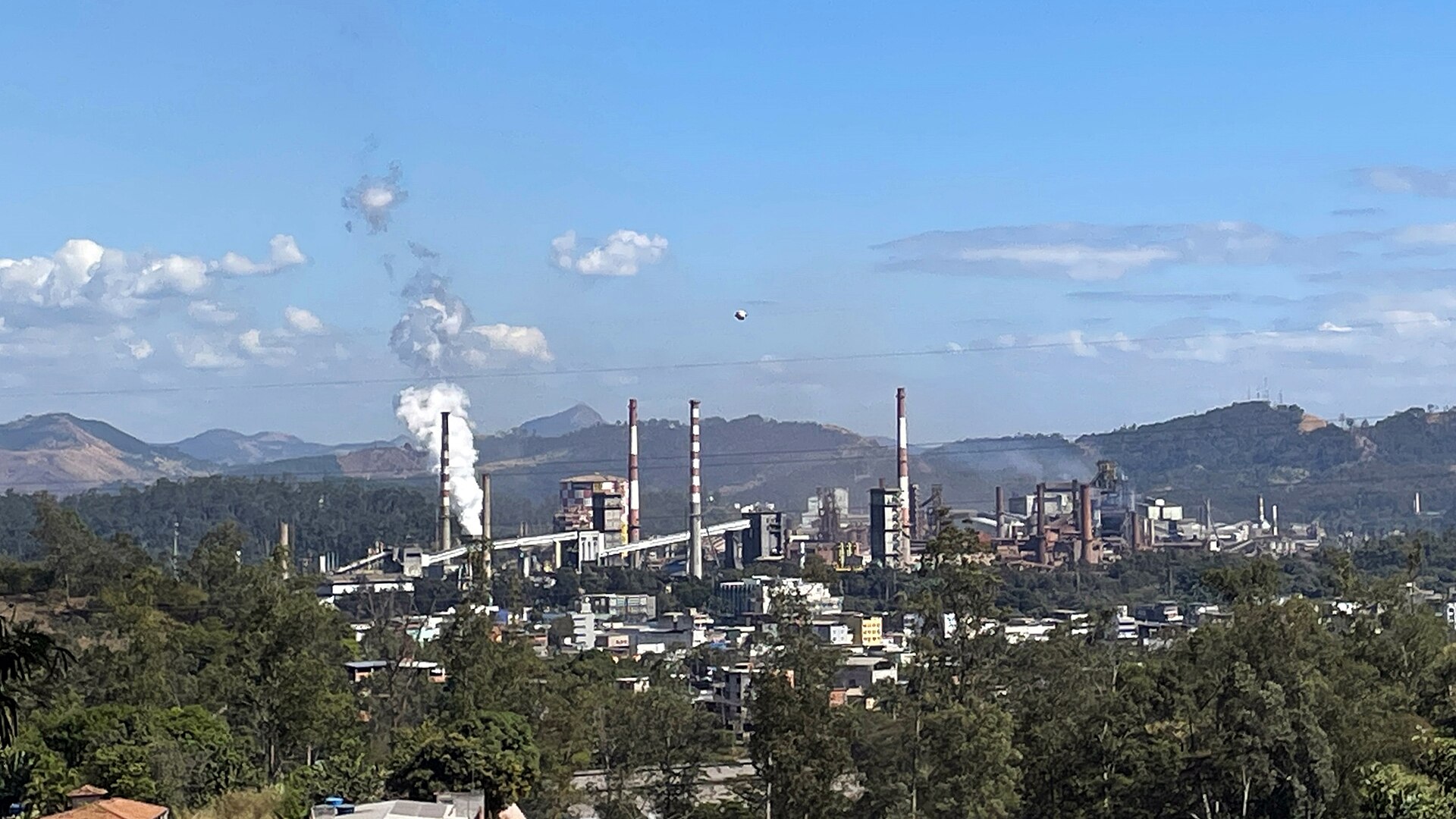
01 The session in one read
Latin American steel tore in two directions on Wednesday, September 23, 2026. Usiminas, Brazil’s major flat-steel producer, jumped 7.91% to R$6.55 on heavy São Paulo volume of 10,455,700 shares.
Yet every US-dollar-quoted steel proxy fell. Gerdau dropped 2.79% to US$4.88, CSN’s New York ADR lost 3.39% to US$1.14, and the SLX steel-producers ETF declined 1.81% to US$104.80.
Ternium, Mexico’s leading flat-steel producer, was the most resilient of the decliners, easing 0.78% to US$55.99.
The board shows investors paying for one domestic Brazilian name while marking down every dollar-quoted proxy in the sector. With Brazilian import penetration at 22.5% despite tariffs, the market is signalling that trade policy alone cannot restore flat-steel margins. Watch Usiminas volume and follow-through on Thursday to gauge whether the 7.91% move is a one-session re-rating or the start of something broader.
02 The board
The divergence on the board is a lesson in what each ticker represents. Usiminas trades in reais on the São Paulo exchange and carries a heavy weighting of Brazilian institutional money responding to domestic construction and auto demand signals.
Gerdau, CSN’s ADR and SLX are dollar-priced proxies exposed to global steel sentiment and the same Chinese import pressure that has weighed on the sector all year. Their simultaneous declines on Wednesday show that international investors remain cautious on the region’s flat-steel economics.
| Asset | Level | Change |
|---|---|---|
| Steel (SLX ETF) | US$104.80 | -1.81% |
| Gerdau | US$4.88 | -2.79% |
| CSN (ADR) | US$1.14 | -3.39% |
| Ternium | US$55.99 | -0.78% |
Source: RT close, 2026-09-23. Where a commodity has no spot feed, an exchange-traded tracker or leading producer is shown as a labelled proxy.
Live Market IntelligenceThe live market board
Rio Times · Live Market Intelligence
Latin America — Cross-Market Board
| Instrument | Last | Change | YoY | Prev. | High | Low | Volume |
|---|---|---|---|---|---|---|---|
| IBOV | 185,814.09 | -0.86% | +21.85% | 187,422.92 | 168,310 | 167,142 | — |
| IPSA | 11,449.60 | +0.20% | — | 11,426.75 | 11,210 | 10,984 | 1,513,213,483 |
| IPC MEX | 64,276.72 | -0.28% | +12.17% | 64,456.59 | 66,121 | 65,405 | 108,886,187 |
| MERVAL | 2,969,545 | -0.94% | +30.51% | 3,022,485 | 3,042,365 | 2,991,150 | — |
| COLCAP | 2,612.48 | +0.92% | — | 9.04 | 9.05 | 9.02 | 4,133 |
| BVL PERÚ | 60,625.42 | -1.56% | — | — | — | — | — |
| USD/BRL | 5.16 | +0.01% | -5.13% | 5.16 | 5.18 | 5.14 | — |
| EUR/BRL | 5.95 | +1.01% | -5.83% | 5.89 | 5.98 | 5.94 | — |
| USD/MXN | 17.06 | -0.24% | -8.58% | 17.10 | 17.08 | 17.01 | — |
| USD/CLP | 913.98 | +0.04% | -5.67% | 913.65 | 915.11 | 906.68 | — |
| USD/COP | 3,140 | +0.03% | -22.04% | 3,139 | 3,141 | 3,105 | — |
| USD/PEN | 3.36 | -0.66% | -4.82% | 3.38 | 3.38 | 3.35 | — |
| USD/ARS | 1,493 | +0.10% | +12.96% | 1,491 | 1,494 | 1,480 | — |
| USD/UYU | 40.27 | +1.24% | +1.80% | 39.77 | 40.27 | 40.23 | — |
| USD/PYG | 5,939 | +1.68% | -19.54% | 5,841 | 5,939 | 5,925 | — |
| USD/BOB | 11.64 | -0.76% | +72.04% | 11.73 | 11.72 | 11.64 | — |
| USD/DOP | 58.34 | +1.25% | -3.44% | 57.62 | 58.34 | 58.04 | — |
| USD/CRC | 445.92 | +0.89% | -9.71% | 441.97 | 448.50 | 445.92 | — |
Live Company IntelligenceGerdau S.A — the full investor dossier
Valuation & profitability
Price & risk
$16.0852-wk high
$26.44
Revenue trend · 6y
Ownership
Dividend
03 What moved it
Cheap Chinese supply remains the central pressure on Latin American mills. Brazil has kept a 25% tariff on steel imports above quota across 19 product categories, plus five-year anti-dumping duties on Chinese cold-rolled, coated, galvanised and wire-rod products.
Even so, Brazil’s first-half 2026 steel-import penetration reached 22.5%, evidence that foreign steel keeps entering despite the tariff shield.
Construction is the counterweight. Brazilian building activity is the main support for long-steel producers such as Gerdau. Usiminas is a flat-steel maker, so its demand comes mainly from carmakers and appliance plants rather than from building sites. Weaker flat-steel pricing leaves CSN more exposed to Chinese competition.
04 The Latin American read
The regional demand picture is best described as grinding rather than growing. Latin American apparent rolled-steel consumption rose just 0.1% year on year in March 2026, and automotive output increased only 1.1% in the first four months of 2026.
Mexico offers a clearer growth case. Mexican steel consumption is forecast to grow about 4% in 2026, with auto output expected to remain roughly flat near 4 million vehicles.
Ternium is the direct beneficiary of nearshoring-linked factory construction, which explains its relatively small decline of 0.78% even as US-listed Brazilian names fell harder.
05 The names to watch
Usiminas is the session’s wildcard. A 7.91% jump on volume of 10,455,700 shares is not background noise; it suggests a specific buyer or a stock-specific re-rating. Ternium, which fell on the same day, is Usiminas’ controlling shareholder after buying out the Nippon Steel group, and take-private speculation has followed the company through 2026.
Gerdau and CSN present the cleanest contrast in Brazil. Gerdau, as a long-steel producer, has domestic construction on its side; CSN, heavily flat-steel, must fight Chinese imports for pricing on every tonne.
Ternium and the SLX ETF are the external check. If Ternium continues to hold up while SLX slides, the market is confirming that the Mexican nearshoring story is stronger than the global flat-steel downdraft.
06 The outlook
Follow-through on Usiminas is the first test. A second session of above-average volume would confirm the rotation into construction-linked long steel; a swift fade would leave Wednesday looking like a one-name spike.
Beyond that, watch Brazil’s import penetration data. If the 22.5% first-half reading worsens, the political pressure to raise tariffs beyond 25% will build quickly, and that would be a direct catalyst for both CSN and Usiminas.
07 What to watch
- Usiminas volume: Whether the 7.91% move on 10,455,700 shares attracts follow-through buying or fades within a session.
- Brazil import penetration: If the 22.5% first-half steel-import penetration figure keeps climbing, expect new tariff talk in Brasília.
- Mexican auto output: Ternium’s resilience depends on auto production holding near 4 million vehicles through year-end.
- CSN flat-steel pricing: CSN’s ADR at US$1.14 will stay depressed until flat-steel spreads stop narrowing against Chinese imports.
Frequently Asked Questions
Why did Usiminas jump while Gerdau and CSN fell?
Usiminas trades in São Paulo and benefits from Brazilian construction and auto demand, while the US-listed names face global flat-steel and Chinese import pressure.
What is the main threat to Latin American steel producers?
Cheap Chinese steel. Brazil’s 25% tariff and anti-dumping duties have not stopped import penetration reaching 22.5% in the first half of 2026.
Why is Ternium falling less than its Brazilian peers?
Mexico’s nearshoring story supports factory construction and steel consumption is forecast to grow about 4% in 2026.
What does the SLX ETF tell us about this market?
SLX, the steel-producers ETF, fell 1.81% to US$104.80, showing that global investors remain cautious even when domestic Brazilian names like Usiminas rally.
Market data: RT
This article was produced by The Rio Times’ automated newsroom system. How we use AI · Report an error
LatAm Markets: Live Signals → — real-time movers, turnover leaders and FX across Latin America.
Read More from The Rio Times
- Oil Prices Slip to US$89.89 a Barrel on 23 September 2026; Brazil’s Petrobras Rises 1.83%
- Gold Falls 1.72% to US$4,289 an Ounce and Silver About 3.9% on 23 September 2026, With Mexico the World’s Largest Silver Producer
- Zinc Miners Fall Nine Times Faster Than the Metal in Latin America on 23 September 2026, With Peru’s Nexa Down 3.9%