Gold Falls 1.72% to US$4,289 an Ounce and Silver About 3.9% on 23 September 2026, With Mexico the World’s Largest Silver Producer
Key Facts
- —The country. Mexico has about 133.0 million people and has been governed by President Claudia Sheinbaum since 1 October 2024.
- —The money. Mexico’s currency is the peso, worth roughly 17.2 to 17.4 to the US dollar in September 2026.
- —The background. Spot gold and spot silver are the cash price of one troy ounce in US dollars. Mexico mines more silver than any other country, and Peru is close behind.
- —The news. On Wednesday 23 September 2026 gold closed at US$4,289 an ounce, down 1.72%, and silver at about US$64.50, down about roughly 3.9%.
- —What is disputed. The draft said silver fell roughly 3.9%. Same-day market reports put the drop between 3.6% and 3.9%, so the figure was corrected before publication.
- —What it means for you. Anyone holding gold or silver in dollars lost value on the day. Earning pesos or reais softened the loss, because the dollar itself rose.
- —The caveat. Spot prices differ by a few cents between data feeds, and one session says nothing about where metals go next.
Today’s Focus
Gold and silver fell hard on Wednesday, September 23, 2026, with gold settling at US$4,289 an ounce for a 1.72% loss and silver at about US$64.50 an ounce for a drop of roughly 3.9%.
A stronger US dollar was the dominant pressure, making dollar-denominated metals more expensive for holders of other currencies.
Higher real yields compounded the move, since bullion pays no interest and becomes less attractive when inflation-adjusted bond returns rise.
Mexico and Peru, the world’s top two silver producers, remain central to the supply story even as prices retreat.
What matters today. The combination of a firm dollar and rising real yields overpowered any safe-haven bid for precious metals in the session.
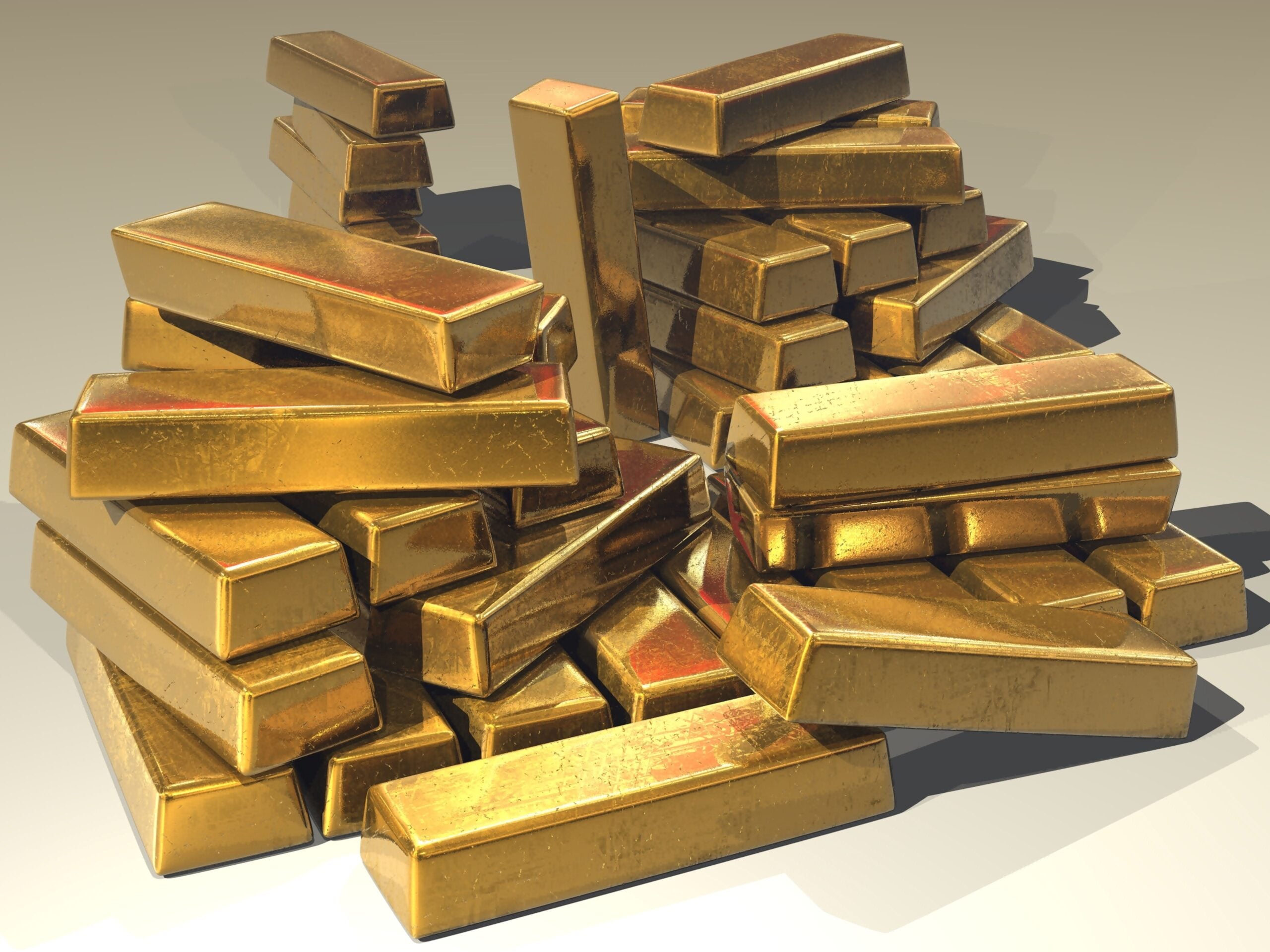
01 The session in one read
Gold settled at US$4,289 an ounce on Wednesday, September 23, 2026, a decline of 1.72% that erased the previous day’s buoyancy.
Silver fell faster, settling at about US$64.50 an ounce for a drop of roughly 3.9% as the metal’s industrial exposure amplified the move.
T
h
e
s
e
l
l
–
o
f
f
w
a
s
a
t
e
x
t
b
o
o
k
r
a
t
e
s
–
a
n
d
–
c
u
r
r
e
n
c
y
m
o
v
e
:
a
f
i
r
m
e
r
d
o
l
l
a
r
a
n
d
h
i
g
h
e
r
r
e
a
l
y
i
e
l
d
s
r
e
m
o
v
e
d
t
h
e
t
w
o
p
r
o
p
s
t
h
a
t
h
a
d
s
u
p
p
o
r
t
e
d
b
u
l
l
i
o
n
.
S
i
l
v
e
r
’
s
l
a
r
g
e
r
d
r
o
p
r
e
f
l
e
c
t
s
i
t
s
i
n
d
u
s
t
r
i
a
l
b
e
t
a
a
n
d
t
h
i
n
n
e
r
s
a
f
e
–
h
a
v
e
n
c
u
s
h
i
o
n
.
T
h
e
v
a
r
i
a
b
l
e
t
o
w
a
t
c
h
i
s
t
h
e
U
S
d
o
l
l
a
r
i
n
d
e
x
a
n
d
t
h
e
r
e
a
l
y
i
e
l
d
o
n
t
e
n
–
y
e
a
r
T
r
e
a
s
u
r
i
e
s
.
02 The board
The gold-tracking proxy closed at US$4,289 an ounce, down 1.72% in the session, reflecting the same dollar and yield pressures visible across the precious metals complex.
Silver-tracking instruments settled at about US$64.50 an ounce, down roughly 3.9%, underscoring how the white metal tends to swing harder than gold when macro winds shift.
| Asset | Level | Change |
|---|---|---|
| Gold | US$4,289/oz | -1.72% |
| Silver | about US$64.50/oz -3.9% |
Source: RT close, 2026-09-23. Where a commodity has no spot feed, an exchange-traded tracker or leading producer is shown as a labelled proxy.
Live Market IntelligenceThe live market board
Rio Times · Live Market Intelligence
Latin America — Cross-Market Board
| Instrument | Last | Change | YoY | Prev. | High | Low | Volume |
|---|---|---|---|---|---|---|---|
| IBOV | 185,814.09 | -0.86% | +21.85% | 187,422.92 | 168,310 | 167,142 | — |
| IPSA | 11,449.60 | +0.20% | — | 11,426.75 | 11,210 | 10,984 | 1,513,213,483 |
| IPC MEX | 64,276.72 | -0.28% | +12.17% | 64,456.59 | 66,121 | 65,405 | 108,886,187 |
| MERVAL | 2,969,545 | -0.94% | +30.51% | 3,022,485 | 3,042,365 | 2,991,150 | — |
| COLCAP | 2,612.48 | +0.92% | — | 9.04 | 9.05 | 9.02 | 4,133 |
| BVL PERÚ | 60,625.42 | -1.56% | — | — | — | — | — |
| USD/BRL | 5.16 | +0.01% | -5.13% | 5.16 | 5.18 | 5.14 | — |
| EUR/BRL | 5.95 | +1.01% | -5.83% | 5.89 | 5.98 | 5.94 | — |
| USD/MXN | 17.06 | -0.24% | -8.58% | 17.10 | 17.08 | 17.01 | — |
| USD/CLP | 913.98 | +0.04% | -5.67% | 913.65 | 915.11 | 906.68 | — |
| USD/COP | 3,140 | +0.03% | -22.04% | 3,139 | 3,141 | 3,105 | — |
| USD/PEN | 3.36 | -0.66% | -4.82% | 3.38 | 3.38 | 3.35 | — |
| USD/ARS | 1,493 | +0.10% | +12.96% | 1,491 | 1,494 | 1,480 | — |
| USD/UYU | 40.27 | +1.24% | +1.80% | 39.77 | 40.27 | 40.23 | — |
| USD/PYG | 5,939 | +1.68% | -19.54% | 5,841 | 5,939 | 5,925 | — |
| USD/BOB | 11.64 | -0.76% | +72.04% | 11.73 | 11.72 | 11.64 | — |
| USD/DOP | 58.34 | +1.25% | -3.44% | 57.62 | 58.34 | 58.04 | — |
| USD/CRC | 445.92 | +0.89% | -9.71% | 441.97 | 448.50 | 445.92 | — |
03 What moved it
A stronger US dollar was the clearest driver, since a firm greenback makes dollar-priced metals more expensive for buyers using euros, reais or yen.
Higher real yields added to the drag: with inflation-adjusted returns on government bonds improving, the opportunity cost of holding non-yielding gold and silver increased.
Safe-haven flows were not enough to offset these pressures, and reduced urgency around defensive assets left the complex exposed to the macro move.
04 The Latin American read
Mexico remains the world’s largest silver-producing country, with Fresnillo plc and Peñoles among the listed miners that track silver prices closely.
Peru ranks second in global silver output, and its mines typically recover silver as a by-product of zinc, lead and copper, tying Peruvian supply to base-metal economics.
For foreign investors, the two countries represent the most direct equity route into silver, even when the metal’s price is falling.
05 The names to watch
Fresnillo plc, the London-listed Mexican silver giant, moves with the silver price and is a bellwether for Mexican mining sentiment.
Peñoles, the Mexican mining and metals conglomerate, offers broader exposure that includes silver, gold and base metals.
Peruvian miners with large zinc, lead and copper portfolios also carry meaningful silver by-product exposure, linking Lima-listed names to global silver trends.
06 The outlook
The direction of the dollar and the path of real yields will likely set the near-term tone for gold and silver, with silver’s larger beta meaning bigger swings in both directions.
07 What to watch
- US dollar index: A further firming of the dollar would pressure dollar-priced gold and silver, especially for emerging-market investors.
- Real yields on US Treasuries: Rising inflation-adjusted bond returns reduce the appeal of non-yielding bullion and were central to this session’s decline.
- Mexico’s Fresnillo and Peñoles shares: These equities track silver sentiment and offer a read on how Latin American producers absorb price moves.
- Peruvian base-metal miners: By-product silver supply from zinc, lead and copper mines means base-metal demand shifts can influence silver output.
Frequently Asked Questions
Why did gold and silver fall on Wednesday, September 23, 2026?
A stronger US dollar and higher real yields made bullion less attractive, while safe-haven demand was not strong enough to offset those pressures.
How much did silver fall compared with gold?
Silver settled at about US$64.50 an ounce, down roughly 3.9%, while gold settled at US$4,289 an ounce, down 1.72%.
Which Latin American countries matter most for silver?
Mexico is the world’s largest silver producer, with Fresnillo and Peñoles among key miners; Peru ranks second, with silver often produced alongside zinc, lead and copper.
What should investors watch next?
The US dollar index and real yields on US Treasuries are the main variables to monitor for the next directional move in precious metals.
Market data: RT
This article was produced by The Rio Times’ automated newsroom system. How we use AI · Report an error
In depth
LatAm Markets: Live Signals → — real-time movers, turnover leaders and FX across Latin America.
Read More from The Rio Times