SpaceX’s Starship Test Reveals Progress and Persistent Hurdles in Moon Race
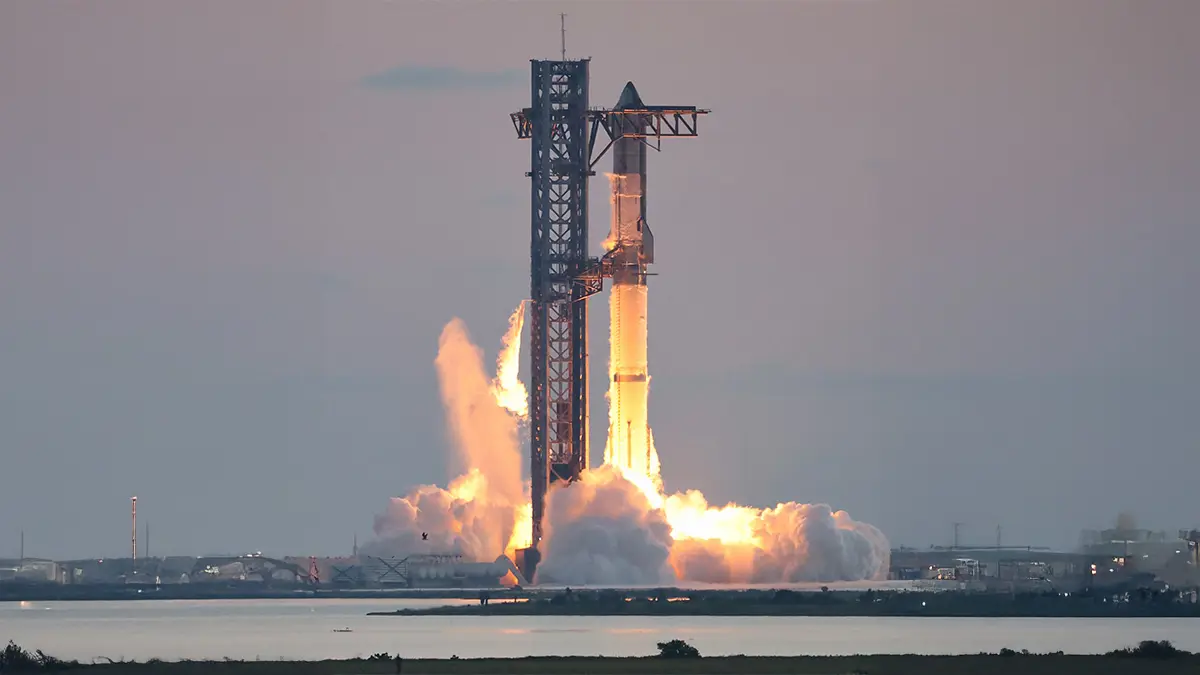
SpaceX launched its Starship rocket from Boca Chica, Texas, on May 27, 2025, marking the ninth test of a vehicle critical to NASA’s Artemis lunar program and private space ambitions.
The 120-meter rocket, powered by 33 Raptor engines, achieved its suborbital trajectory but faced setbacks during reentry, underscoring challenges in reusable spacecraft development.
The Super Heavy booster, reused for the first time with 29 refurbished engines, executed a controlled descent but disintegrated during its final landing burn in the Gulf of Mexico.
SpaceX intentionally tested “non-nominal” maneuvers to gather data on extreme aerodynamic stress, a strategy aimed at refining future recovery systems.
The Starship upper stage separated successfully and completed its engine burn, but a propellant leak caused an uncontrolled spin, leading to breakup during reentry.
This flight followed two prior failures: a January 2025 launch aborted due to engine resonance vibrations and a March attempt doomed by a methane leak.
Starship Setbacks and Geopolitical Stakes
Federal Aviation Administration (FAA) investigators mandated over 60 design changes after the March incident, including reinforced fuel lines and vibration dampeners.
NASA, which relies on Starship for its 2027 Artemis 3 Moon landing, has delayed its timeline to 2028–2029 amid technical hurdles.
Key stakes include orbital refueling—a process requiring at least 10 tanker launches per lunar mission—and heat-shield durability. SpaceX removed 100 thermal tiles during this test to evaluate failure thresholds, risking the vehicle but gaining data to streamline production.
Meanwhile, China’s National Space Administration aims for a 2029 crewed lunar landing, leveraging its Long March 10 rocket, intensifying geopolitical competition.
Elon Musk emphasized rapid iteration, stating the mishap provided “a lot of good data,” with plans to accelerate launches to every three weeks.
Critics highlight environmental concerns, as debris from failed flights has disrupted air traffic and coastal ecosystems. The FAA is reviewing methane emissions and wetland impacts near Starbase.
For SpaceX, success hinges on demonstrating payload deployment, a milestone delayed again when the Starship’s satellite door jammed. The company must now balance innovation with reliability to meet NASA’s deadlines and outpace global rivals.
This article was produced by The Rio Times’ automated newsroom system. How we use AI · Report an error · Editorial responsibility: Matthias Camenzind, Editor-in-Chief