Golden Dome Missile Shield Stirs Sovereignty Clash as Trump Links Defense to Canada’s Statehood
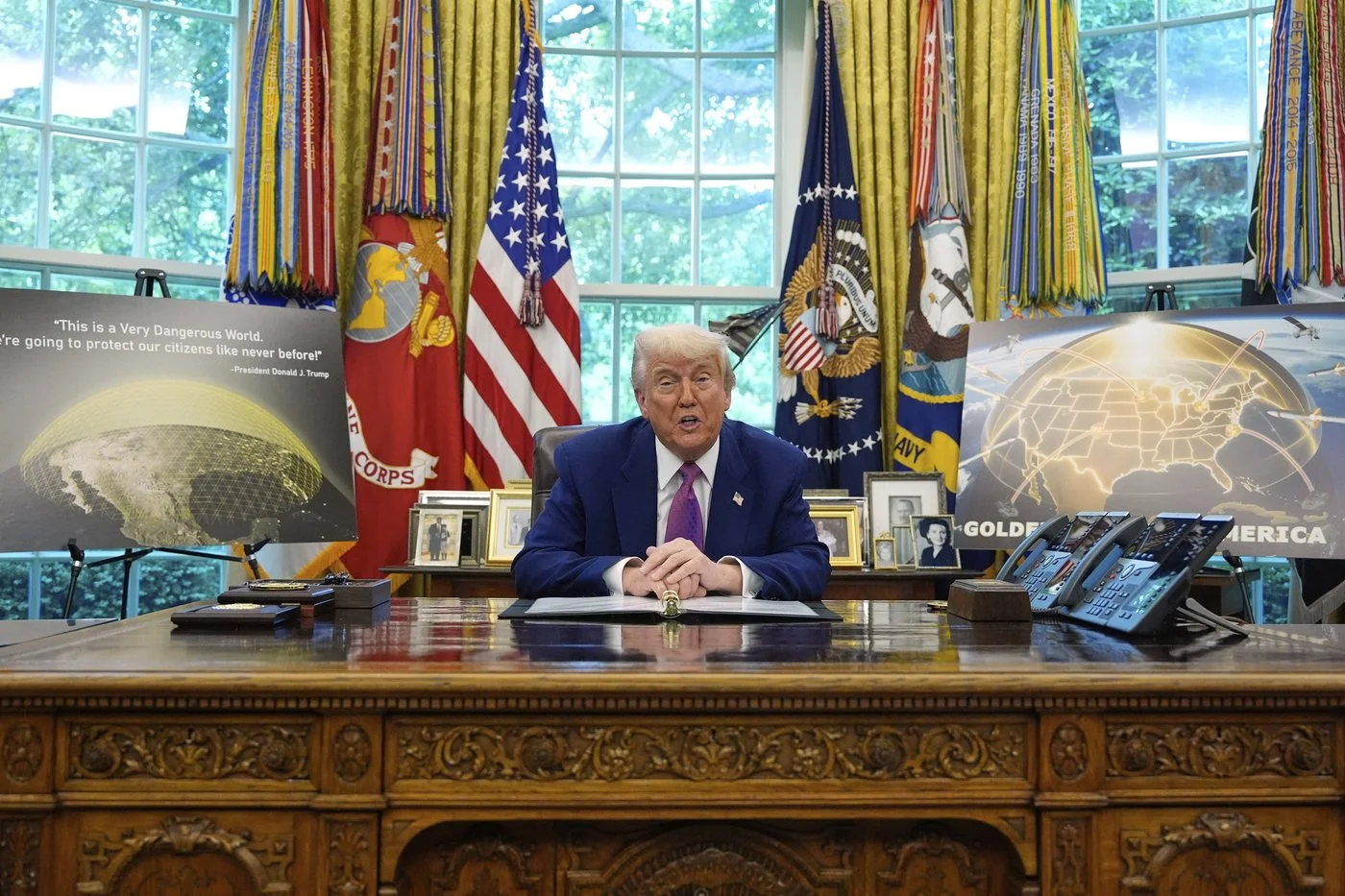
President Donald Trump offered Canada participation in the $175 billion Golden Dome missile defense system on May 27, 2025, conditional on a $61 billion payment or statehood.
The proposal, announced via Trump’s Truth Social platform, framed Canada’s options as financial contribution or territorial integration. Canadian Prime Minister Mark Carney’s office rejected the offer, stating, “Canada is a proud, independent country and has no plans to give up its sovereignty.”
The Golden Dome aims to defend against ballistic, hypersonic, and space-launched missiles using layered interceptors and satellites. Trump claims it will operate by 2029, but the Congressional Budget Office estimates costs could exceed $500 billion over 20 years.
Initial funding includes $25 billion from a pending Republican-backed bill. Technical hurdles, such as tracking hypersonic missiles and deploying space-based weapons, cast doubt on feasibility.
Analysts warn the system risks violating the 1967 Outer Space Treaty and triggering an arms race. Canada already collaborates with the U.S. through NORAD, a Cold War-era air defense network.
Ottawa recently committed $28 billion to modernize NORAD through 2042 and signed a $6.6 billion radar deal with Australia for Arctic surveillance.
Carney Emphasizes Canada’s Diversification of Defense Partnerships
Carney emphasized Canada’s intent to diversify defense partnerships, including Europe’s ReArm initiative, to reduce reliance on U.S. technology. Trump’s proposal follows years of strained bilateral relations, including tariff disputes and annexation rhetoric.
His May 2025 meeting with Carney ended with the Canadian leader asserting, “Canada is not for sale.” Public polls show 82% of Canadians oppose statehood. Critics label the offer a political maneuver, leveraging defense needs to advance territorial ambitions.
Space Force Gen. Michael Guetlein will oversee Golden Dome’s development, prioritizing space-based interceptors. The system’s architecture includes preemptive strike capabilities and orbital sensors, drawing criticism from China and Russia for militarizing space.
Defense experts question the timeline, noting similar projects historically take decades. Thomas Roberts of Georgia Tech called Trump’s $175 billion estimate “not realistic,” while RUSI’s Thomas Withington deemed the 2029 target “incredibly optimistic.”
The Golden Dome debate underscores shifting North American defense dynamics. Canada’s rejection highlights its strategic balancing act between alliance obligations and sovereignty. For the U.S., the proposal tests transactional diplomacy amid growing global missile threats.
This article was produced by The Rio Times’ automated newsroom system. How we use AI · Report an error · Editorial responsibility: Matthias Camenzind, Editor-in-Chief