Seychelles Economy Slows as President Herminie Inherits Record Tourism Boom and Rising Debt
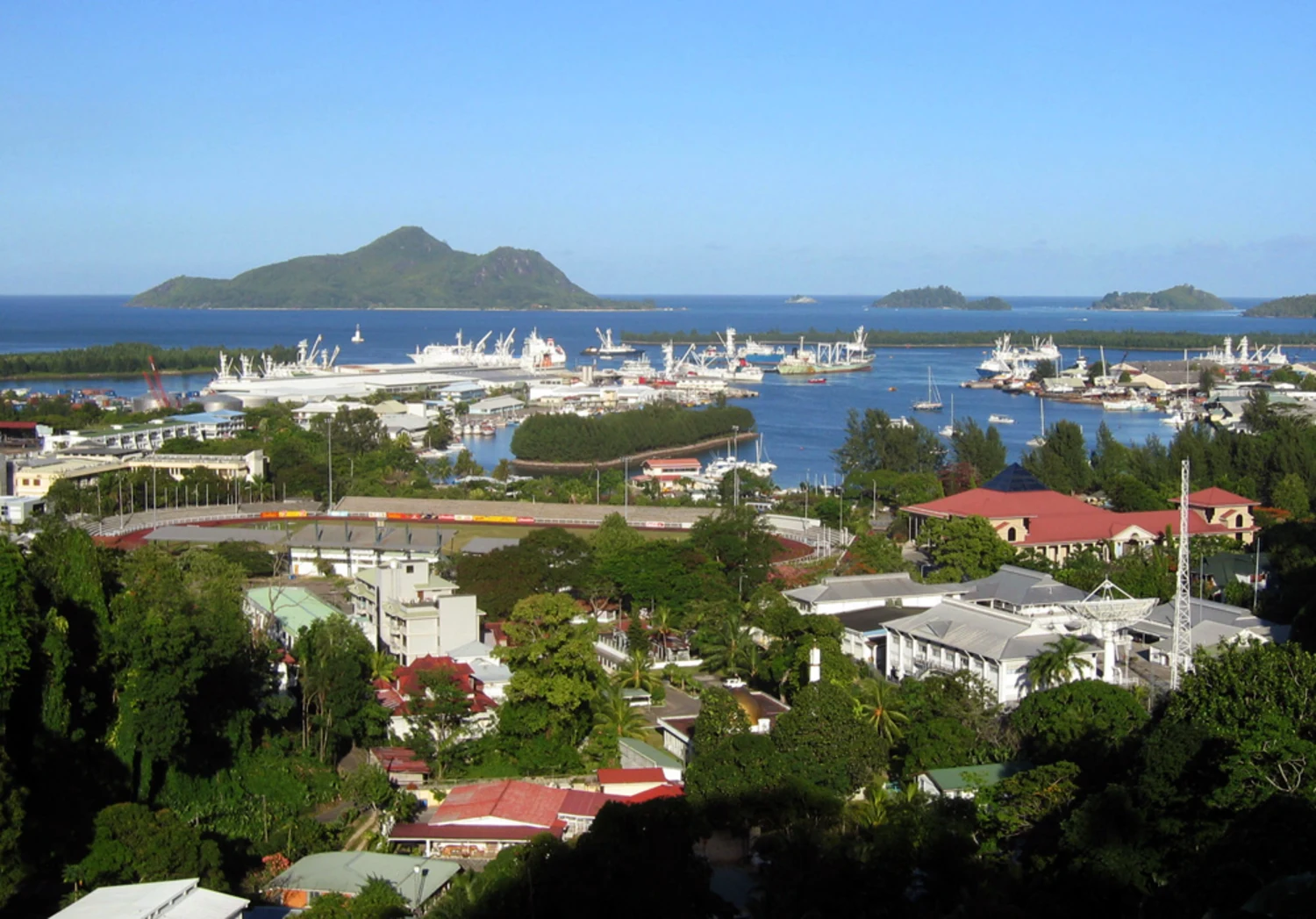
Economy · Seychelles
—The stakes. Seychelles is Africa’s richest per-capita economy but remains acutely exposed to tourism, imported goods and climate shocks.
—The date. Patrick Herminie took office on 26 October 2025 after winning a runoff with 52.7% of the vote.
—The boom. Record 2025 tourism arrivals of 398,841 and spending gains pushed real GDP growth to 5.8% according to the World Bank.
—The squeeze. Fitch projects a 10% drop in 2026 tourist arrivals and an 8% fall in tourism revenue after the US-Iran war disrupted travel.
—The debt. Public and publicly guaranteed debt stood at 53.6% of GDP at end-2025 on World Bank figures, against 51.5% in the IMF’s estimate.
Seychelles enters the Herminie presidency carrying the weight of its own success. Record tourism income in 2025 masked the structural vulnerabilities of an island economy that remains dependent on imported goods, tuna exports and borrowed money.
Herminie Inherits a High-Income Economy at a Political Turning Point
President Patrick Herminie took office on 26 October 2025 after defeating incumbent Wavel Ramkalawan with 52.7% of the vote in a tightly contested runoff.
His party, United Seychelles, also won the National Assembly, ending the previous governing arrangement and restoring the party to power.
The transition came as the World Bank continued to describe Seychelles as having Africa’s highest GNI per capita.
The economy is highly dependent on tourism and fisheries, with climate change posing long-term sustainability risks.
Herminie now leads what multiple 2026 sources call Africa’s richest per-capita economy, though metrics vary between GDP per capita and GNI per capita.
Record 2025 Growth Was Driven by Tourism Income
The World Bank estimated real GDP growth at 5.8% in 2025, led by record tourism earnings.
Seychelles recorded 398,841 visitor arrivals in 2025, a 13% increase over 2024 and above the pre-pandemic peak.
The IMF put 2025 real GDP growth at 5.1% .
Overall tourism income increased 29% compared with 2024, according to the IMF.
The Ministry of Finance estimated tourism receipts at US$1.2 billion for 2025.
Improved connectivity and targeted promotions offset weakness in traditional European markets during the boom year.
The 2026 Tourism Shock Arrives
Fitch reported that tourism was hit by the US-Iran war .
The same rating note projected an 8% decline in tourism revenue for the year.
National Bureau of Statistics data showed 27,201 visitors in May 2026, down 3.4% year on year.
Visitor arrivals totalled 145,858 in January to May 2026, down 11.7% from the same period in 2025.
By July, 197,983 visitors had arrived since January 2026, still down 11% year on year, though Fitch noted July arrivals recovered to exceed July 2025 by close to 2%.
Growth Slows Sharply After the 2025 Peak
The IMF’s 2026 Article IV report projected real GDP growth of about 1.5% in 2026.
That marks a sharp slowdown from the 5.8% expansion the World Bank estimated for 2025.
Fiscal authorities projected a primary surplus in 2026, with the FY26 budget assuming 1.5% of GDP.
IMF staff later revised the projected primary surplus to about 0.9% of GDP.
The Ministry of Finance budget speech put total revenue including grants at SR 12.28 billion for 2026, or about 35 percent of GDP.
The tourism shock leaves the small island economy with less foreign exchange cushion just as import needs remain high.
Debt and Import Dependence Remain Central Risks
Public and publicly guaranteed debt reached 53.6% of GDP at end-2025, according to the IMF.
The Fund projected debt would rise to 57.2% of GDP at end-2026 including new guarantees.
The Ministry of Finance said debt had declined to about 54% of GDP at end-2025.
Gross international reserves reached US$878 million in December 2025, equal to about four months of import cover.
Seychelles remains a small island economy with high exposure to external shocks because of its dependence on tourism, imported goods and fisheries.
Both the World Bank and IMF emphasise that fiscal consolidation has helped, but public debt stays a central policy concern.
Blue Bonds and Debt-for-Nature Swaps Put Seychelles on the Global Map
Seychelles is widely cited as a pioneer in blue bonds and debt-for-nature swaps.
The debt-for-nature swap was completed in 2015 and 2016 and involved about US$21.6 million of debt conversion.
Philanthropic contributions of about US$5 million supported the transaction, with debt-service savings directed toward marine and climate work.
The Nature Conservancy describes the transaction as the world’s first nature bonds project.
It created the Seychelles Conservation and Climate Adaptation Trust, or SeyCCAT, a national trust fund channeling money into marine protection.
The World’s First Commercially Financed Blue Bond
Seychelles issued a US$15 million blue bond in 2018, described as the world’s first sovereign blue bond.
A World Bank partial credit guarantee and GEF concessional financing
The Commonwealth says the blue bond helped support marine protection goals while addressing sustainable fisheries development.
SeyCCAT funding supported marine conservation, marine protected areas and blue economy projects.
Tuna Fisheries and the Blue Economy
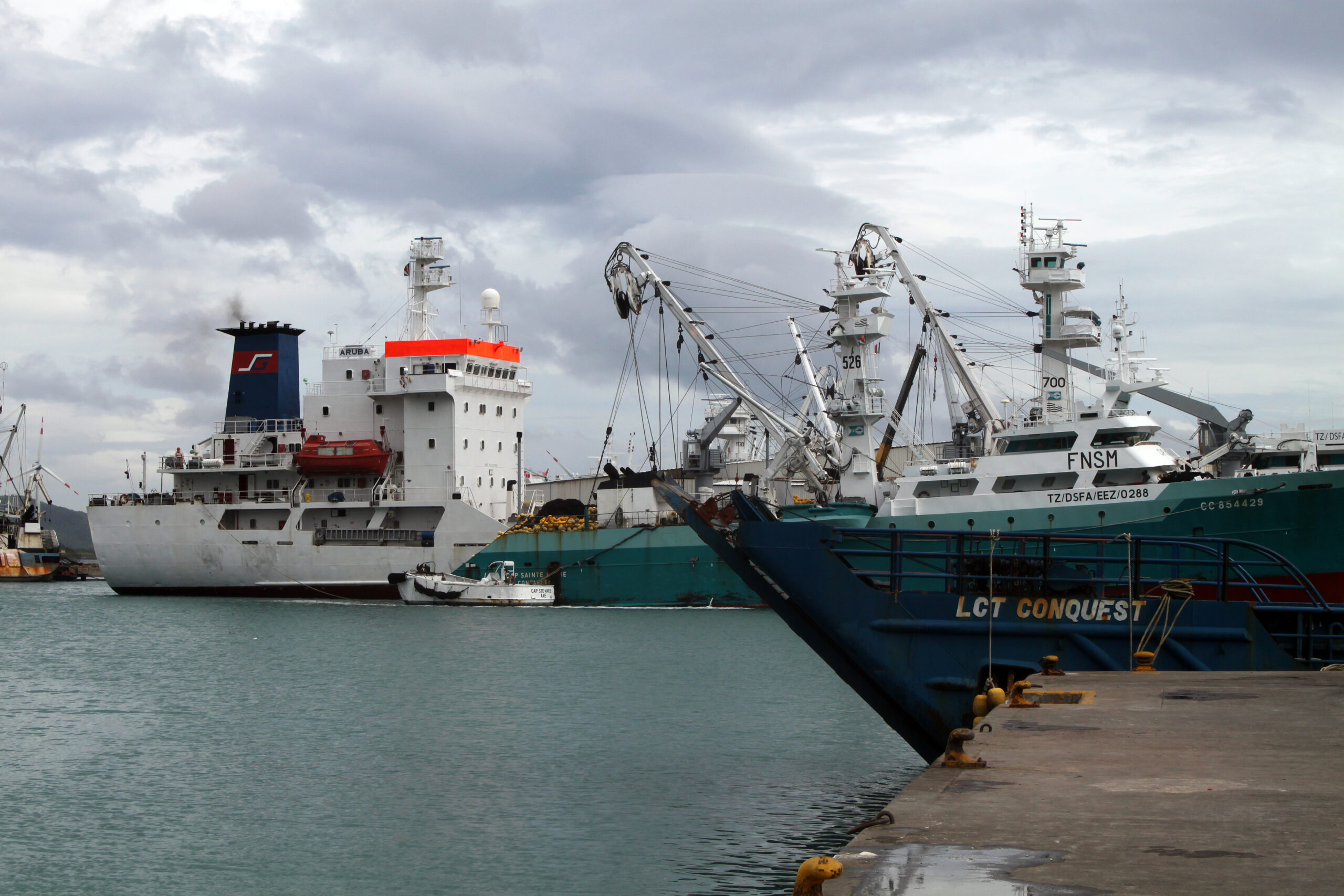
Seychelles is repeatedly described as a major tuna exporter, with fisheries forming a core pillar of the economy.
World Bank and IMF material indicate that fisheries, alongside tourism, are among the principal sectors supporting growth and foreign exchange earnings.
Blue-bond and swap proceeds were directed partly into sustainable fisheries, marine conservation and blue-economy financing through SeyCCAT.
A related mechanism, the Blue Investment Fund, also channelled concessional financing into ocean-linked projects.
Fisheries earnings provide a partial hedge when tourism receipts fall, but the sector operates within the same marine ecosystems threatened by climate change.
The dependence on tuna exports reinforces why the blue bond and debt-for-nature swap were structured around ocean protection.
Climate Vulnerability Threatens Coastal Infrastructure and Marine Ecosystems
The World Bank states that climate change poses long-term sustainability risks for Seychelles.
The IMF and World Bank both link Seychelles’ vulnerability to its exposure to coastal and marine climate risks.
Tourism and fisheries depend heavily on healthy coral reefs, stable sea temperatures and intact coastal infrastructure.
The debt-for-nature swap and blue bond are tied to marine protection and climate adaptation because the economy is highly exposed to ocean and coastal changes.
Small island geography leaves little room to diversify away from shoreline assets and imported supply chains.
Climate adaptation finance has therefore become part of Seychelles’ broader debt management and environmental strategy.
Critics Question the Real Impact of the Landmark Finance Deals
A 2025 academic analysis argues the debt-for-nature swap did not reduce Seychelles’ sovereign debt.
The same analysis found it did not create additional ocean protections beyond existing commitments.
It did, however, help finance planning and conservation implementation.
Another 2025 to 2026 academic source says the swap and blue bond support marine spatial planning, marine protected areas and fisheries-related ecological restructuring.
The debate matters because Seychelles is held up as a model for other climate-vulnerable countries seeking debt-linked conservation finance.
Investors and donor governments are watching whether the Seychelles model can scale without improving the headline debt ratio.
Africa’s Richest Per-Capita Economy Faces a Sobering 2026
A 2026 World Factbook-style source gives Seychelles’ GDP per capita as about US$19,615 for 2025 on World Bank figures, against an IMF estimate of US$18,479.
The World Bank’s 2026 country page says Seychelles has Africa’s highest GNI per capita but does not provide a single comparable per-capita dollar figure in the captured text.
The per-capita wealth claim should therefore be attributed carefully depending on whether GDP per capita or GNI per capita is used.
Even as Africa’s richest economy by headline measures, Seychelles enters 2026 with slowing tourism, rising debt and import dependence.
President Herminie inherits both the prestige of record income and the structural exposure behind it.
The Big Picture
Latest developments
- First Cargo for Dangote Refinery Docks at Kenya’s Lamu Port — 28 September 2026
- Ethiopia Faces Higher Flood Risk as a Very Strong El Niño Peaks in 2026 — 27 September 2026
- UAE Agrees to Lift Its Ebola Travel Ban on Uganda, Pending an Inspection — 27 September 2026
- Keinemusik Nairobi: Kenya Debut at Uhuru Gardens on 21 November — 27 September 2026
This article was produced by The Rio Times’ automated newsroom system. How we use AI · Report an error · Editorial responsibility: Matthias Camenzind, Editor-in-Chief