South Africa Fuel Up US$0.20 as Shell Lifts US Imports

SOUTH AFRICA · ENERGY
Key Facts
- —The country South Africa now imports more than 60% of its finished fuel, after refineries such as SAPREF in Durban closed.
- —What happened Shell has stepped up South Africa fuel imports from the United States and Europe, the news site News24 reported on Sunday 11 October.
- —Who spoke Aluwani Museisi, who chairs Shell’s South African fuel business, said the country’s problem is its unpredictable legal framework, News24 reported.
- —The pump On Wednesday 7 October, 95-octane petrol rose R3.33 (about US$0.20) a litre, after Brent crude averaged US$101 a barrel.
- —The US link US exports of crude and fuel to South Africa hit a 2026 high of 3.03 million barrels in May, then 328,000 in July.
- —Prediction markets Polymarket bettors put 66.5% on inflation above 5.0% in its South Africa Annual Inflation 2026 market (12 October, 1:53 a.m. ET).
- —Still open Shell has released no figures on the volumes or cost of its extra fuel cargoes from the United States and Europe.
Shell has ramped up South Africa fuel imports from the United States and Europe, News24 reported on Sunday 11 October, amid a fuel crunch. Motorists have paid about US$0.20 more a litre for petrol since Wednesday 7 October.
For US readers, the shift points to more American fuel cargoes bound for a country hit hard by the oil price jump. Shell plc, the London-based energy group whose shares also trade in New York, says South Africa must find oil and gas of its own.
What Shell Said About South Africa’s Fuel Supply
News24 reported that Shell has ramped up fuel imports from the United States and Europe, while arguing that local exploration still matters. The report, by journalist Na’ilah Ebrahim, appeared on Sunday 11 October.
Aluwani Museisi chairs Shell’s downstream business in South Africa, which sells fuel at service stations and to businesses, airlines and ships. Museisi said South Africa’s problem is its unpredictable legal framework, according to News24.
Museisi warned that the cost of doing nothing about South Africa fuel security will be felt at the pump. Fuel security means a country can still get enough petrol and diesel when world supply is disrupted.
Shell is betting on offshore oil and gas exploration, not petrol stations, for its future in South Africa, News24 wrote. Every licence it holds faces a court challenge, the site added.
In August, South Africa’s Constitutional Court set aside Shell’s exploration right off the Wild Coast, a stretch of the Eastern Cape shoreline. The ruling ended a court fight that began in 2021.
Why South Africa Buys So Much Fuel Abroad
South Africa lost much of its own refining capacity in recent years. The SAPREF refinery in Durban, then owned 50:50 by Shell and the British oil company BP, closed after floods damaged it in April 2022.
SAPREF held 35% of the country’s refining capacity and could process 180,000 barrels of crude a day, Business Report wrote in May 2024. The state-owned Central Energy Fund bought the site in 2024 and set out a plan in September to restore refining there.
Imports now supply more than 60% of South Africa’s finished fuel, Engineering News reported on 9 September. That leaves South Africa fuel prices tied closely to world markets.
In June, Mineral and Petroleum Resources Minister Gwede Mantashe said a draft policy proposes state reserves equal to 60 days of net imports. Mantashe is a senior figure in the African National Congress, the largest party in the governing coalition.
South Africa held about 8 million barrels of strategic crude in March, Business Report said. The country burns 60 to 70 million litres of petrol and diesel a day, the paper added.
Live Market IntelligenceCommodities — Live Market Board
Rio Times · Live Market Intelligence
Commodities — Live Market Board
-0.03%
| Instrument | Last | Change | YoY | Prev. | High | Low | Volume |
|---|---|---|---|---|---|---|---|
| GOLD | 4,461 | +1.78% | +33.20% | 4,383 | 4,503 | 4,421 | 139,824 |
| SILVER | 65.59 | +1.26% | +73.05% | 64.77 | 66.98 | 64.81 | 46,406 |
| BRENT | 88.88 | -0.03% | +34.42% | 88.91 | 90.07 | 88.12 | 29,713 |
| WTI | 83.11 | -0.11% | +31.57% | 83.20 | 84.35 | 82.40 | 166,848 |
| COPPER | 6.61 | +0.03% | +46.70% | 6.61 | 6.71 | 6.61 | 39,543 |
| LITHIUM | 75.20 | +1.47% | +62.95% | 74.11 | 75.80 | 75.08 | 89,275 |
| IRON ORE | 161.91 | — | +58.10% | 161.91 | 161.91 | 1 | |
| SOY | 1,184 | +3.20% | +17.05% | 1,148 | 1,199 | 1,168 | 163,179 |
| CORN | 480.50 | +10.02% | +29.34% | 436.75 | 480.75 | 459.50 | 341,248 |
| WHEAT | 655.00 | +3.93% | +29.70% | 630.25 | 657.75 | 631.50 | 128,793 |
| COFFEE | 317.25 | -5.51% | +0.67% | 335.75 | 321.20 | 313.55 | 21,747 |
| SUGAR | 16.43 | -1.79% | -3.01% | 16.73 | 17.11 | 16.22 | 171,992 |
| COCOA | 5,719 | +3.18% | -34.96% | 5,543 | 5,779 | 5,574 | 26,773 |
| ORANGE JUICE | 138.55 | -0.47% | -45.38% | 139.20 | 141.05 | 137.50 | 703 |
| COTTON | 85.03 | +2.33% | +26.78% | 83.09 | 82.90 | 81.96 | 16,546 |
| BEEF | 223.60 | -3.93% | -5.18% | 232.75 | 226.40 | 223.00 | 16,126 |
| CATTLE | 339.10 | -3.16% | -1.82% | 350.17 | 345.50 | 338.60 | 10,164 |
| USD/BRL | 5.16 | +0.01% | -5.13% | 5.16 | 5.18 | 5.14 | — |
What the 7 October Price Rise Changed
The Department of Mineral and Petroleum Resources, which sets South Africa fuel prices each month, raised 95-octane petrol by R3.33 (about US$0.20) a litre. The rise took effect on Wednesday 7 October (dollar values at about 16.51 rand to the US dollar on 12 October 2026).
Diesel with 0.005% sulphur rose by R3.24 (about US$0.20) a litre, the ministry said. Wholesale illuminating paraffin, used for cooking and heating in many low-income homes, rose by R3.58 (about US$0.22).
The department blamed Brent crude, which averaged US$101 a barrel against US$87.89 in the previous period. It cited US-Iran tensions and uncertainty over oil flows through the Strait of Hormuz.
The rand barely moved, at about 16.21 to the US dollar, so the October fuel price increase came from world oil and fuel prices. A balancing account called the slate, which smooths prices, showed a deficit of R10.45 billion (about US$633 million) at the end of August.
Shell Is Selling Its Petrol Stations
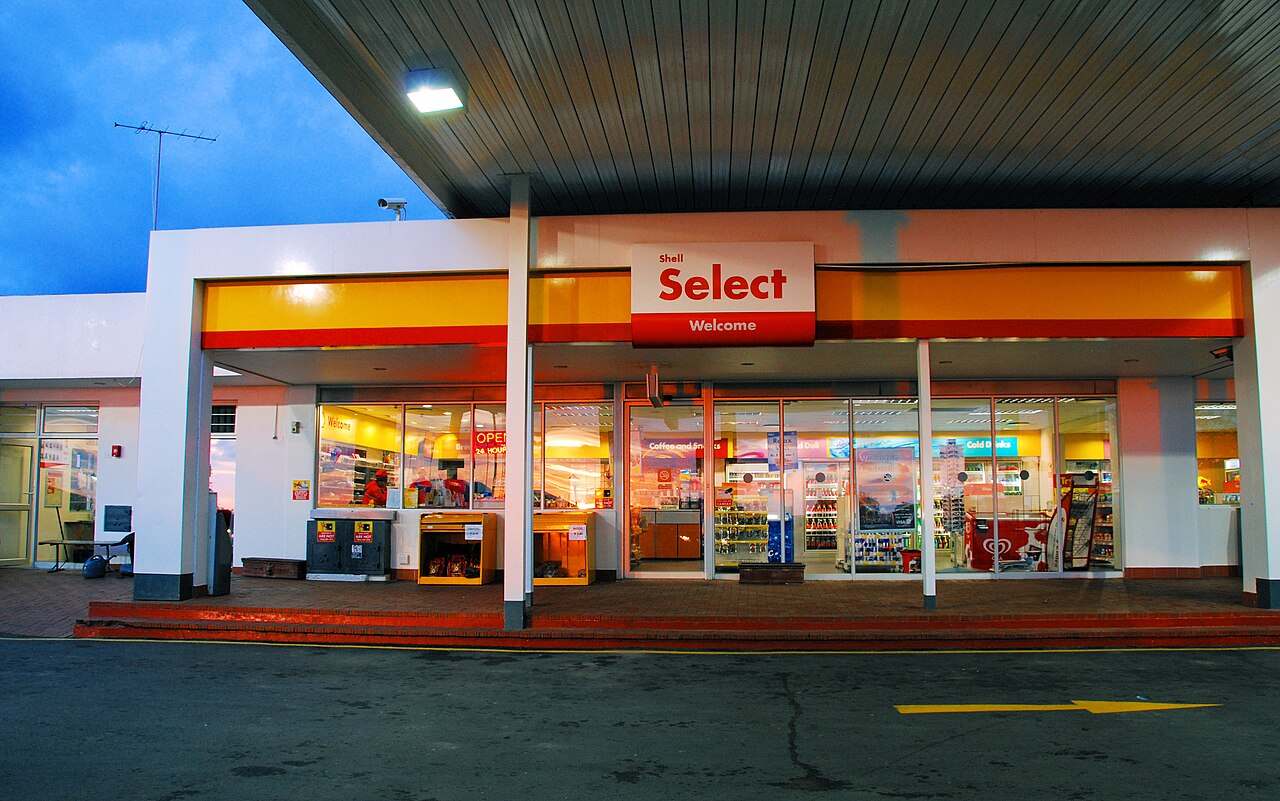
Shell is selling its fuel retail business in South Africa. On 7 July, it agreed to sell its downstream arm to ADNOC Distribution in a deal BusinessDay valued at R16.3 billion (about US$1 billion).
ADNOC Distribution is a fuel retailer controlled by the Abu Dhabi National Oil Company, the emirate’s state oil group. Shell’s network has about 580 company- and dealer-owned stations and sold about 3.5 billion litres of fuel in 2025, BusinessDay reported on 8 July.
The deal is expected to close in 2027, subject to regulatory approval. Under the sale to ADNOC Distribution, the stations will keep the Shell brand under licence.
Shell keeps its upstream arm, which searches for oil and gas. “For upstream, I think the regulatory uncertainty is what limits our ability to invest as much as we would like,” Museisi told BusinessDay in July.
What It Means for US Readers
The US Energy Information Administration (EIA), the federal energy statistics agency, tracks exports by destination. Its data show 10.99 million barrels of US crude and petroleum products went to South Africa from January to July 2026.
That is about 2% more than the 10.76 million barrels shipped in the same months of 2025. Monthly flows hit this year’s high of 3.03 million barrels in May, then fell to 328,000 barrels in July.
The EIA does not break South Africa fuel shipments down by company. For holders of Shell plc’s New York-listed shares, the bigger South African bet lies offshore, in licences now challenged in court.
For American visitors and companies, higher South Africa fuel prices raise the cost of road travel and deliveries across the country.
What Prediction Markets Say
Fuel prices feed into South Africa’s consumer inflation through transport costs and the price of goods moved by road. On Polymarket, bettors put 66.5% on the top bracket, above 5.0%, at 1:53 a.m. ET on 12 October.
That bracket, in the South Africa Annual Inflation 2026 market, gained 4.0 points in 24 hours. The 4.7% to 5.0% bracket rose 7.1 points to 18.7%, and the market has drawn about US$90,000 in bets.
Why we show this: prediction markets turn real-money bets into a live probability that moves within minutes of the news, which is why investors, campaigns and newsrooms in the United States now follow them closely. We show them next to polls and official results, never instead of them.
What Is Not Known
Shell has released no figures on the volumes or start date of its extra South Africa fuel cargoes from the United States and Europe.
The July fall in US shipments predates the News24 report. The EIA publishes US export figures for August on 30 October, which will show whether shipments recovered.
It is unclear when courts will rule on the challenges to Shell’s remaining exploration licences. The November pump price adjustment will depend on oil prices and the rand through October.
More: South Africa news in English, every day from The Rio Times.
Frequently Asked Questions
Why is Shell importing more fuel into South Africa?
News24 reported on Sunday 11 October that Shell has ramped up South Africa fuel imports from the United States and Europe. Imports supply more than 60% of the country’s finished fuel, and world prices jumped amid US-Iran tensions.
How much did South Africa fuel prices rise in October?
From Wednesday 7 October, 95-octane petrol rose by R3.33 (about US$0.20) a litre and 0.005% diesel by R3.24 (about US$0.20). The Department of Mineral and Petroleum Resources blamed Brent crude averaging US$101 a barrel.
Is Shell leaving South Africa?
Shell is selling its downstream fuel business, with about 580 stations, to ADNOC Distribution for about US$1 billion, with closing expected in 2027. It keeps its exploration business, and the stations will keep the Shell brand.
How much fuel does the US send to South Africa?
US Energy Information Administration data show 10.99 million barrels of US crude and petroleum products went to South Africa from January to July 2026. Shipments hit this year’s high of 3.03 million barrels in May and fell to 328,000 in July.
Why does this matter to US investors?
More Shell fuel cargoes from the United States mean more business for American fuel exporters. For Shell plc shareholders, the company’s South African future rests on offshore exploration licences that face court challenges.
Sources: News24, 11 October 2026; Shell South Africa, media release on the ADNOC Distribution sale, 7 July 2026; Department of Mineral and Petroleum Resources, fuel price adjustment (gov.za), 5 October 2026; US Energy Information Administration, US exports to South Africa, 30 September 2026; BusinessDay, 8 July 2026; Business Report, 11 June 2026; Business Report (IOL), 28 May 2024; Engineering News, 9 September 2026.
This article was produced by The Rio Times’ automated newsroom system. How we use AI · Report an error · Editorial responsibility: Matthias Camenzind, Editor-in-Chief