BEAC Warns CEMAC Oil Reliance Weakens Reserves to 4.12 Months of Imports
Economy · Central Africa
—The stakes. Six oil-dependent economies in Central Africa are watching their shared currency buffer shrink as crude prices stay soft and reform pressure mounts.
—The date. CEMAC foreign reserves stood at roughly 6,203 billion CFA francs on 31 October 2025, on a Cameroonian finance ministry report. In its July 2026 programming the BEAC used import cover of 4.12 months as the 2025 comparator.
—The problem. Hydrocarbons still provide about 87 percent of CEMAC export revenues, leaving the bloc exposed to every oil price swing.
—The response. BEAC projects a modest reserve recovery to 4.72 months of import cover by end-2026, driven by firmer crude prices rather than structural change.
—The investor signal. Reform talk is not yet diversification reality in Africa’s least integrated region, making short-term oil cycles the dominant market driver.
The Central African Economic and Monetary Community is running out of easy answers. Its six member states still depend on oil for nearly nine of every ten export dollars, while foreign reserves keep drifting lower and the IMF keeps pushing for change.
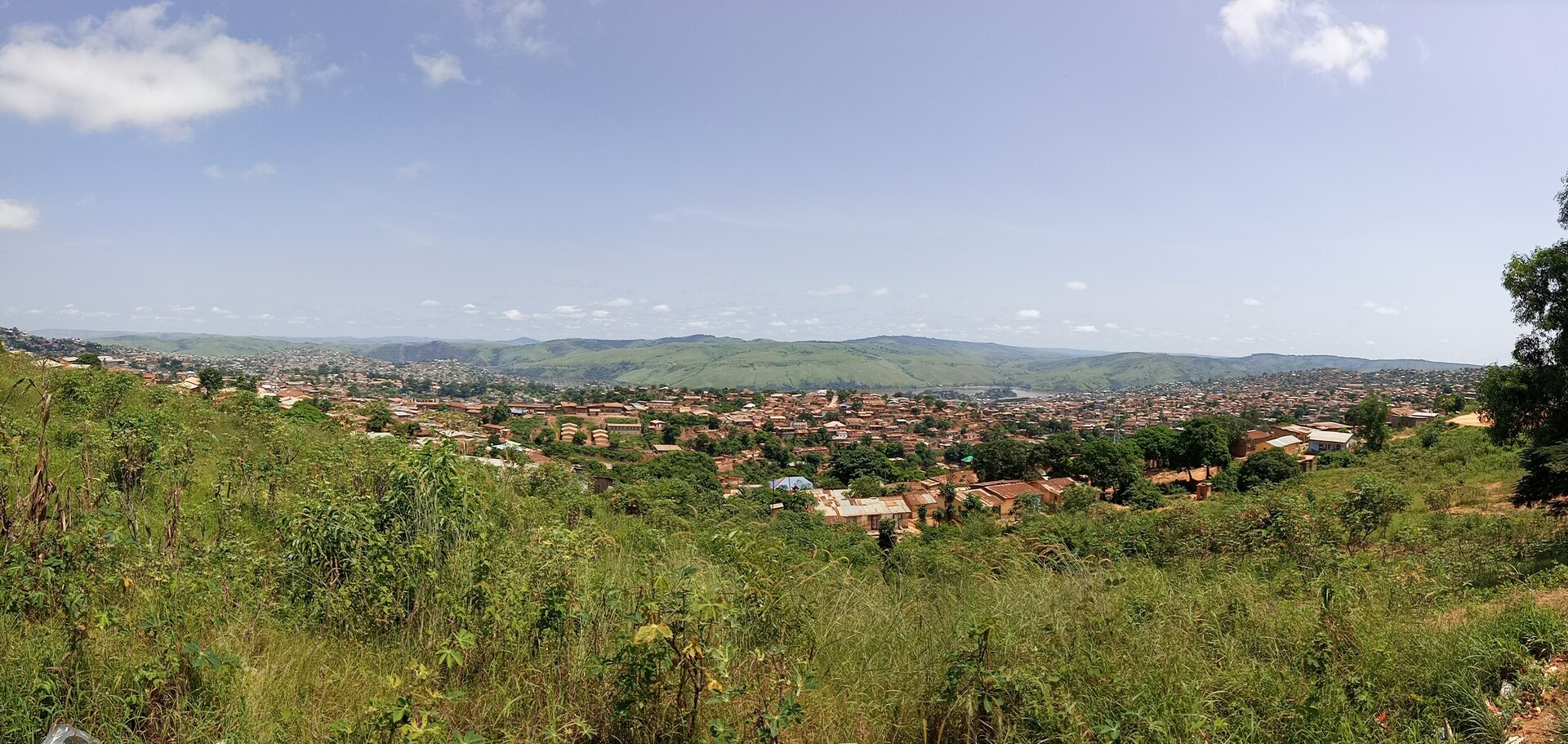
CEMAC’s Six Economies and the CFA Franc Anchor
The Central African Economic and Monetary Community, known as CEMAC, unites Cameroon, Central African Republic, Chad, Republic of Congo, Gabon and Equatorial Guinea.
They share a single currency, the Central African CFA franc, issued by the Bank of Central African States, commonly called BEAC.
The CFA franc is pegged to the euro under a monetary cooperation arrangement with France, a structure that ties CEMAC monetary policy to European conditions.
That peg offers nominal stability but limits the region’s ability to absorb oil shocks through exchange rate adjustment.
Investors often view this as a double-edged sword: predictable convertibility, but limited domestic monetary flexibility.
The Oil-Addiction Problem in Export and Fiscal Data
CEMAC exports remain heavily dependent on extractives, which the World Bank put at more than 75 percent of the bloc’s exports in 2023.
This means oil and gas still generate the overwhelming majority of foreign exchange earnings across the bloc.
The weight of oil in public revenues differs sharply across member states, and the World Bank reports it by country in percent of GDP rather than as a bloc-wide share.
Gabon and Congo remain far more fiscally tied to crude than Cameroon or Central African Republic.
A lower fiscal share does not remove the external account vulnerability, since export dollars still hinge on commodity prices.
BEAC Reserves Slide Despite Occasional Rebound Talk
CEMAC foreign exchange reserves were 6,203 billion CFA francs, about US$10.9 billion at the euro rate of 31 October 2025, on that date.
That was down 146 billion CFA francs year on year and down 1,133 billion CFA francs compared to December 2024.
World Bank regional data show import cover falling from 5.2 months in 2022 to 4.8 months in 2023 and 4.2 months in 2024.
The external coverage ratio for the currency was around 67 percent at the end of 2025, against 73.58 percent in June of that year.
The BEAC revised that path upward in July 2026. It now puts reserves at 7,962.3 billion CFA francs at end-2026, covering 4.72 months of imports, then 8,649.1 billion in 2027 and 9,555 billion in 2028.
A Revised 2026 Outlook Built on Oil Prices
In July 2026, BEAC raised its end-2026 reserve forecast to 4.72 months of import cover, up from 4.12 months in 2025.
The central bank attributed the improvement mainly to Eurobond issues by Cameroon and Congo, alongside bilateral and commercial borrowing, petroleum revenue repatriation and disbursements from institutional partners. Crude averaged US$67 a barrel in 2025, down 14.9 percent on the year.
The BEAC also expects the external coverage ratio to rise to 70.7 percent in 2026 from 66.9 percent, and to hold near 75 percent from 2027 to 2029.
These projections still leave the union below the comfort zone for a commodity-dependent currency zone.
The Eurobond issues are the basis of the revised forecast rather than an upside case.
IMF Reform Pressure and the Limits of Regional Discipline
The International Monetary Fund consistently describes current reserve coverage around four months of imports as below adequate for CEMAC.
IMF staff reports point to vulnerability from oil price volatility and weak regional policy coordination.
The fund has urged fiscal consolidation, broader non-oil revenue mobilisation and tighter liquidity management.
BEAC has used reserve requirements and open market operations, but structural adjustment remains slow.
For investors, IMF pressure signals continued oversight but also highlights how far the bloc remains from durable external buffers.
Gabon’s Post-Coup Course and Oil Sector Risk
Gabon’s political transition after its 2023 coup has not removed the economy’s dependence on crude exports.
The country’s fiscal position remains sensitive to production declines at mature oil fields.
Reform promises have focused on governance and revenue transparency, but implementation has been gradual.
Investors monitoring Gabon see a state with oil wealth, political transition risk and limited non-oil fiscal replacement.
The wider CEMAC picture means Gabon’s oil revenue swings feed directly into regional reserve movements.
Congo’s Post-Election Path and Fiscal Pressures
Republic of Congo continues to rely on oil for government revenue and export earnings after its recent electoral cycle.
Debt service and arrears remain persistent concerns for external creditors and development lenders.
IMF engagement has focused on clearing arrears, improving budget execution and managing state-owned oil company finances.
Congo’s ability to fund imports depends on crude receipts that remain vulnerable to global price changes.
This keeps Congo among the most oil-exposed members of an already oil-exposed bloc.
Diversification Talk Versus On-the-Ground Reality
CEMAC documents mention diversification in agriculture, forestry, mining and services, but results remain limited.
The World Bank reports intra-regional trade at 5.1 percent of CEMAC’s total trade over 2019 to 2021, a low share by any regional comparison.
Non-oil growth exists in Cameroon and some urban service sectors, yet it has not displaced oil as the export engine.
The trade balance stayed broadly stable between 2023 and 2024 at around 8.6 to 8.9 percent of GDP, according to World Bank analysis.
But that stability still depends on global oil prices, not a diversified export base.
What Weak Integration Means for Investors
Low intra-CEMAC trade means limited regional demand to cushion external shocks.
Most member states export commodities to Europe, Asia and North America rather than trading with each other.
This pattern concentrates risk and leaves the bloc exposed to external demand cycles and oil market swings.
For portfolio investors, CEMAC offers high yield opportunities in select sovereign Eurobonds, but currency and reserve risk remain part of the package.
Direct investors face infrastructure gaps, regulatory fragmentation and slow movement on regional integration commitments.
Currency Risk, Import Cover and the Euro Peg
The euro peg gives the CFA franc an anchor but also means CEMAC cannot devalue to restore competitiveness during oil slumps.
The external coverage ratio, a key measure of BEAC’s ability to defend the peg, fell to about 67 percent in late 2025.
BEAC projects an average coverage ratio of 72.4 percent over 2026 to 2028, still below full coverage.
A prolonged oil price decline would test the peg and could force tighter monetary conditions.
Investors holding CEMAC assets should track import cover and the coverage ratio as leading indicators of currency sustainability.
The 2026-2028 Trajectory and the Oil-Price Bet
The BEAC expects reserves of 9,555 billion CFA francs by 2028 and 10,773.2 billion by 2029.
The projected 2028 import cover of 4.19 months would still be below the 5.2 months recorded in 2022.
This path leaves little room for external shocks, political disruptions or faster-than-expected crude decline.
Hydrocarbons remain the primary source of foreign exchange for the bloc, according to Cameroon’s Ministry of Finance.
For investors in Africa’s least integrated region, CEMAC’s oil addiction is the defining macro risk of 2026 and beyond.
Connected Coverage
Equatorial Guinea Is Running Out of Gas and Looking Next Door
The Big Picture
Latest developments
- Africa Intelligence Brief — Thursday, October 1, 2026 — 1 October 2026
- Doing Business in the Republic of Congo — 1 October 2026
- São Tomé Opposition Wins Vote but Needs a Partner — 1 October 2026
- Africa Intelligence Brief — Wednesday, September 30, 2026 — 30 September 2026
This article was produced by The Rio Times’ automated newsroom system. How we use AI · Report an error · Editorial responsibility: Matthias Camenzind, Editor-in-Chief