Social Abyss Divides Blacks and Whites in Brazil from Childbirth
RIO DE JANEIRO, BRAZIL – One hundred and thirty-one years have passed since the abolition of slavery, but Brazil is still far from being a democracy in racial terms.
The scars of exploitation that lasted more than three centuries and the lack of restorative public policies in adequate numbers, are reflected in the low rates of well-being of the majority of the population comprising blacks and mulattos (a share that corresponds to 55.8 percent of Brazilians), when compared to the average population and to whites.

And yet, the country that in recent decades has seen the debate on racism and its implications erupt like never before, now coexists with the far-right in power.
Members of President Jair Bolsonaro’s party use the rhetoric against the reparation of minorities, and of blacks in particular, and the rejection of statistics and the effects of prejudice as a loud political flag.
On Tuesday, the eve of Black Awareness Day, PSL deputy Delegado Tadeu decided to tear up a poster on exhibition in the Chamber, depicting a black man wounded by a bullet shot by a police officer.
Tadeu said the illustration offended police officers – the victims of the Brazilian police are men (99 percent), blacks (75 percent), and youths (78 percent), according to the Brazilian Annual Report on Public Safety.
While the opposition called for Tadeu to be taken before the Ethics Council of the Chamber for racism, his party colleague, Daniel Silveira, climbed up to the podium to say that more blacks died at the hands of officers because they are “the majority in drug trafficking”.
“Do not blame the deaths on the Rio de Janeiro State Police because a little black criminal must be forgiven” he added.
Below are some of the statistics to deconstruct the notion that there are no specific costs for being black in Brazil.
From the first hours of life to violent death
The majority of Brazil’s population today (55.8 percent) is made up of blacks and mulattos, but it is precisely this group that has the highest rate of illiteracy, the lowest wages and suffers the most from violence and unemployment.
Inequality in relation to the white population starts from birth, since the mortality rate among black and brown Brazilian young children is much higher than that of the white population of the same age.
In 2017, 50.7 percent of children under the age of five who died from avoidable causes were mulatto and black, while 39.9 percent were white, according to data from the Ministry of Health.
The educational disparity in the country is also affected by color. Despite the fact that a number of educational indicators for the black or mulatto population have gradually improved in recent years, reflecting affirmative action policies such as the quota system, this population’s disadvantage in relation to the white population remains evident.
Although the number of illiterates fell between 2016 and 2018, the illiteracy rate of blacks and mulattos was 9.1 percent in Brazil, more than twice as high as that of whites (3.9 percent), according to data from the IBGE.
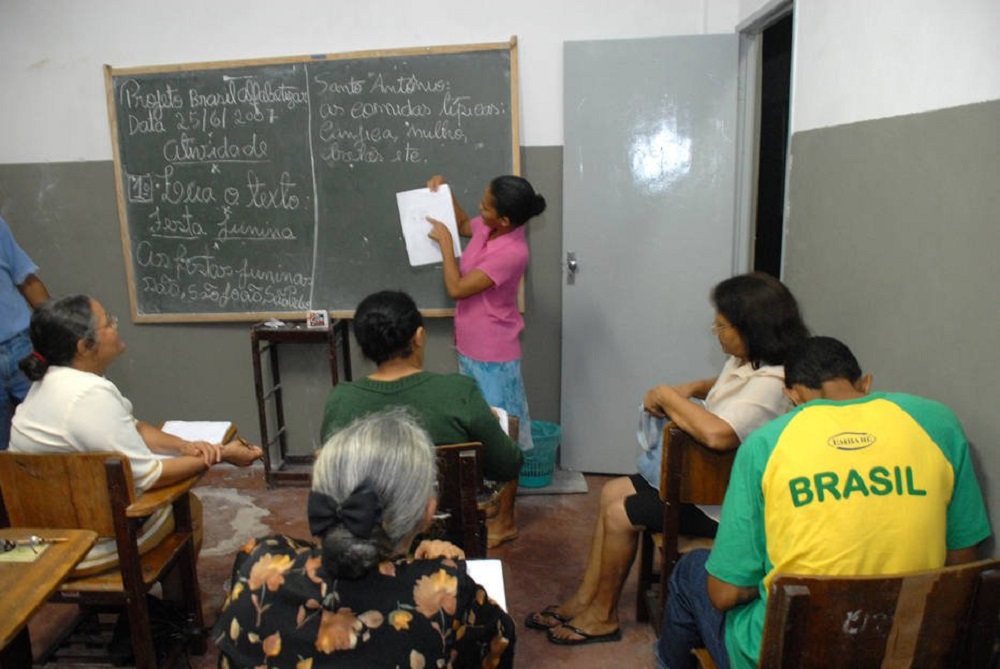
Completing high school is still a distant reality for many Brazilians, but the challenge is greater for mulattos and blacks. The high school graduation rate (for people aged 20-22) in this group was 61.8 percent , while that of the white population was 76.8 percent.
School dropouts also reflect the disparity between the two groups. The proportion of blacks and mulattos aged 18-24 who were out of school fell slightly from 30.8 to 28.8 percent, but the proportion of white people in the same situation in 2018 was much lower, at 17.4 percent.
Last week, the IBGE reported that for the first time, blacks or mulattos accounted for 50.3 percent of higher education students in the public university system, but since they make up a majority of the population, they remain under-represented.
The institute’s data further showed that, among blacks and mulattos aged 18 to 24, the percentage attending higher education increased from 2016 to 2018 (50.5 percent to 55.6 percent), but was still below the percentage of whites in the same age group (78.8 percent).
Blacks and mulattos are the majority in the unemployment queue
Educational inequality is ultimately reflected in the labor market and income gap.
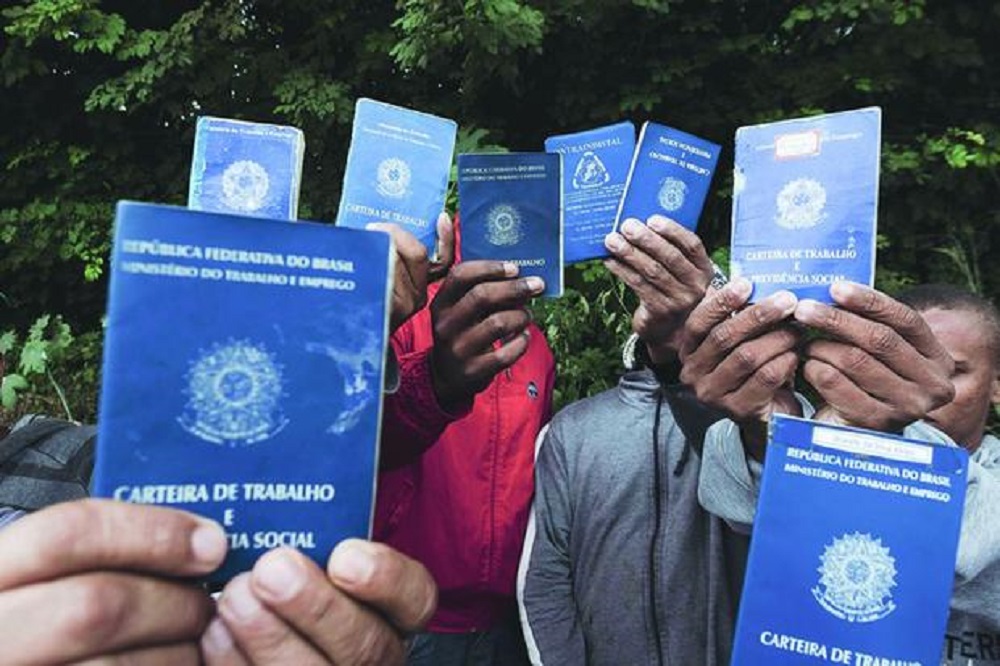
Blacks and mulattos totaled 64.2 percent of the unemployed population and 66.1 percent of the underutilized population. The average monthly income of employed whites was R$2,796 (US$699) last year, 73.9 percent higher than that of blacks and mulattos, who, on average, earned R$1,608.
In the case of black women, the inequality abyss is even wider. Last year, they earned on average less than half the wages of white men (44.4 percent), who top the pay scale in the country.
Not even when the level of education is the same among blacks, mulattos and whites, does the gap close. Whites with a college degree earned 45 percent more per hour than blacks or mulattos with the same level of education.
Inequality is also prevalent when it comes to the distribution of managerial positions, which require greater qualification: only 29.9 percent of them were held by blacks or mulattos last year.
While two-thirds of those in the ten percent population group with the lowest income are blacks, not even one-third are among the ten percent group with the highest income.
According to the IBGE survey, the proportion of blacks or mulattos with income below the poverty levels proposed by the World Bank was more than double the proportion of whites.
Violence affects most blacks and mulattos
The racial difference also remains within the bleak statistics on violence in Brazil. In all age groups, the homicide rate of blacks or mulattos exceeded that of whites. In 2017, blacks and mulattos were 2.7 times more likely to be victims of intentional homicide than whites.
The historical series also shows that, while the average rate remained stable for whites between 2012 and 2017, it increased for blacks and mulattos during the same period, from 37.2 to 43.4 homicides per 100,000 inhabitants in this population group.
The differences are even more pronounced among youths. The homicide rate is as high as 98.5 homicides per 100,000 inhabitants among blacks and mulattos between the ages of 15 and 29. Among young whites in the same age group, the homicide rate is 34 per 100,000 inhabitants.
The numbers also show that blacks and mulattos in the 9th grade of elementary school suffered more violent experiences than whites.
Attending schools located in high-risk areas for violence, having been attacked by an adult in the family, being involved in fights with the use of a firearm or a bladed weapon – all these variables were more intensely present in the daily life of blacks or mulattos.
Source: El Pais
More: Brazil news in English, every day from The Rio Times.
This article was produced by The Rio Times’ automated newsroom system. How we use AI · Report an error · Editorial responsibility: Matthias Camenzind, Editor-in-Chief