Julius Maada Bio Battles Weak Leone and Kush Crisis as Iron Ore Exports Top 830 Million

Economy · Sierra Leone
—The stakes. Sierra Leone economy growth is stable but fragile, with mining gains offset by persistent inflation, a weak leone and rising social unrest.
—The date. The IMF and World Bank both project real GDP will slow to about 4.0 percent in 2026 after growth of 5.0 percent in 2025 on IMF figures and 4.5 percent on the World Bank’s.
—The mineral engine. Iron ore made up about 69 percent of the US$1.3 billion mineral export haul in 2025, up from US$784.5 million and 70.3 percent of receipts in 2024, on Ministry of Mines figures.
—The political risk. Julius Maada Bio holds a contested second term as rivals and voters already position for the 2028 presidential race.
—The debt pressure. Interest payments consumed 42 percent of government revenues in 2025, limiting fiscal space as the synthetic drug crisis escalates.
Sierra Leone enters late 2026 with a familiar tension: mining revenues are rising, yet the public finances that depend on them remain acutely strained. The government is trying to convert iron ore and rutile windfalls into stability while inflation, debt service and a spiralling kush crisis chip away at confidence.
Growth holds but the Middle East war dulls the outlook
The IMF describes Sierra Leone’s economic outlook as stable, but the horizon is not uniform. Real GDP improved from 4.4 percent in 2024 to 5.0 percent in 2025, driven by agriculture, manufacturing and services.
For 2026, both the IMF and the World Bank project growth to slow to 4.0 percent, partly because of oil price shocks linked to the war in the Middle East. Higher energy and fertiliser costs are feeding into production and transport expenses.
The African Development Bank has a slightly different view, recording 4.6 percent growth in 2025 and projecting 4.2 percent in 2026. Most forecasters agree that mining and the Feed Salone agricultural programme are the main pillars.
Medium-term projections centre on a recovery to around 4.6 percent as the external shocks subside and mining expands. Yet rising food insecurity and social tensions remain a constraint on that path.
Iron ore and rutile still set the export pace
Minerals are the core of Sierra Leone’s external position. Total mineral exports accounted for 76.8 percent of total export receipts in 2024, on Ministry of Finance figures, a different series from the Ministry of Mines numbers above.
Iron ore is by far the biggest single earner. Total mineral exports reached US$1.3 billion in 2025, up 16 percent on the US$1.12 billion recorded in 2024, on Ministry of Mines figures.
Rutile, a titanium ore used in paint pigments and welding rod coatings, is structurally important even when annual volumes soften.
The export base remains narrow and unprocessed. According to the AfDB, most exports are commodities such as iron ore, diamonds, rutile and bauxite rather than finished goods.
Live Market IntelligenceCommodities — Live Market Board
Rio Times · Live Market Intelligence
Commodities — Live Market Board
-0.03%
| Instrument | Last | Change | YoY | Prev. | High | Low | Volume |
|---|---|---|---|---|---|---|---|
| GOLD | 4,461 | +1.78% | +33.20% | 4,383 | 4,503 | 4,421 | 139,824 |
| SILVER | 65.59 | +1.26% | +73.05% | 64.77 | 66.98 | 64.81 | 46,406 |
| BRENT | 88.88 | -0.03% | +34.42% | 88.91 | 90.07 | 88.12 | 29,713 |
| WTI | 83.11 | -0.11% | +31.57% | 83.20 | 84.35 | 82.40 | 166,848 |
| COPPER | 6.61 | +0.03% | +46.70% | 6.61 | 6.71 | 6.61 | 39,543 |
| LITHIUM | 75.20 | +1.47% | +62.95% | 74.11 | 75.80 | 75.08 | 89,275 |
| IRON ORE | 161.91 | — | +58.10% | 161.91 | 161.91 | 1 | |
| SOY | 1,184 | +3.20% | +17.05% | 1,148 | 1,199 | 1,168 | 163,179 |
| CORN | 480.50 | +10.02% | +29.34% | 436.75 | 480.75 | 459.50 | 341,248 |
| WHEAT | 655.00 | +3.93% | +29.70% | 630.25 | 657.75 | 631.50 | 128,793 |
| COFFEE | 317.25 | -5.51% | +0.67% | 335.75 | 321.20 | 313.55 | 21,747 |
| SUGAR | 16.43 | -1.79% | -3.01% | 16.73 | 17.11 | 16.22 | 171,992 |
| COCOA | 5,719 | +3.18% | -34.96% | 5,543 | 5,779 | 5,574 | 26,773 |
| ORANGE JUICE | 138.55 | -0.47% | -45.38% | 139.20 | 141.05 | 137.50 | 703 |
| COTTON | 85.03 | +2.33% | +26.78% | 83.09 | 82.90 | 81.96 | 16,546 |
| BEEF | 223.60 | -3.93% | -5.18% | 232.75 | 226.40 | 223.00 | 16,126 |
| CATTLE | 339.10 | -3.16% | -1.82% | 350.17 | 345.50 | 338.60 | 10,164 |
| USD/BRL | 5.16 | +0.01% | -5.13% | 5.16 | 5.18 | 5.14 | — |
Marampa, Tonkolili and a delayed mineral payoff
Coface expects iron exports to accelerate in 2026 because of capacity expansion at the Marampa and Tonkolili mines. A magnetite processing plant attached to Tonkolili is expected to increase export value.
The government has also moved to centralise resource management in a Mineral Wealth Fund. Renegotiated concession contracts and joint ventures are meant to capture more value from mining.
Royalty rates reported in April 2025 vary sharply by commodity: 3.5 percent for iron ore, 3 percent for bauxite and only 0.5 percent for rutile exports. Gold is set at 5 percent, while diamonds and other precious minerals range between 3 and 5 percent.
This structure means iron ore provides volume, but rutile provides less fiscal return per unit. A current account improvement is expected as raw material export growth outpaces import growth, especially investment related imports.
The mining slowdown that exposed weakness
The World Bank notes that in 2025 bauxite and iron ore output remained resilient despite lower global prices. However, overall mining activity softened because of reduced gold, rutile and diamond production.
The indefinite shutdown of the Koidu Limited diamond mine in May 2025 contributed to that softness. The loss of diamond output added pressure to a sector already facing price volatility.
This episode shows how dependent official growth remains on a small number of sites and commodities. A single mine closure can shift quarterly export performance and public expectations.
Agriculture under the Feed Salone initiative and stronger services partly offset weaker mining in 2025. That did not prevent external accounts from staying exposed to commodity cycles.
Persistent inflation and the weak leone
The BTI 2026 report warns of inflationary pressures, food insecurity and political instability as key uncertainties. The leone remains weak, raising the local currency cost of imported food and fuel.
Higher energy prices linked to the Middle East conflict have compounded the problem in 2026. The IMF explicitly links this external shock to the slowdown in projected growth.
For households, the combination of a weak exchange rate and high food inflation erodes purchasing power. That dynamic is politically sensitive because imported rice and fuel are major budget items for ordinary families.
For investors, currency risk and inflation risk remain central to evaluating local operations and public contracts. Even rising dollar based export revenues have not eliminated domestic financing stress.
Debt stress consumes room for public spending
Fiscal pressure is acute. Coface reports that interest payments accounted for 42 percent of government revenues in 2025, mostly on domestic debt.
That level of interest burden leaves little room for health, education and infrastructure spending, even when exports grow. The IMF’s Extended Credit Facility reviews continue to focus on fiscal discipline and revenue mobilisation.
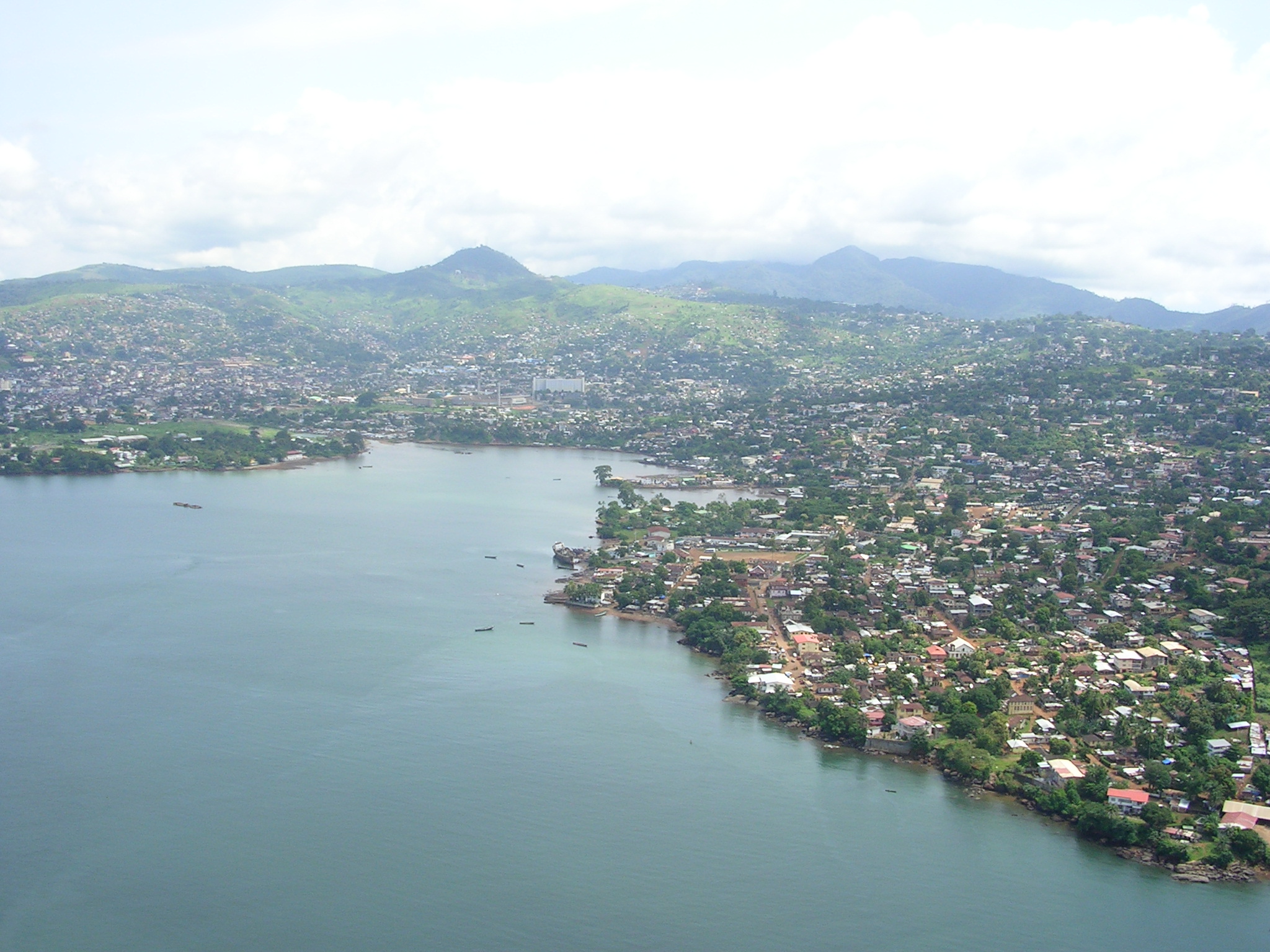
Domestic borrowing has become an expensive financing tool for Freetown, the capital and seat of government. High nominal interest rates reflect inflation expectations and a weak currency.
The government’s ability to respond to shocks is therefore narrow. Any slowdown in mining revenues or rise in energy prices quickly translates into arrears or spending cuts.
Kush crisis strains the social fabric and local budgets
The kush synthetic drug crisis has become a major social emergency. The drug, a mixture often containing psychoactive substances, is linked to deaths and public health strain among young people.
President Julius Maada Bio has described kush as an existential threat and declared a national emergency on drug abuse. The crackdown has generated public debate over treatment versus law enforcement.
The crisis is not only a health issue. It reduces labour force participation in affected communities and increases demand for emergency services.
Investors face operational risks in areas where kush related insecurity or social breakdown disrupts transport, port access or local hiring. The drug crisis adds a layer of social instability to an already fragile economic environment.
Julius Maada Bio holds a contested second term
Julius Maada Bio is serving a second term after an election that opponents disputed. That contest has not fully receded from domestic politics.
The political opposition has continued to challenge aspects of the vote and to organise early for the next cycle. Civil society groups have raised concerns over civic space and electoral transparency.
Bio’s government is trying to use mining performance and agricultural programmes to build legitimacy. But inflation, the weak leone and the kush emergency complicate that message.
The stability of the second term matters for contract continuity and investor confidence. Any escalation in political grievances could delay approvals or shift policy priorities.
Early positioning for the 2028 race
The 2028 presidential race is already shaping economic debate. The World Bank notes a temporary softening of growth is anticipated in 2028, explicitly linked to election-related uncertainties.
Rivals and potential successors are testing messages on the cost of living, mining contracts and the drug crisis. The narrowing fiscal space gives politicians fewer resources to distribute ahead of the vote.
Bio cannot run indefinitely, and succession politics inside the ruling party will intensify. Opposition figures are expected to use debt stress and the weak leone against the governing coalition.
For foreign investors, the early campaign period means contract terms may face renewed scrutiny. Mineral royalties and disagreements over the Mineral Wealth Fund are likely to become public political issues.
What the mineral dependence means for foreign investors
The headline growth outlook is moderate, but the composition of growth is narrow. Mining and agriculture dominate official projections, leaving services exposed to domestic demand.
Foreigners considering Sierra Leone must weigh high potential mineral returns against currency volatility, high debt service and social pressure. The kush crisis raises operational and reputational risks in affected districts.
The planned acceleration of iron exports in 2026 may improve the trade balance, but it will not quickly resolve the domestic debt burden. Interest costs at 42 percent of revenues leave little room for stimulus.
The medium-term question is whether the Mineral Wealth Fund can translate resource earnings into stabilisation and infrastructure. If it does not, political turnover in 2028 could bring abrupt policy changes.
Freetown’s narrow path from commodity boom to stability
The government is walking a narrow path between external opportunity and internal strain. Higher iron ore volumes from Marampa and Tonkolili could deliver more export receipts and slightly narrow the current account deficit.
Yet persistent inflation, a weak leone and expensive domestic debt limit the developmental impact. The kush crisis adds an urgent social cost that cannot be deferred.
The IMF and World Bank both see growth returning toward 4.6 percent in the medium term. That is not fast enough to transform employment or household incomes quickly.
Sierra Leone economy in 2026 is therefore one of selective strength: minerals are performing, but the state remains financially and socially stressed, with elections already looming on the horizon.
The Big Picture
Latest developments
- Nigeria Oil Firm Eyes 100,000 Barrels a Day With Qatari Islamic Financing — 29 September 2026
- Nigeria Court Orders Regulator to Keep Licensing Fuel Importers — 29 September 2026
- Ghana’s Accra Airport Picks Up Two More Passenger Service Honours — 29 September 2026
- Senegal opens Dakar airport train, cutting the trip to 55 minutes — 29 September 2026
This article was produced by The Rio Times’ automated newsroom system. How we use AI · Report an error · Editorial responsibility: Matthias Camenzind, Editor-in-Chief