Woman hikes alone through Brazil and chooses the three most challenging trails
RIO DE JANEIRO, BRAZIL – Before becoming a trend among many people during the pandemic, isolating herself in the middle of the forest was already part of Daiana Antonio da Silva’s lifestyle (@daieletrica). Years ago, she discovered the pleasure of hiking alone in nature. And, until today, she has already done several solitary hikes in wild areas in Brazil and abroad.
“Trails with large groups of people make the contact with nature not so deep. We talk a lot on the way, and many things go unnoticed,” she says.
“When I am alone, my concentration increases. I can pay more attention to the details of the landscapes around me. The connection with nature is total”.
Now 34 years old, Daiana has already done, alone, approximately 20 trekkings in paradisiacal places such as the Swiss Alps and Norway.

However, even having traveled to various places in the world, she points out that three of the most special treks she has taken alone are in Brazil: the walks through the Canastra mountains in Minas Gerais State, through the canyons in the south of Brazil, and the route that goes along most of the beaches on Ilha Grande in Rio de Janeiro State.
In the Canastra mountains, she did a five-day trek, camping in the middle of the way. The isolation allowed her to contemplate the region’s rich nature with all the calm in the world, without distractions caused by other people.
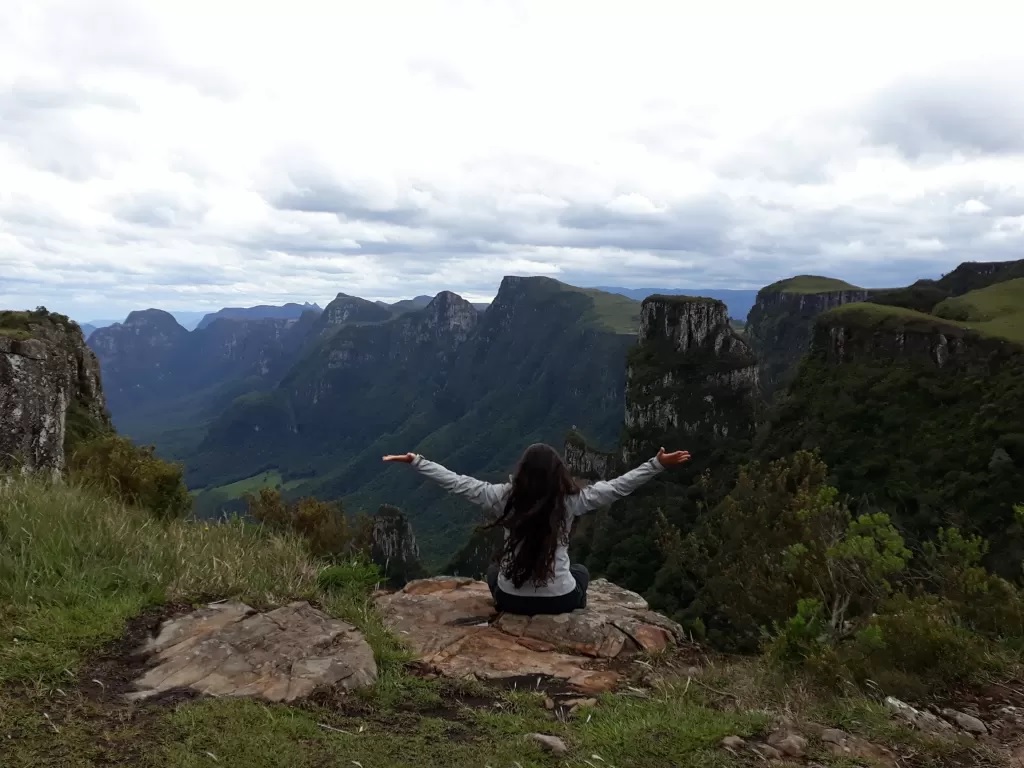
She also visited southern Brazil, passing through landscapes such as the Funil canyon and the viewpoint of the Rio do Rastro mountain range in Santa Catarina State.
“One of the highlights was, without a doubt, the sunrise at the Funil canyon.”
On the Rio de Janeiro State coast, she faced, alone, a challenging route that visits a large part of the beaches of Ilha Grande. She spent five days walking around the island, covering about 80 kilometers and sleeping in camping areas.
The route has strenuous stretches in the middle of the Atlantic forest but rewards travelers with beautiful scenery.
“This is one of the most beautiful trails I have ever done. Along the way, I stopped at beaches and snorkeled in the sea, where I enjoyed abundant marine life with turtles and colorful fish. You can also visit a lookout point that offers an incredible view of the Aventureiro beach. And, when the sun was at its peak, I passed by Caxadaço beach, with water the color of which I had never seen in my life.
PREPARED FOR NATURE
When she leaves home to go on a long hike alone, Daiana is always prepared to immerse herself in nature in the most efficient way possible.
In her backpack, she often carries a camping tent, a sleeping bag, food that doesn’t need refrigeration, a stove and a pot for preparing meals in the middle of the forest, and waterproof clothing.
Other essential items for any hiker are also on the list, such as special shoes for hiking in rugged terrain, hats, walking sticks, sunglasses, sunscreen, and insect repellent.
Safety items are also fundamental because, during a solitary hike, any accident can have severe consequences. After all, Daiana is constantly miles away from other people.
“I always carry a first aid kit, with medicines, splints, bandages, and other items that can help me in case of an accident. I also depend a lot on my cell phone for my navigation. So I always carry extra batteries,” she explains.
“And you have to be alert at all times on the trail. While I’m walking, I can’t be distracted by taking pictures. It’s dangerous to trip and fall off a cliff. I stay alert because I know that I can only count on myself.”
Besides this, the traveler wears leggings that protect her from possible snake bites.
Daiana says she has never had a serious accident on her treks, but she has had some difficulties.
“During the hike in Ilha Grande, I came across several snakes. I got a big scare when I stepped too close to one of them. And, when crossing the canyons in Santa Catarina, I had a stretch with a lot of fog. I couldn’t see anything and lost the ability to orientate myself.”
The adventurer, however, usually feels safe on the trails she goes on. And even though she enjoys being alone, she is never closed to interacting with other hikers she comes across on her walks.
She says that she has already made friends with people she has met on the trails and with whom she has decided to walk part of the way.
TIPS FOR LONELY HIKERS
According to Daiana, the person who wants to hike alone should take some precautions to reduce the possibility of mishaps during the trip.
The traverses start with planning. It is essential to buy a first aid kit, download maps, trace the route, check the topographical unevenness of the path, calculate the daily mileage that will be covered, find out where the water collection points are, and analyze the weather forecast for the period when you intend to hike, as well as estimate the amount of food and equipment that should be in your backpack.
“Depending on the length of the hike, take extra batteries [to operate flashlights, for example] and a power bank to recharge your cell phone. And, of course, it is crucial to be physically and mentally prepared for the task.
Daiana says that the biggest problem of hiking alone as a woman is the question of safety concerning other people.
More: Brazil news in English, every day from The Rio Times.
This article was produced by The Rio Times’ automated newsroom system. How we use AI · Report an error · Editorial responsibility: Matthias Camenzind, Editor-in-Chief