São Paulo Builds A “Beach” Without The Sea — And Tests A New Model For Public Space
Key Points
- A sand-based “urban beach” is opening inside Villa-Lobos Park, with free entry and free sports courts.
- Published figures point to a footprint of 12,000–15,000 m² and investment between more than R$20 million ($3.7 million) and about R$25 million ($4.6 million).
- The bigger story is the business model: a public park experience, upgraded with private capital, curated programming, and tight security—a formula The Rio Times has tracked across São Paulo’s evolving “urban beach” experiments since at least 2015.
São Paulo is about to do something that sounds like a joke until you see the blueprint: bring the beach to a city built far from the coast.
Inside Parque Villa-Lobos, a new complex called Orla TotalPass is rolling out a soft opening that replaces grass-and-asphalt monotony with sand, a promenade, sports courts, and a cluster of food operators meant to keep people there long after a quick walk.
The pitch is simple: most beachgoers spend their time on the sand and around kiosks, not in the ocean. So the project tries to recreate that “80%” of the experience—without pretending it has waves.
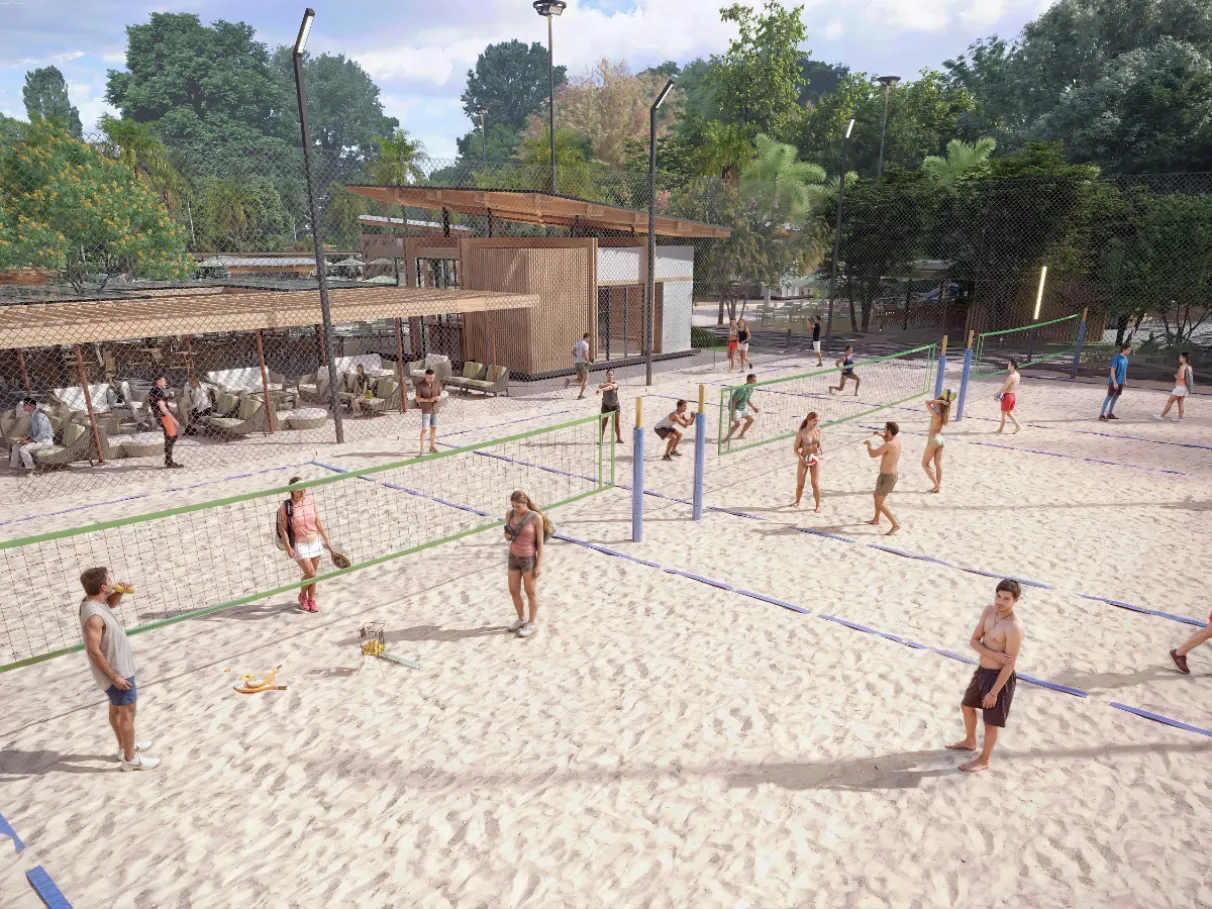
The result is five sand courts for beach tennis, futevôlei and volleyball, a central arena designed for group classes and occasional shows, plus family features such as a kids zone and a small water-play area described in coverage as a “parque das águas.”
Private investment reshapes public park
What makes it worth watching is not the sand. It is the structure. Access is free for anyone, including people with no link to TotalPass.
Court use is also positioned as free, shifting from early first-come play to scheduled bookings via the TotalPass app. Equipment is expected to be available on site.
Around that free core, the project layers paid experiences—wellness services such as sauna-and-ice offerings, and the standard economics of food and drink.
Food, in fact, is treated as infrastructure. Announced names include Più, Pato com Laranja, Espetto Carioca, Futuro Refeitório and Hilda Botequim, with kiosks like Juçaí, Amalfi, Kibon and Lumina.
Programming is built for weekday demand: morning class blocks (published as 8:00–9:30 and 10:00–11:30, with capacity around 100 per activity), then weekend add-ons like kids activities and, in some schedules, live music and sunset events.
Published numbers vary—12,000 to 15,000 m², and investment from more than R$20 million ($3.7 million) to about R$25 million ($4.6 million)—but the message is consistent: private money is reshaping how a public park feels.
The area is fenced with controlled access and cameras reported to include facial recognition, and promoters point to 100-plus new trees and recycling and composting targets. Reports published in the available sources place the official opening on January 5, February 28, or January 10.
Either way, São Paulo is running an experiment many big cities are quietly debating: can you keep public space open to everyone while letting private operators provide the “nice things” that public budgets rarely deliver?
Related coverage: Brazil’s Morning Call | U.S. Jobs Growth Slows But Productivity Surge Keeps Economy This is part of The Rio Times’ daily coverage of Brazil city news for expats and the international community.
This article was produced by The Rio Times’ automated newsroom system. How we use AI · Report an error · Editorial responsibility: Matthias Camenzind, Editor-in-Chief
Read More from The Rio Times