Culture
Key Facts
—The anniversary. The year marks 100 years since Roberto Arlt’s first novel, published in October 1926.
—The book. “El juguete rabioso” is credited with founding modern urban fiction in Argentina.
—The show. A Buenos Aires exhibition curated by scholar Sylvia Saítta honours the novel.
—The centrepiece. A mural gathers a century of book covers, beside a replica of Arlt’s Underwood typewriter.
—The run. The display is open to the public through March 2027.
—The contrast. Arlt was long overshadowed by his contemporary Jorge Luis Borges.
A Buenos Aires exhibition is marking the Roberto Arlt centenary, a hundred years since the novel that taught Argentine literature to speak in the raw voice of the modern city. It is a quiet anniversary with an outsized claim on the country’s culture.
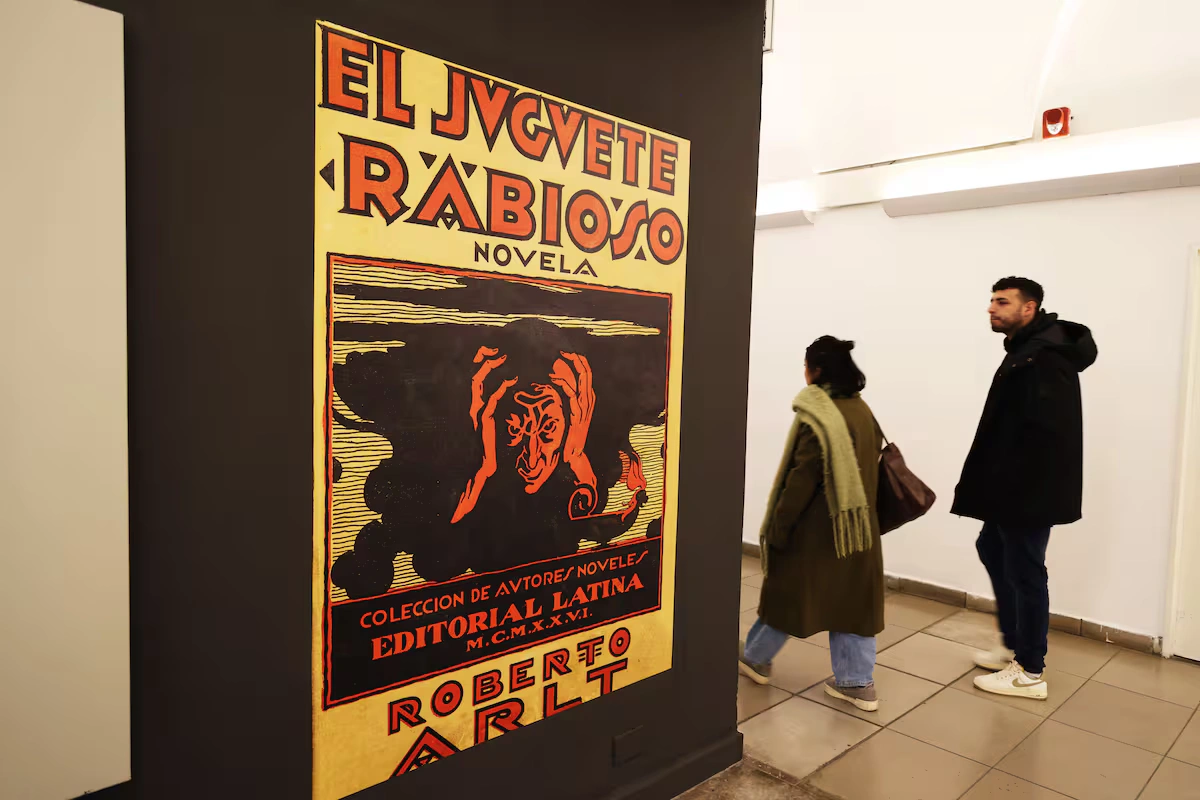
The book is “El juguete rabioso,” or “The Rabid Toy,” published in October 1926. A century on, a show curated by the scholar Sylvia Saítta gathers editions, illustrations and objects to honour it, according to local cultural listings.
For a reader abroad, the name may mean little. Inside Argentina, it names the writer who cracked open how the country’s literature could sound.
Who Roberto Arlt was
Arlt was a working-class writer and journalist, largely self-taught, who came up far from the polished salons of the literary elite. He wrote about swindlers, dreamers and the poor of a fast-growing Buenos Aires.
“El juguete rabioso” follows a poor young man drawn into petty crime as he tries to escape his lot. Its language was the street Spanish of the city, not the refined prose then in fashion.
That choice was the revolution. By putting the messy, immigrant, money-hungry city on the page in its own voice, Arlt is credited with founding modern Argentine urban fiction.
He wrote fast and died young, at forty-two in 1942. His fame grew mostly after his death, as later generations found in him a bracing alternative to more genteel writing.
His influence ran wide. Writers, filmmakers and playwrights across the decades have borrowed his eye for the city’s underdogs and his ear for how ordinary people actually talk.
He also wrote hugely popular newspaper columns, the “Aguafuertes,” short sketches of daily life that reached readers far beyond the literary world. They kept his voice in the street where it began.
Why the Roberto Arlt show matters now
The exhibition’s centrepiece is a large mural assembling the many covers “El juguete rabioso” has worn across a hundred years. Grouped by theme, they trace how each era re-imagined the book.
Beside them sit a first edition and a replica of the Underwood typewriter Arlt name-checked in one of his prologues. The effect is to treat a scruffy street novel as a national treasure.
The timing carries a gentle argument. Buenos Aires spent much of this year marking forty years since the death of Jorge Luis Borges, the elegant giant of Argentine letters.
Arlt was, in a sense, Borges’s opposite: rough where Borges was refined, urban where Borges was cerebral. Honouring both in the same year is Argentina acknowledging the two poles of its literary soul.
What it offers a visitor
For a traveller in Buenos Aires, the show is a low-cost, high-reward way into the city’s self-image. It explains why the capital sees itself as a place of hustle and reinvention.
It also pairs neatly with the wider winter culture season, when the city fills its centres with free and cheap concerts, talks and exhibitions. The long run, into 2027, means there is no rush.
For the curious reader, the novel itself is short and widely translated. Reading it before or after a visit turns the mural of covers into a story you already know.
The deeper reward is perspective. A hundred-year-old book about a poor boy chasing escape still maps onto a city, and a country, wrestling with the same hungers today.
Who was Roberto Arlt?
He was a working-class Argentine novelist and journalist, largely self-taught, who wrote about the swindlers and dreamers of early twentieth-century Buenos Aires. He is credited with founding modern urban fiction in Argentina and died in 1942 at the age of forty-two.
What is being celebrated?
The year marks one hundred years since Arlt’s first novel, “El juguete rabioso,” published in October 1926. A Buenos Aires exhibition curated by Sylvia Saítta honours it with editions, illustrations and objects, running through March 2027.
How does he compare to Borges?
Arlt and Jorge Luis Borges are often cast as opposites, one rough and urban, the other refined and cerebral. Honouring both in the same year reflects the two contrasting traditions of Argentine literature.
More: Argentina news in English, every day from The Rio Times.
Frequently Asked Questions
What is the exhibition about and how long is it open?
The show honours the 100th anniversary of Roberto Arlt's first novel, 'El juguete rabioso,' and runs through March 2027. It was curated by scholar Sylvia Saítta and features editions, illustrations, a mural of book covers, and a replica of Arlt's Underwood typewriter.
Who was Roberto Arlt?
Roberto Arlt was a largely self-taught, working-class Argentine novelist and journalist who wrote about the poor, swindlers, and dreamers of Buenos Aires. He is credited with founding modern urban fiction in Argentina and died in 1942 at the age of forty-two.
How does Roberto Arlt compare to Jorge Luis Borges?
The two are often seen as opposites — Arlt was rough and urban while Borges was refined and cerebral. Buenos Aires is honouring both in the same year, as 2025 also marks forty years since Borges's death.
This article was produced by The Rio Times’ automated newsroom system. How we use AI · Report an error
Read More from The Rio Times