Rio’s Airport Battle: Downtown Convenience Threatens Hub Strategy
A brewing debate over Rio de Janeiro’s airports pits practicality against long-term strategy. Santos Dumont Airport, located conveniently in the city center, is a favorite for travelers seeking quick access to domestic flights.
In contrast, Galeão International Airport, far from downtown and reachable only by navigating through favelas, struggles to attract passengers despite its larger capacity and international focus.
In January, the federal government capped Santos Dumont’s passenger traffic at 6.5 million annually to boost Galeão’s connectivity and prominence.
This move aimed to redirect domestic flights to Galeão, which has never reached its full capacity of 35 million passengers since being privatized in 2014.
However, the Ministry of Ports and Airports is now considering loosening these restrictions to help Infraero, the state company managing Santos Dumont, recover R$120 million in lost annual revenue.
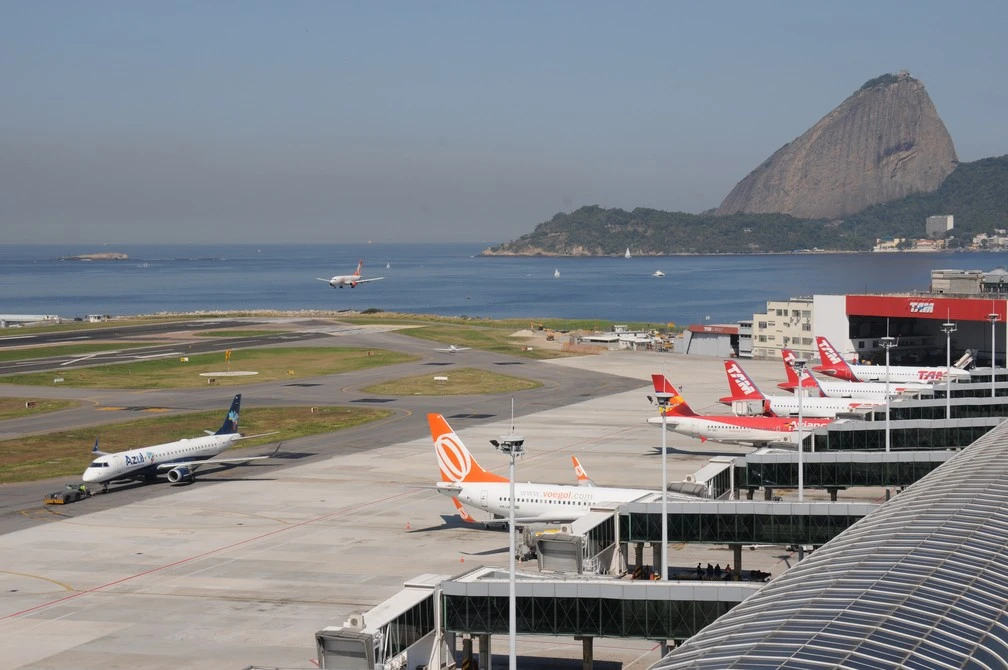
Critics argue that increasing Santos Dumont’s capacity could destabilize the fragile balance between the two airports. Experts like Delmo Pinho from Fecomércio warn that Galeão must first reach 25-30 million passengers annually before any changes are made.
The Future of Rio’s Airports
Currently, Galeão expects to close in 2024 with just over 14 million passengers, up from 8 million in 2023. Supporters of Santos Dumont’s expansion point to its convenience and the infrastructure challenges Galeão faces in attracting more travelers.
Meanwhile, opponents highlight the need for significant upgrades at Santos Dumont if passenger limits are raised, including better runways and expanded facilities.
Local officials remain divided. Rio’s mayor, Eduardo Paes, opposes any changes, citing environmental and traffic concerns around Santos Dumont.
State officials demand thorough technical studies before decisions are made. The Ministry insists its priority is strengthening Galeão while ensuring Rio’s aviation sector grows sustainably.
This debate underscores a broader question: should convenience for travelers take precedence over long-term regional connectivity?
The outcome will influence the future of these two airports. It will also define Rio’s role as a hub for domestic and international travel.
This article was drafted with automated assistance and reviewed before publication. How we use AI · Report an error · Editorial responsibility: Matthias Camenzind, Editor-in-Chief