Progressive Evangelicals Decry Homophobia Among Pastors, Begin Political Involvement
RIO DE JANEIRO, BRAZIL – Last week, the clan of one of the most traditional evangelical churches in the country, founded in Belo Horizonte, was exposed by intolerance towards LGBTs in public speeches. First, pastor André Valadão, of the Baptist Church of Lagoinha, stated in a post that church is no place for gays, because “homosexual practice is considered a sin.”
Then, his older sister, Ana Paula Valadão, had a 2016 video retrieved on social media, in which she preaches that AIDS “shows that sexual union between two men causes a disease that leads to death.” Given these repeated homophobic statements by religious leaders, progressive evangelical groups are mobilizing to defend gender equality and oppose the commercialization of faith in major churches.

In a manifesto released last Saturday, the National LGBTI+ Alliance, a movement that congregates political and religious organizations, reported that Ana Paula Valadão was sued for homophobia, comparing the pastor’s speech to Adolf Hitler’s.
“Ana Paula attacks the entire LGBTI+ community and, mainly, the dignity of people living with HIV/AIDS, holding them responsible for the spread of a virus and equating in a shameful, retrograde and criminal way, a legitimate expression of love and affection to a criminal deed like taking the life of a human being,” says the organization.
Coordinator of the Aliança in Minas Gerais, Pastor Gregory Rodrigues, 29, notes that gender discrimination is the predominant behavior among the Protestant community in Brazil. On the other hand, he says he believes there is growing resistance from the church’s progressive sectors.
“Amid the wave of conservatism, this kind of thinking [like that of the Valadão siblings] has been unashamedly exposed. From the outside, we see a discourse of love and acceptance. But on the first opportunity, pastors do not hesitate to brand members of the LGBT community as impure and sinful beings.”
With degrees in theology and history, Gregory found out he was gay at around 16 years of age. He faced rejection from his family and the church he was attending at the time. After being beaten by his father, he attempted suicide but was eventually welcomed into an inclusive church in Belo Horizonte.
“I was attacked when I defended the argument that God makes no distinction between people, regardless of sexual orientation,” says the pastor, pointing out that progressive groups of the faithful are not exclusive to inclusive temples. “The fear of hell is a way of manipulating people. Within traditional churches of a conservative nature, we also have people who think more openly. But there is repression of these ideas by the upper echelons. Or, in some places, the defense of what we call halter inclusion,” he says.
According to the progressive religious, halter inclusion, in terms of gender diversity, refers to movements that accept declared LGBTs, as long as they propose to give up sexuality and fulfill a vow of chastity. The Baptist Church of Lagoinha, for instance, although it refuses to impose this condition on its followers, upholds the Movimento Cores (Colors Movement), aimed at the LGBT public, which issues guidelines in its services on how to “transform” and banish the “sin of homosexuality”.
Other churches operate more explicit ministries, which propose spiritual healing and conversion processes known as “gay healing”. One of them, the Movimento de Ex-Gays do Brasil (Ex-Gay Movement of Brazil), sponsored by the Minister of Human Rights and Family, Damares Alves, seeks to strengthen ties with politicians, particularly those linked to President Jair Bolsonaro, to legitimize the practice.
On the other hand, movements of progressive evangelicals, such as Cristãos Contra o Fascismo (Christians Against Fascism) and Evangélicos pela Diversidade (Evangelicals for Diversity), are articulating collective candidacies in several cities, in an attempt to oppose religious fundamentalism. This is the case of the left-wing group that will run for the City Council of Belo Horizonte for the Unidade Popular (Popular Unity – UP) party.
The four members say that the goal of the candidacy is to represent evangelicals who do not feel contemplated by the “bible bench” and to reframe the concept of how religion manifests itself in power circles. “We are a minority [in the church] that cannot be ignored. The movements of progressive evangelists are already in virtually every capital in the country,” says Jonatas Aredes, one of the members of the collective, recalling that the Protestant progressive front began to take shape in 2016 after the evangelical benches supported Dilma Rousseff’s impeachment.
According to Datafolha’s April survey, 41 percent of evangelicals approve of Jair Bolsonaro’s government, while 30 percent support the ouster of the President, who has already stated in a session in the Chamber of Deputies that he intends to appoint a “terribly evangelical” Justice to the Supreme Court.
Aredes said that in addition to those who reject Bolsonaro, the evangelical community is mainly composed of women, black and poor, who would be on the sidelines of the religious bench representation. “Our understanding is that the evangelicals are not, in fact, represented because the colonels of faith persecute minorities. We can no longer accept that our faith be associated with fundamentalism and intolerance.”
For the LGBT theologian, the statements of the Valadão siblings- who now live in the United States, declared their support for Bolsonaro in the last presidential election and did not recant for their homophobic insults – synthesize the preaching of other religious leaders who still perceive sexual diversity as sinful behavior.
“Fundamentalists push the Bible into the LGBT person’s face, irresponsibly selecting half a dozen isolated passages from context,” Aredes says. “Thus the concept of sin is perpetuated in what it has always been: a category of judgment, without any foundation, that aims to justify the discrimination by a certain group of people who think they are doing God’s will, when the sin, in fact, is the church being prejudiced.”
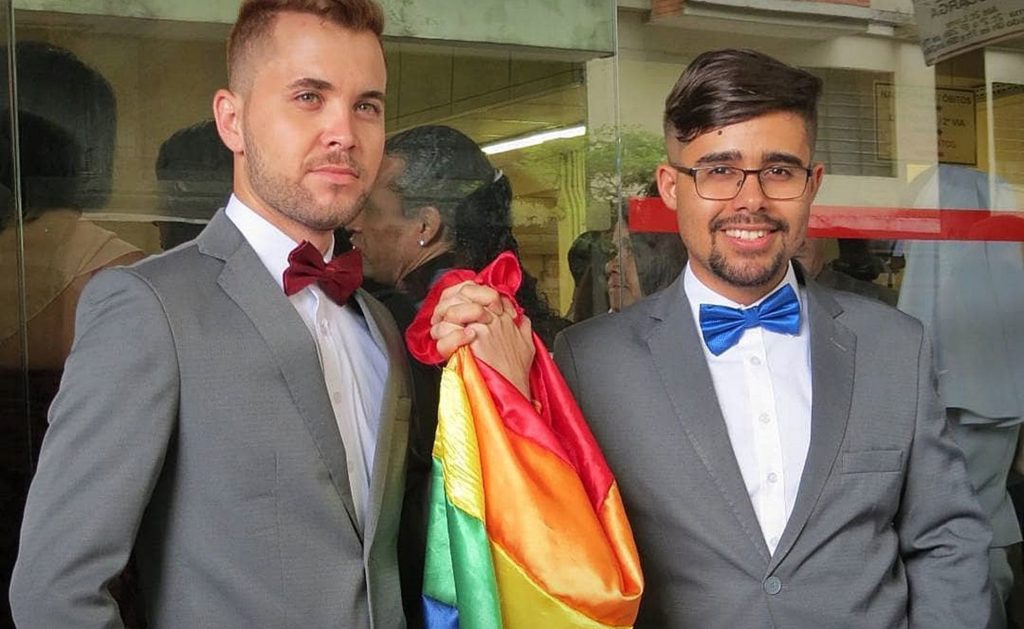
Homoaffectivity condemned, debt forgiven
On Monday last week, Bolsonaro vetoed part of a bill aimed at pardoning church debts, on the grounds that if he were to sanction the full text, he would risk impeachment based on the Fiscal Responsibility Law. However, on social media, the President suggested Congress overturn his own veto.
“I confess, if I were a legislator or senator, at the time of analyzing the veto that should occur until October, I would vote to override it,” he wrote. Under the bill, churches would be exempt from the Social Contribution on Net Profits (CSLL), as well as from fines for failure to pay the tax, which amount to over R$1 billion (US$200 million).
Progressive evangelicals oppose the granting of another tax benefit to religious institutions in Brazil that are already legally exempt from taxes. “We are against the tax exemption on profits and labor charges,” says Jonatas Aredes, on behalf of the UP collective candidacy.
“Bishops like Edir Macedo, R.R. Soares, and Silas Malafaia are millionaires, they don’t need more benefits. This money from the fines is needed in the budget. The government cut the emergency aid in half. At this time, it is inexcusable to pardon the debt of churches and religious leaders.”
Pastor Gregory Rodrigues also criticizes the President for the incoherence of vetoing the debts while recommending overriding his veto. He says he has already opened an inclusive temple in Belo Horizonte, but eventually closed the space for lack of financial resources. “It is not easy to keep a church preaching the faith responsibly, without such an emphatic discourse on tithing.”
Gregory sees the tax exemption on churches’ profits, advocated by the Evangelical Parliamentary Front in Congress, as an affront to the principles of the secular state. “Millions of Brazilians are unable to work because of the pandemic, while the government is considering pardoning R$1 billion from churches. How many families would be helped with this amount? The mixture of militarism, religiosity, and politics is detrimental to the country.”
Along the same lines, pastor Ricardo Gondim, president of the Betesda Church, with a progressive inclination, takes a stand against the measure favorable to the large evangelical corporations. At the age of 66, he recalls that when reviewing the values of the biblical commandments he professed, he repented “for having promoted a religion that condemns, excludes and prefers to punish rather than understand,” alluding to intolerance of LGBT followers.
“The church cannot pretend that homosexuals do not exist. Jesus would welcome them. It was never the role of Christians to disapprove, condemn and harass,” argued the pastor, who today advocates the separation of Church and State, in addition to actions to demystify homo-affective relationships among the evangelical community. “To be against homophobia is to be a Christian.”
Source: El País
More: Brazil news in English, every day from The Rio Times.
This article was produced by The Rio Times’ automated newsroom system. How we use AI · Report an error · Editorial responsibility: Matthias Camenzind, Editor-in-Chief