Plastic industrialists affirm that Ecuador is not the “garbage dump” of countries like the U. S.,
RIO DE JANEIRO, BRAZIL – In Ecuador, World Recycling Day was commemorated yesterday with complex figures. According to the Ministry of the Environment, Water and Ecological Transition (Maate), the country generates 4.06 million metric tons of waste per year. Of these, 62% constitute organic waste, 25% are recyclable and 13% are of another type. Of this total, only 4% is recycled.
Although private companies have begun to develop waste classification programs, it is the grassroots recyclers who bear the brunt of recyclable collection.
Read also: Check out our coverage on Ecuador
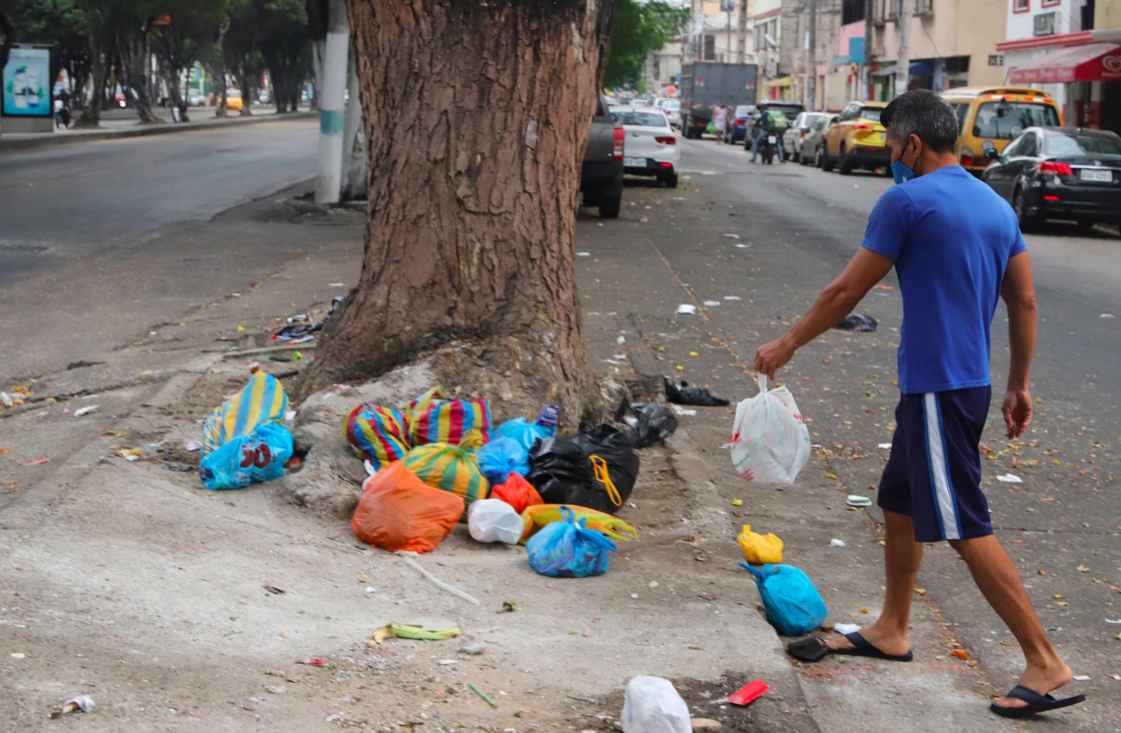
Most municipalities do not classify waste, have inefficient collection systems and, in the best of cases, have sanitary landfills that are about to collapse. According to the National Institute of Statistics and Censuses, 111 councils have sanitary landfills, 69 have pop-up cells and 40 have open-air dumps.

For example, Quito, since the beginning of 2022, has had a problem with garbage collection where it has been verified that what is done with the waste is to accumulate it in transfer terminals only to bury it.
Jorge Oviedo, a specialist in waste management at the consulting firm Costecam, says that on the subject of recycling the country has made incipient efforts and is far from high standards.
In addition, he affirms that the few initiatives in Ecuador have been growing slowly. He highlights the work of the National Network of Recyclers (Renarec). In fact, to “dignify” the work of recyclers, Maate, together with the Ministry of Labor, developed the Basic Recycling professional qualification certification. 50,000 recyclers will benefit.
For Oviedo, although this type of recognition is deserved, work must be done on background guidelines and social inclusion whose main managers are the councils.
“There are also political overtones, social impositions, economic issues and a lack of technical knowledge about the comprehensive management of solid waste. In addition, there is a lack of education on the part of the citizens who continue to dump waste in creeks and vacant lots,” he notes.
Another problem that exists in the country is the way in which municipal waste collection contracts are negotiated, says Jorge Mórtola, president of the Ecuadorian Association of Plastics (Aseplas). He adds that it is paid by the ton and the collectors try to “put everything” in the unsorted trucks.
He agrees with Oviedo about the political overtones, since the value of the collection, classification and recycling of waste would raise the rate charged and this “is not good at election time.”
“Ecuador has already signed an agreement in which it undertook to sign a treaty that makes it mandatory to reduce the consumption of virgin plastic and seek mechanisms to reuse the plastic that is already produced. Which means you have to prevent plastic waste from going to landfills,” he says.
Mórtola affirms that not everything is negative and points out that in Ecuador 80% of PET plastic bottles that are produced are collected for recycling and this thanks to the redeemable tax. He adds that the industry has become more technical to produce plastic resin. Although several NGOs have denounced that Ecuadorian companies import plastic garbage from countries like the United States to make the resin.
Between 2018 and 2021, the country imported 47,596 tons of plastic waste, according to a study published by Alianza Basura Cero Ecuador and the Universidad Andina Simón Bolívar. These figures, the study indicates, make the country the third largest importer of plastic waste in Latin America.
“That has been sensationalized. If you buy waste for five cents, add value to it here in the country and then sell it for 25 cents, Ecuador is winning. It is illogical to think that companies bring garbage to lose money. They bring waste to convert them into, for example, making thick covers that are sold in Central America, the United States and Europe,” says Mórtola.
The executive indicates that the importation occurs due to the lack of raw material in the country, since plastic waste, except PET, is not collected: “The municipalities must put a redeemable tax on packagings, straws, glasses and people go to pick them up”.
More: Ecuador news in English, every day from The Rio Times.
Editorial responsibility: Matthias Camenzind, Editor-in-Chief · Editorial standards · Report an error