Peru’s Economy Grows at Weakest Pace in Six Months as El Niño Takes Toll
Peru · Economy
Key Facts
—Growth brakes sharply Peru’s GDP expanded only 1.8% in May, breaking a streak of 3%-plus monthly growth and marking the slowest advance so far this year.
—Fishing collapse The fishing sector plummeted over 73% year-on-year as warmer seas drove away anchovy, threatening a supply chain that provides 40% of the world’s fishmeal.
—Manufacturing hit Primary manufacturing contracted 41.7%, directly linked to the anchovy shortage, dragging overall factory output down by 10.67%.
—Domestic demand resilient Non-primary sectors like commerce and construction grew solidly, and private investment is still projected to rise 12.5% in 2026, cushioning the blow.
—Inflation risk Analysts warn that El Niño disruptions to farming and fishing will likely push food prices higher, potentially forcing the central bank to raise its key interest rate.
Peru’s economy decelerated to its weakest pace in six months in May 2026, growing just 1.8% from a year earlier as the El Niño weather pattern triggered a collapse in fishing and primary manufacturing.
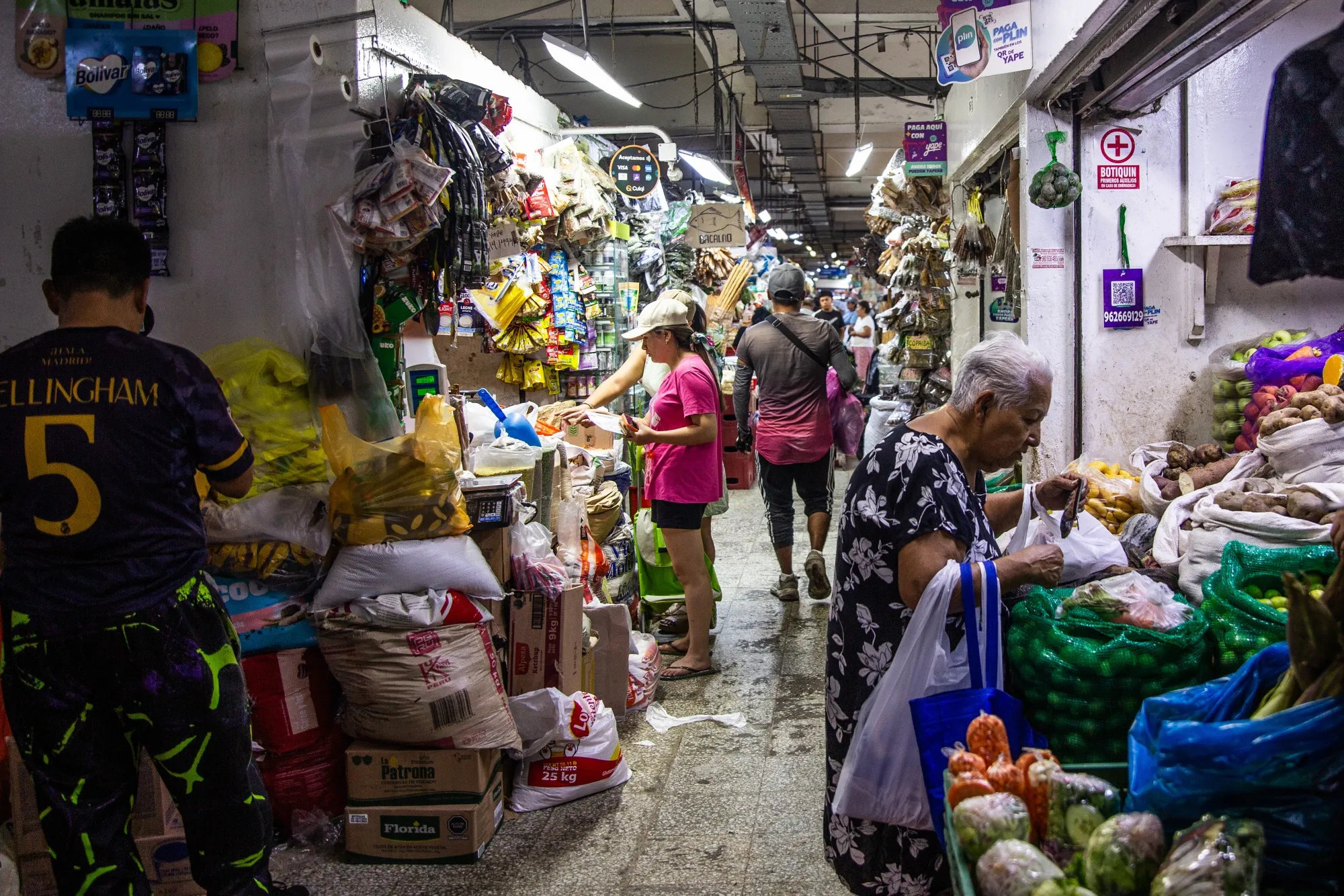
The May Slowdown: A Sharp Break from Trend
Peru’s gross domestic product expanded by 1.80% in May compared to the same month a year earlier, according to the national statistics institute INEI. That was a dramatic step down from the 3.67%, 3.71%, 3.21%, and 3.73% rates recorded in the first four months of the year, respectively.
The annualized growth rate up to May still sits at 3.54%, but the monthly figure signals a clear loss of momentum. Central bank president Julio Velarde confirmed the slowdown is localized, stating that commerce, construction, and non-primary industry ‘continue to do well’ and that the drag is coming directly from El Niño.
El Niño’s Blow to Fishing and Manufacturing
The fishing sector collapsed, shrinking by 73.10% in May as warmer Pacific waters drove anchovy shoals away from the coast. Anchovy is the key input for fishmeal, and Peru supplies about 40% of the world’s total. The government had already suspended fishing activities on June 11 to protect dwindling stocks.
The shock rippled directly into primary manufacturing, which fell 41.70% as fishmeal and fish oil processing ground to a halt. Overall manufacturing output dropped 10.67%, and these two sectors together pulled the headline GDP figure down despite gains elsewhere.
Agriculture and the Wider Threat
Agriculture is showing early signs of stress. Velarde noted that the sector ‘has almost not grown’ and that if livestock is excluded, pure agricultural activity has already fallen due to El Niño.
A central bank scenario analysis warns that a strong coastal El Niño would mainly hit agriculture, fishing, primary manufacturing, and hydrocarbons.
One risk assessment estimates that 12 million people and nearly 3 million hectares of agricultural land in Peru are exposed to intense rains and mudslides linked to the weather pattern. Specific export crops like lemon, mango, grape, and organic banana along the northern coast are considered at risk in 2026.
What Stayed Strong in May
Not all sectors faltered. Commerce grew 6.91%, driven by wholesale, retail, and automotive sales.
Construction expanded 4.66%, electricity, gas and water rose 5.21%, and transport and storage added 2.42%. Mining and hydrocarbons also posted a positive contribution.
These non-primary engines are why the broader economy is not contracting. Velarde emphasized that private spending remains robust, and the central bank still projects private investment will surge 12.5% in 2026, up from a previous estimate of 9.5%. Domestic demand overall is forecast to grow 5.9%.
Why This Matters for Investors and Residents
For investors, the May data confirms that El Niño is a concentrated shock, not a broad economic meltdown. Sectors tied to domestic demand—retail, construction, finance—are expanding solidly, and copper prices remain supportive. However, Fitch warns that the banking sector’s recent asset quality recovery may stall and that loan growth could slow as food prices climb.
For residents, the main channel of pain is inflation. Disruptions to fishing and farming typically raise food costs, eroding real incomes. The Royal Geographical Society notes that during El Niño years, the Peruvian economy can lose up to 5% of total income, with the burden falling hardest on those whose jobs depend directly on fishing and farming. The central bank has held its 2026 inflation forecast at 3.8% and expects a return to the 1–3% target range only in early 2027.
2026 Growth Outlook: A Slower but Still Positive Year
Forecasts now range between 2.7% and 3.4% for full-year 2026 growth. The central bank raised its forecast to 3.4%, explicitly incorporating a strong coastal El Niño and betting on non-primary strength to compensate.
The World Bank is more cautious at 2.7%, the OECD projects 2.9%, and Fitch Solutions forecasts 3.0% with momentum softening in the second half.
BBVA Research estimates a 3.1% expansion, while central bank economist Adrián Armas said growth would reach 4.1% without the weather pattern. That implies El Niño is already shaving roughly 0.7 to 0.8 percentage points off Peru’s economic output. The drag is expected to persist as long as ocean temperatures remain elevated.
Frequently Asked Questions
What caused Peru’s sharp economic slowdown in May 2026?
The El Niño weather pattern warmed Pacific waters, driving away anchovy. This caused the fishing sector to contract 73.10% and primary manufacturing—which processes fishmeal—to drop 41.70%.
Together they pulled overall GDP growth down to 1.8%.
How does El Niño affect inflation and the cost of living in Peru?
El Niño disrupts crop harvests and fish landings, reducing food supply. This pushes up food prices and headline inflation, eroding real incomes.
The central bank has kept its 2026 inflation forecast at 3.8% and may raise interest rates to contain price pressures.
Is Peru still expected to grow in 2026 despite El Niño?
Yes. While forecasts have been trimmed, the central bank, World Bank, and OECD all project growth between 2.7% and 3.4% for 2026.
Strong private investment, robust domestic demand, and solid non-primary sectors like commerce and construction are cushioning the impact.
Sources: El Niño golpea el crecimiento de Perú en mayo y el PBI se estanca a 1.80% tras caída en dos sectores clave, Julio Velarde alerta sobre impacto económico de El Niño, BCR raises Peru’s economic growth forecast to 3.4% for 2026, Peru central bank warns El Niño raises inflation risks, El Niño Puts 60% of Peru’s Fishing, 30% of Farming GDP at Risk in 2026, Peru Macro Poverty Outlook – World Bank
Read More from The Rio Times