A Swedish Supplier Spent 76 Years Serving Peru’s Mines. Now It Wants Hospitals.
Corporates
Key Facts
—The move. Atlas Copco has relaunched its medical gases division in Peru, selling to clinics and hospitals rather than mines.
—The history. The Swedish group has operated in Peru for 76 years. It was its first base in Latin America.
—The concentration. Compressor Technique is about 80% of local sales, and roughly 60% of its aftermarket service revenue comes from mining.
—The clients. Southern, Antapaccay, Las Bambas and Antamina, on long-term contracts with on-site maintenance.
—The year. A record is in prospect, with double-digit growth expected in the compressor unit.
—The backdrop. Peru’s metallic mining output is forecast to grow just 0.3% this year despite copper near record prices.
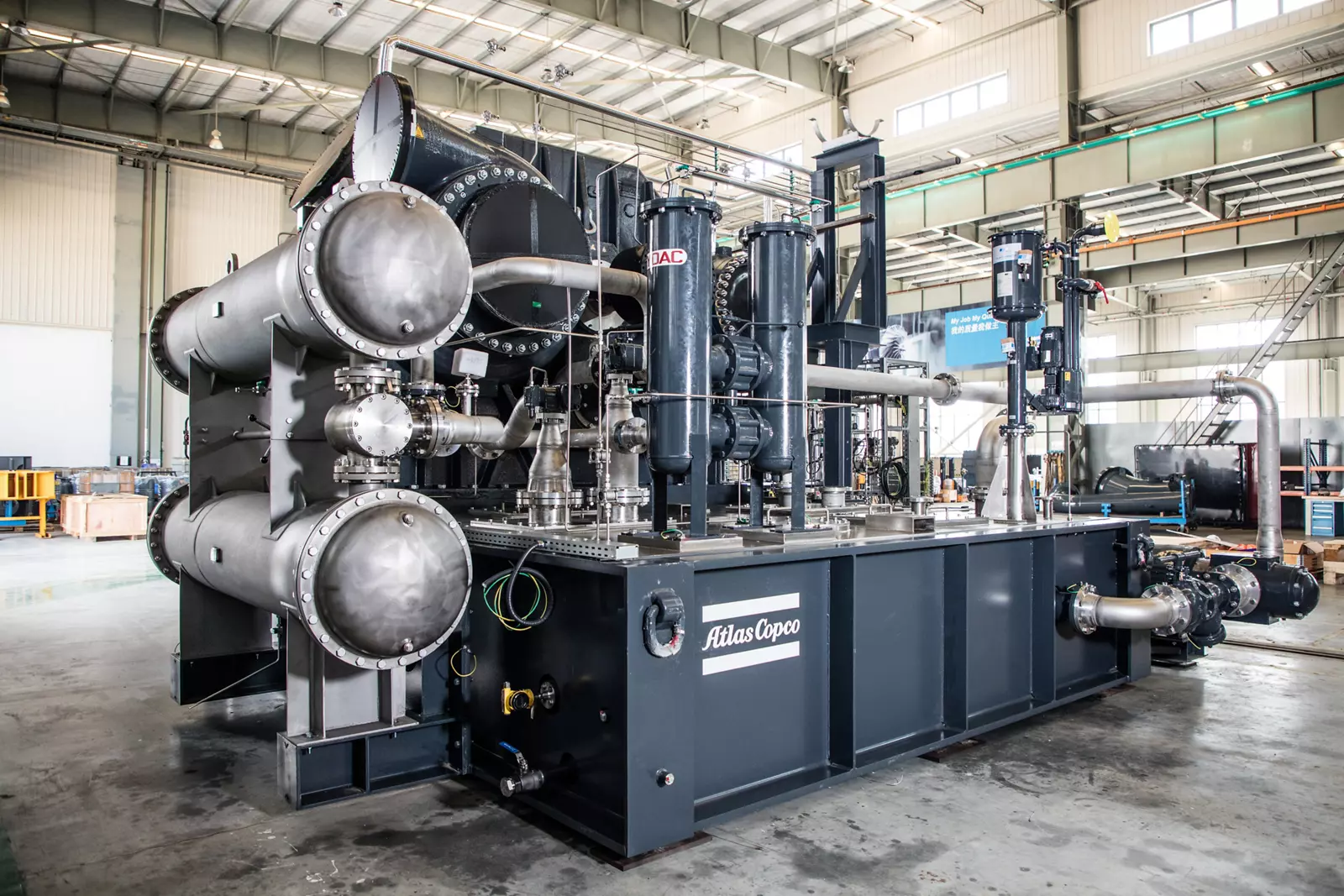
Atlas Copco Peru is having a record year selling to mines, and has just relaunched a business that sells to hospitals instead, which is a more interesting decision than a bad year would have produced.
The Swedish group builds compressed air and vacuum systems. It has been in Peru for seventy-six years, longer than anywhere else in Latin America.
Julio Hernández, who runs the Andean region covering Peru and Bolivia, laid out the shift this week: medical gases for clinics and hospitals, plus a push into agroindustry.
What Atlas Copco Peru is actually diversifying away from
The company runs four business lines locally: stationary compressors, portable equipment, vacuum systems and torque tools. The first of those, Compressor Technique, is about eighty percent of local sales.
Inside it, the aftermarket service arm carries the largest volume. And roughly sixty percent of that service revenue comes from mining.
Stack those together and the shape becomes clear. A dominant unit, whose dominant activity leans on a single sector, means the business is closer to a mining-services company than its industrial-equipment label suggests.
The client list makes the point. Southern, Antapaccay, Las Bambas and Antamina are among the largest copper operations in the country, served through integrated long-term contracts where Atlas Copco maintains the equipment on site.
That model is excellent business and precisely the problem. On-site contracts with a handful of large miners produce steady revenue and near-total dependence on their capital cycle.
The number behind the pivot
Peru’s mining sector looks unstoppable from the outside. Mineral exports jumped fifty-three percent in the first five months of the year, copper and its concentrates alone were worth thirteen point seven billion dollars, and the project pipeline runs past sixty-four billion.
Now the number that matters to a supplier. The central bank expects metallic mining output to grow three tenths of one percent this year.
Peru is being paid far more for its metal without digging much more of it up, because no major new mine has opened. Prices are a windfall for miners; volumes are what supplier revenue tracks.
That is the gap Atlas Copco is reading. You can sell compressors into a price boom for a while, but if tonnage is flat and the pipeline stays stuck in permitting, the equipment cycle eventually flattens with it.
Two Swedes, one problem, opposite answers
There is a neat comparison available, and it is closer to home than it looks. Epiroc, which handles mining and infrastructure machinery, was spun out of Atlas Copco in 2018 — and its Peruvian branch was the same 1950 operation, the group’s first in the region.
Same lineage, same market, opposite conclusions. Epiroc is moving deeper into mining, restructuring around a twenty-four-country cluster and shifting investment toward mobile workshops located inside the mines themselves.
Its regional workshops run at seventy to eighty percent utilisation, which the company calls a red flag and a reason to add capacity. Its former parent, facing the same flat-tonnage market, is going looking for hospitals.
Both may be right, since they sell different things. Drilling rigs live or die on tonnes moved; compressed air is a general-purpose utility that a hospital, a fruit packer and a mine all need.
The map tells on them
One detail undercuts the diversification story, and it is geographic. The Lima headquarters now runs to about nine and a half thousand square metres, and a new workshop of around a thousand has opened in Arequipa.
Moquegua is under evaluation next. Arequipa and Moquegua are mining regions in the southern copper belt.
So the revenue is trying to leave mining while the concrete keeps following it. That is not hypocrisy, it is sequencing — the mines pay for the buildings that the new businesses will eventually use.
The company also holds 2030 emissions targets of forty-six percent below on scopes one and two, twenty-eight percent on scope three, and a local reduction of ten percent a year.
Why is Atlas Copco Peru moving into medical gases?
Because its Peruvian revenue is heavily concentrated in mining, with about sixty percent of aftermarket service income coming from the sector, and medical gas systems use the same compressed-air engineering for a completely different customer. The timing fits a market where metallic mining output is forecast to grow only three tenths of a percent this year despite record prices.
Is the mining business in trouble?
No, and that is what makes the move notable, since the company expects a record year with double-digit growth in its largest unit. The risk it is hedging is structural rather than immediate, because supplier revenue ultimately follows tonnage and new mine openings rather than the copper price.
How does this compare with Epiroc?
Epiroc was spun out of Atlas Copco in 2018 and its Peru operation traces to the same 1950 branch, yet it is doing the opposite by pushing mobile workshops inside mine sites. The divergence reflects their products, since drilling equipment depends directly on extraction volumes while compressed air can be sold to any industry.
Connected Coverage
Peru Economy: Central Bank Lifts 2026 Growth to 3.4%
Peru Has a $64 Billion Mining Wish List. Will It Get Built?
Peru Exports Jumped 40% in May, Led by Mining and Asian Demand
More: Latin America news in English, every day from The Rio Times.
Frequently Asked Questions
Why is Atlas Copco Peru moving into medical gases?
Because roughly 60% of its aftermarket service revenue comes from mining, and medical gas systems use the same compressed-air engineering for a different customer.
Is the mining business in trouble?
No, the company expects a record year with double-digit growth in its largest unit, but it is hedging against flat future tonnage growth.
How does this compare with Epiroc?
Epiroc was spun out of Atlas Copco in 2018 and its Peru operation traces to the same 1950 branch, yet it is doing the opposite by pushing mobile workshops inside mine sites.
This article was produced by The Rio Times’ automated newsroom system. How we use AI · Report an error · Editorial responsibility: Matthias Camenzind, Editor-in-Chief