El Niño Puts Nearly a Quarter of Peru’s Economy at Risk
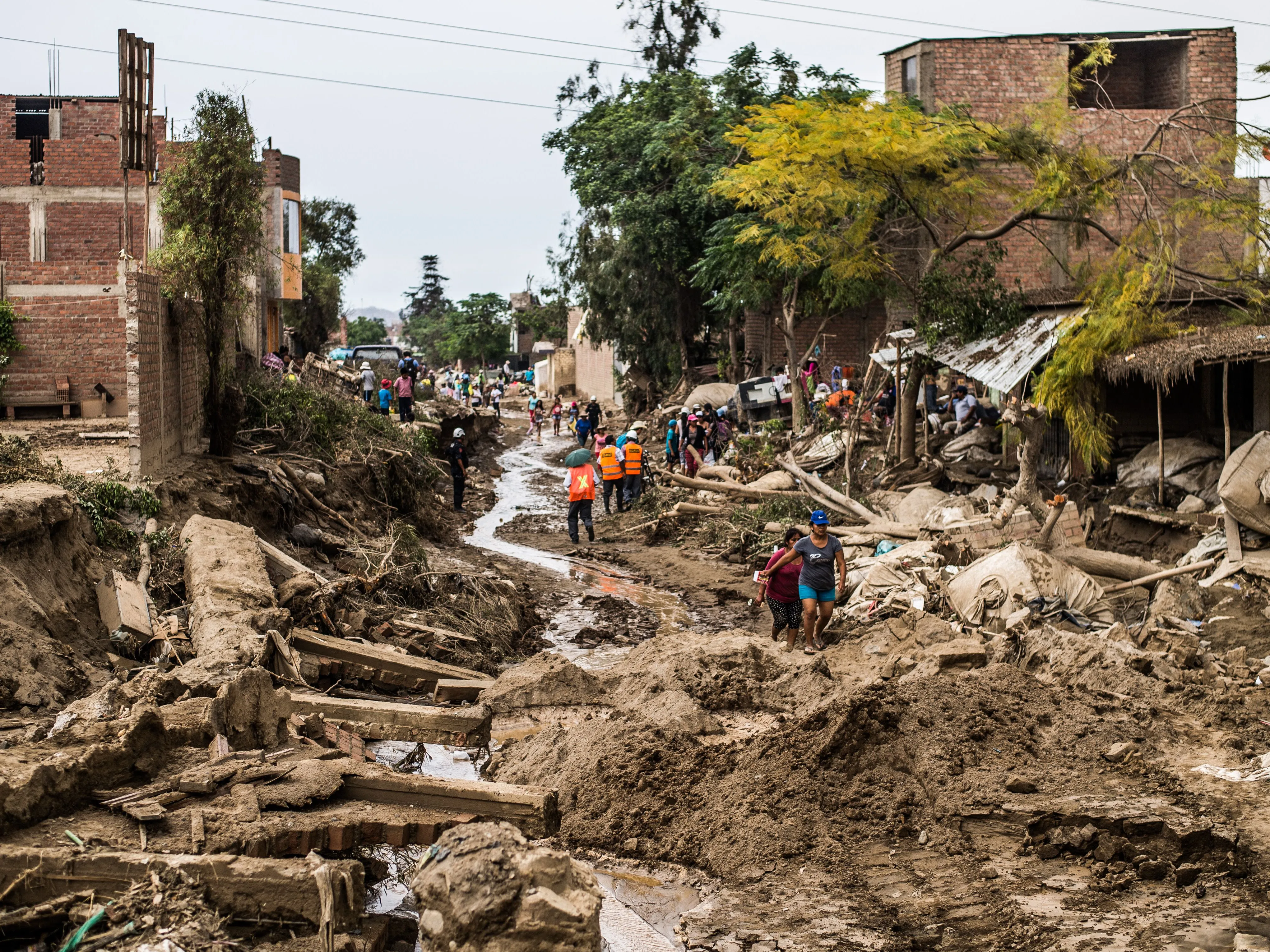
Economy
Key Facts
—The warning. Lima’s Chamber of Commerce says the regions most exposed to a strong El Niño hold nearly a quarter of Peru’s economy.
—The regions. Seven northern and coastal departments carry the highest risk, led by Piura and La Libertad.
—The sectors. Fishing has 60% of its output at risk and farming about a third, the group estimates.
—The gap. About S/11.6 billion ($3.4 billion) in prevention works remains unbuilt, the CCL says.
—The timing. A new government takes office on July 28, inheriting the unfinished works.
—Why it matters. The central bank expects the weather to shave nearly a percentage point off 2026 growth.
The El Niño Peru GDP warning is stark. A leading business group says the regions in the storm’s path hold almost a quarter of the country’s output.
The alert came from the Lima Chamber of Commerce, known by its Spanish initials CCL, one of Peru’s main business associations. It presented the analysis at a forum on the coming weather event.
The head of the chamber’s economics institute, Óscar Chávez, said the estimate weighs the seven departments most likely to be hit. They are Tumbes, Piura, Lambayeque, Cajamarca, Áncash, Lima, and San Martín.
Together, these regions account for close to a quarter of national output, the chamber said. That is why an event centred on the north can ripple across the whole economy.
Where the El Niño Peru GDP risk concentrates
The exposure is heaviest in the sectors that feed the country and its exports. The chamber puts sixty percent of fishing output at risk from warmer waters that scatter the catch, a threat our reporting has shown extends far beyond the boats themselves—Peru supplies 40% of the world’s fishmeal, and the anchovy collapse earlier this year already dragged primary manufacturing down by over 40%. Farming is nearly as exposed, with about a third of agricultural output at risk, concentrated in the coastal valleys that produce the blueberries, avocados, and mangoes that make Peru a top global exporter.
Farming is nearly as exposed, with about a third of agricultural output at risk. Drought in the southern and central highlands is the main threat there.
El Niño is a periodic warming of the Pacific that scrambles Peru’s weather. It typically brings floods to the northern coast and drought to the highlands, hitting crops and fishing at once.
Specific crops are already flagged. In Piura, producers warn that lemon and mango could see heavy losses if the cold spell needed for flowering fails to arrive.
The knock-on effect reaches shoppers quickly. A shortage of lemons, one of the most exposed crops, tends to push prices sharply higher in Peruvian markets within weeks.
Retailers are bracing too. The chamber’s retail arm has trimmed its 2026 growth expectation, citing the weather as a drag on consumer demand through the year.
A prevention gap at the worst possible moment
The chamber’s sharper point is about readiness. It says around eleven point six billion soles, about three point four billion dollars, in prevention works still sits unbuilt.
The national infrastructure authority runs a portfolio of sixty-one projects worth some twenty-three billion soles. As of mid-June, average progress stood at just fifty-one percent, with dozens of projects facing budget limits.
Several projects have stalled outright. The chamber noted that a handful remain suspended entirely, nine years after a devastating coastal El Niño struck the same regions in 2017.
Forecasters expect the peak later this year. Local experts see a strong event building from the fourth quarter, with some warning it could rival the severe episodes of 1983 and 1997.
The timing turns a technical gap into a political one. A new government takes office on the twenty-eighth of July, inheriting what the chamber called a climate and budget time bomb.
For a foreign investor, the read is about execution risk. Peru‘s macro fundamentals are strong, but the state’s ability to deliver public works on time is the recurring weak spot.
The central bank has already priced in a hit. It expects a strong El Niño to shave roughly eight tenths of a percentage point off 2026 growth, with fishing and farming bearing the brunt.
The human stakes sit behind the numbers. The chamber noted that the exposed regions are home to millions of people already living in poverty, who have the least cushion against a bad harvest or lost fishing income.
How much of the El Niño Peru GDP is really at risk?
The Lima Chamber of Commerce estimates that the seven regions most exposed to a strong El Niño hold close to a quarter of national output. That figure reflects the combined weight of those departments, not a forecast of actual losses.
Which sectors are most exposed?
Fishing and farming carry the greatest risk. The chamber puts about sixty percent of fishing output and roughly a third of agricultural output in the danger zone, with construction and commerce also exposed.
Why does the prevention gap matter now?
Billions in flood-defence and drainage works remain unfinished just as a new government takes office and the rainy season approaches. Unbuilt or half-built projects raise the risk of damage and can waste money already spent.
Connected Coverage
El Niño 2026: 61% Odds and What It Means for Latin America
More: Latin America news in English, every day from The Rio Times.
Frequently Asked Questions
How much of Peru's economy is directly in the path of a strong El Niño?
The Lima Chamber of Commerce says the seven regions most exposed hold close to a quarter of national output. That is the combined weight of those departments, not a forecast of actual losses.
Which parts of the economy face the biggest risk?
Fishing and farming are the most exposed. The chamber estimates about sixty percent of fishing output and roughly a third of agricultural output are at risk.
Why is the timing of this El Niño especially worrying?
A new government takes office on July 28 and inherits about S/11.6 billion in unfinished prevention works. This raises the risk of damage just as the rainy season approaches.
This article was produced by The Rio Times’ automated newsroom system. How we use AI · Report an error · Editorial responsibility: Matthias Camenzind, Editor-in-Chief