Peru’s Water Deficit Puts 8.1 Million Hectares of Farmland at Risk

PERU · AGRICULTURE
Key Facts
- —What happened: Peru’s disaster agency warns 8.1 million hectares of farmland face high or very high drought risk.
- —How the threat grew: In July the agency put 1.4 million hectares at risk, so the new estimate is nearly six times larger.
- —Also exposed: The study lists 14 million hectares of pasture and 15 million head of livestock.
- —The catch: Peru is under two opposite emergencies at once, drought in 607 districts and floods in 796.
- —What is at stake: Rain-fed potato, quinoa and maize in the Andes, plus blueberry, grape and avocado exports.
- —What comes next: The drought window opens in October, with the Tinajones reservoir already at 35 percent.
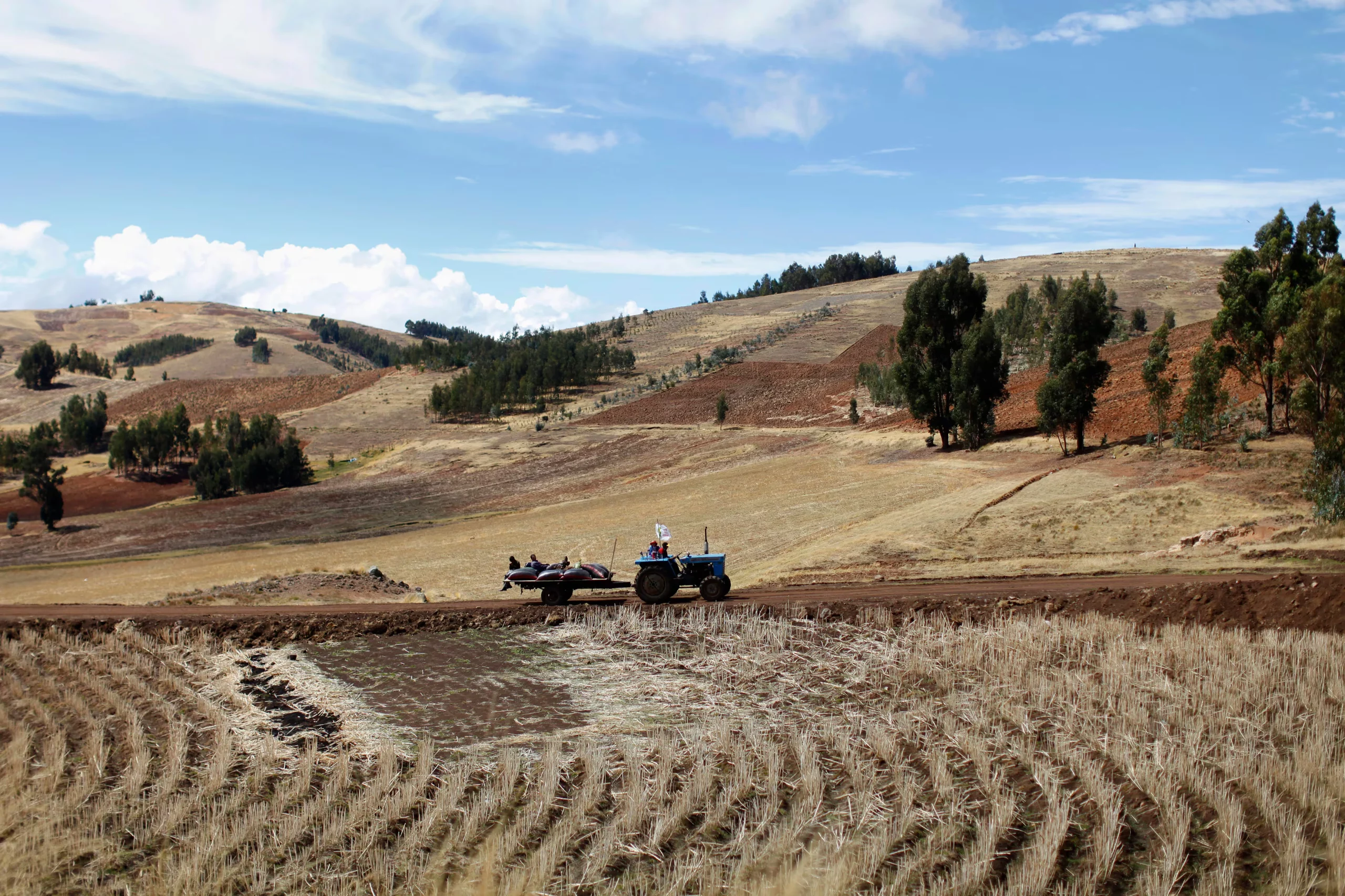
Peru’s disaster-risk agency has raised its drought warning almost sixfold, to 8.1 million hectares of farmland. The water deficit is expected to bite from October, just as the planting season begins.
What the new risk scenario says
The study comes from Cenepred, Peru’s national disaster-risk estimation center. It maps 8.1 million hectares of cropland at high or very high risk from the water deficit in the coming rainy season.
The very-high-risk band covers 3.5 million hectares of crops and 7.1 million hectares of pasture. It spans 484 districts in 16 departments, concentrated in the center and south of the country.
Another 4.6 million hectares of crops sit in the high-risk band, across 656 districts in 22 regions. Pasture and herds raise the stakes further, with 14 million hectares of grassland and 15 million head of livestock exposed.
The jump is the story in itself. In July the same agency warned of 1.4 million hectares at risk, a fraction of the new figure.
Two opposite emergencies at the same time
On 13 August the government declared a 60-day state of emergency in 607 districts over the water deficit. The decree covers 16 departments, from Apurímac and Cusco in the south to San Martín in the north.
Six weeks earlier, on 2 July, Peru had declared a separate emergency in 796 districts. That one was for intense rain, not drought.
Both trace back to the same driver, the El Niño weather pattern. Peru’s El Niño study commission, Enfen, kept the country on Coastal El Niño alert on 14 August.
The commission expects coastal warming to continue, most likely at strong to extraordinary intensity, into the southern summer. El Niño starves the highlands of seasonal rain while unleashing downpours on the coast.
Reservoirs are already low, and the heat is on
The deficit is not only a forecast. River flows are declining in the northern and southern Pacific basins, and southern reservoirs keep losing stored volume.
The Tinajones reservoir stood at 35.4 percent of capacity on 26 August, and Paucarani at 48.5 percent. Cenepred warns supply could be compromised without sufficient spring rain.
Temperatures are running two to four degrees Celsius above normal, according to Senamhi agrometeorologist Joel Yucra. The heat raises evaporation and favors pests on top of the drought.
The agency has added wildfire scenarios to the picture. More than one million hectares could burn in provinces of Lima and Cajamarca.
Which crops stand in the way
The 2026–2027 farm campaign starts in September, and rain-fed fields may have to delay sowing. The most exposed crops are potato, quinoa, maize, broad beans and cereals in the central and southern Andes.
Export fruit faces a double hit. The Agriculture Ministry says El Niño anomalies have already reduced mango, onion and asparagus harvests, while price swings have hurt cacao income.
Through November, heat anomalies could disrupt flowering and cut yields of blueberries, mangoes, table grapes and avocados. Those four crops anchor Peru’s fruit-export boom.
From December to March, peak export volumes would coincide with peak El Niño risk. Heavy rain could rot grapes and blueberries on the plant, cut shelf life and sever the Panamericana Norte highway.
Why it matters beyond the farm gate
Peru has become one of the world’s leading exporters of blueberries and table grapes. That trade depends on irrigation, roads and ports working on schedule.
The ministry reports agro-exports closed the first half of 2026 with a positive balance of US$191.3 million. That was up 3.5 percent on the same period of 2025, with a slowdown expected for the second half.
The human exposure is just as direct. Cenepred estimates nearly 2.8 million people in the highlands and jungle face the water deficit, through crops, pasture and daily livelihoods.
The sector has been here before. Farming shrank 2.9 percent in 2023 under Cyclone Yaku, then grew 5.4 percent in 2024 and 4.8 percent in 2025.
What to watch from here
The first marker is October, when Cenepred expects the water deficit to materialize. The rainy season itself runs from September to May.
The second is Enfen’s next bulletin, which will either confirm or soften the strong El Niño call. A downgrade would ease both the drought and flood scenarios at once.
The third is execution, because emergency decrees only free up money and procedures. Peru’s business association ComexPerú notes the state’s preventive capacity, not its diagnosis, is what fails in these crises.
More: Brazil news in English, every day from The Rio Times.
Frequently Asked Questions
How much of Peru’s farmland is at risk from the water deficit?
Cenepred’s new scenario maps 8.1 million hectares of cropland at high or very high risk, up from 1.4 million in July. It also lists 14 million hectares of pasture and 15 million head of livestock.
Why does Peru have drought and flood emergencies at the same time?
El Niño disrupts rainfall in both directions, starving the Andes of seasonal rain while bringing downpours to the coast. Peru declared a drought emergency in 607 districts on 13 August and a flood emergency in 796 districts on 2 July.
Which Peruvian exports could the water deficit hit?
The Agriculture Ministry sees risk to blueberries, table grapes, mangoes and avocados through the southern summer. Mango, onion and asparagus harvests have already shrunk under El Niño conditions.
Connected Coverage
We examined the export side of this story in Peru’s desert fruit boom is setting records and testing the country’s water future and reported on farm economics in Peru’s private investment jumped 17.6% in the second quarter.
Sources
Gestión; ComexPerú; Agencia Andina; Supreme Decrees 116-2026-PCM and 097-2026-PCM, published in El Peruano.
This article was produced by The Rio Times’ automated newsroom system. How we use AI · Report an error · Editorial responsibility: Matthias Camenzind, Editor-in-Chief