Peru Gets Its Eighth President in a Decade. He’s 83
Peru was without a president for 24 hours. On Tuesday evening, Congress voted 75–24 to censure José Jerí, who had held the presidency for 130 days after inheriting it by constitutional succession when Dina Boluarte was ousted last October.
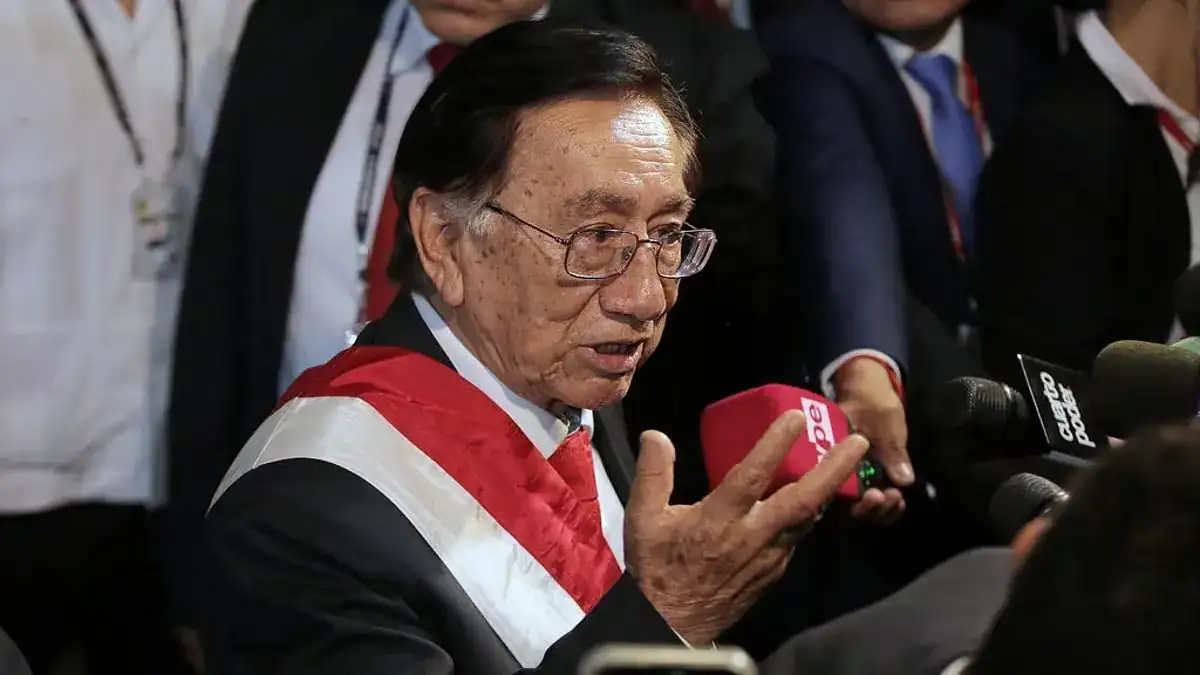
By Wednesday night, 83-year-old José María Balcázar — a former judge and congressman from Perú Libre, the party of jailed ex-president Pedro Castillo — had been elected speaker and was sworn in as the country’s eighth head of state in roughly a decade. No other democracy on Earth churns through leaders at this pace.
Jerí’s downfall was a scandal Peruvians dubbed “Chifagate.” Security cameras captured the president wearing a hood, entering a Chinese restaurant in Lima on December 26 to meet businessman Zhihua Yang in an unregistered meeting.
A second encounter followed on January 6. Yang had ties to a congressional investigation into irregular Chinese state company contracts, and prosecutors opened a probe for alleged influence-trafficking. Jerí apologized but denied wrongdoing. His approval collapsed from 58% to 30% in weeks, and former allies abandoned him ahead of elections.
The unlikely winner
The favored successor was María del Carmen Alva, a right-wing former speaker backed by both Renovación Popular and the Fujimorista bloc. But a cross-party coalition delivered 64 votes to Balcázar, a Cajamarca-born lawyer representing Lambayeque since 2021. His record is far from clean.
The Lambayeque Bar Association expelled him over allegations of fund misappropriation. During a 2023 debate on banning child marriage, he declared that early sexual relations “help the future psychological development of women” — statements condemned by the Women’s Ministry. He has since softened his position.
Five months to the ballot
Balcázar promised a peaceful transition and said he would evaluate Jerí’s cabinet before deciding on ministers. He ruled out pardoning Castillo, his party’s founder serving a prison sentence for his failed 2022 attempt to dissolve Congress. The April 12 election features 36 candidates, with Lima’s former mayor Rafael López Aliaga leading recent polls. This is part of The Rio Times’ daily coverage of Peru affairs and Latin American financial news.
Peru’s economy, meanwhile, defies its politics: GDP grew 3.4% in 2025 with inflation at just 1.7%, powered by mining. The last president to complete a full term was Ollanta Humala, who left office in 2016. Since then, one president lasted five days. Whether Balcázar can manage five months is the only question anyone in Lima is asking.
Related coverage: Brazil’s Morning Call | USA & Canada Intelligence Brief for Thursday, February 19, 2
More: Latin America news in English, every day from The Rio Times.
This article was produced by The Rio Times’ automated newsroom system. How we use AI · Report an error · Editorial responsibility: Matthias Camenzind, Editor-in-Chief
In depth