Paraguay Earns More From Bitcoin Miners Even as Half of Them Leave

Energy
Key Facts
—Revenue up. Paraguay’s state utility ANDE expects $350 million in mining tariffs in 2026, up from $295 million in 2025 and $100 million in 2024.
—Miners down. Legal operators fell from 71 at the start of 2025 to 41 in 2026, a drop of about 42%.
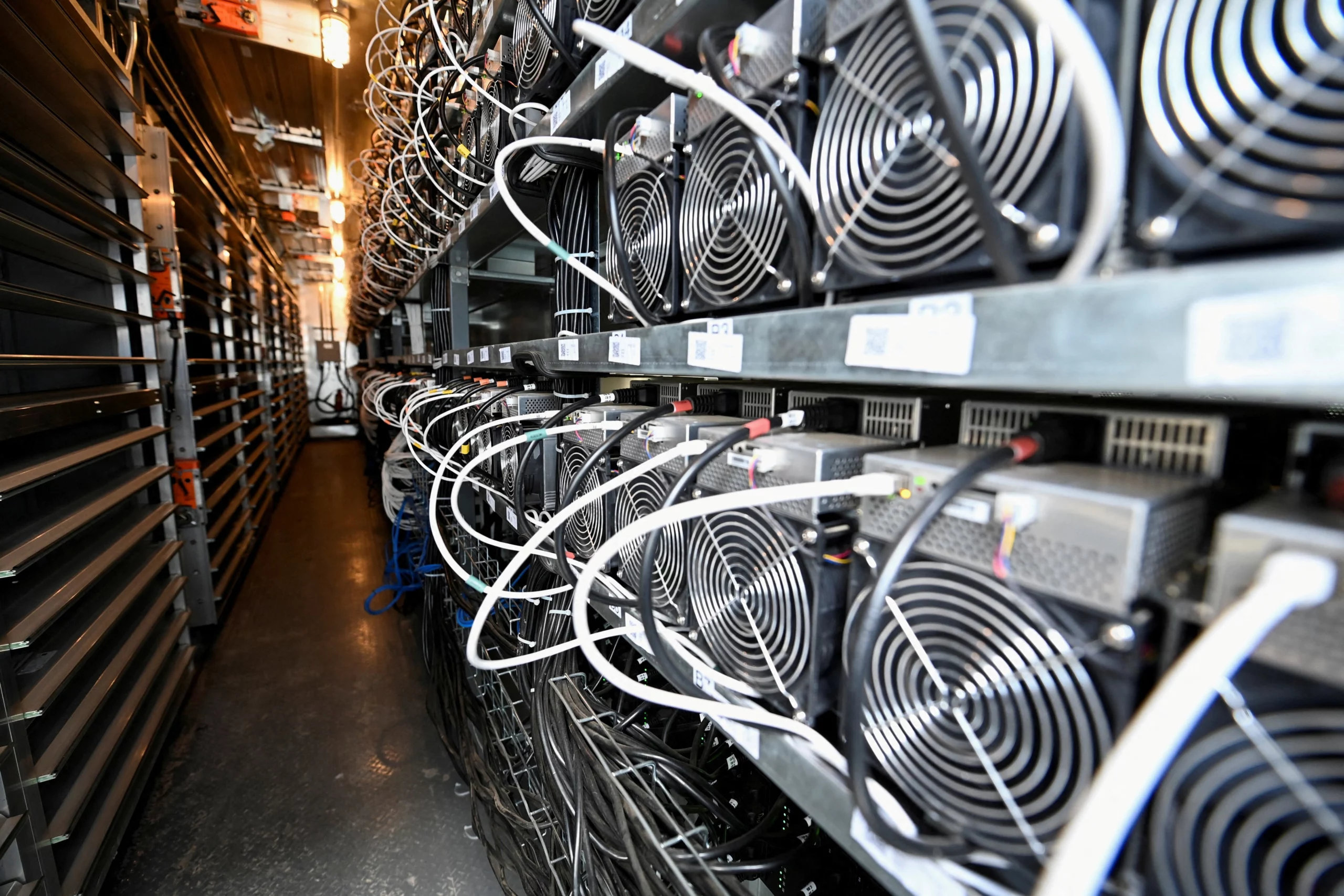
—Concentration. The 41 legal miners reserve 943.8 MW, and four firms alone take 730 MW, more than one Itaipú turbine produces.
—Scale. Paraguay hosts roughly 4.3% of global Bitcoin computing power, behind only the United States, Russia and China.
—The deadline. Every current mining contract expires on December 31, 2027, and ANDE calls the date non-negotiable as it reclaims power for AI and industry.
Paraguay is squeezing more money than ever out of Paraguay Bitcoin mining even as nearly half its licensed miners pack up and leave. The paradox tells a bigger story about who gets to use one of the world’s cheapest sources of clean power.
This small landlocked country punches far above its weight in crypto. It hosts a bigger share of the world’s Bitcoin computing power than almost anywhere, trailing only the United States, Russia and China.
The draw is simple and physical. Paraguay runs on fully renewable hydroelectric power from the giant Itaipú and Yacyretá dams.
For years it produced far more electricity than it could use. That surplus made power unusually cheap.
Why Paraguay Bitcoin mining is consolidating
The state electricity company, known as ANDE, expects mining to hand it about $350 million in tariffs this year. That is up from roughly $100 million just two years earlier, a serious cash injection for an underfunded utility.
Yet the number of legal miners has almost halved, from 71 at the start of last year to 41 now. Higher power rates and steep deposits, which can run to several million dollars before a large operator can plug in, have pushed smaller players out.
What is left is concentrated. The surviving miners reserve close to a thousand megawatts of capacity.
Just four companies account for the bulk of that. Between them they draw more power than a single one of Itaipú’s 20 turbines can generate.
The state is tightening the rest of the crypto world too. The tax authority now requires people to declare crypto gains, chasing evasion and applying the 10% income tax.
The country’s first criminal case tied to mining is also working through the courts. It concerns a noisy site in Villarrica.
For the utility, bigger clients are simply easier to police than hundreds of small farms. Some of those farms have been caught tapping the grid illegally.
Consolidation, in other words, suits the government. It also reshapes the industry.
The 2027 deadline that changes everything
The real turning point is a date. Every current mining contract expires at the end of 2027.
ANDE insists the deadline is firm. It wants that electricity back for homes and traditional industry as the country’s power surplus runs down.
The government has already signalled what comes next. A senior telecoms official summed up the plan bluntly, saying the country should unplug crypto and plug in artificial intelligence.
President Santiago Peña has courted Taiwanese and American investors for data centres. That fits the same ambition.
What the Paraguay Bitcoin mining shift means for investors
The lesson is that cheap power is no longer enough on its own. Miners with local infrastructure, high-voltage connections and close ties to ANDE can negotiate fresh terms.
Thinly capitalised newcomers are already eyeing Bolivia and Venezuela instead. Those markets promise cheaper entry.
There is a note of caution on the AI dream too. Local experts warn that data centres need near-perfect reliability and cooling.
Paraguay’s heat, limited network capacity and occasional blackouts make that switch harder. It is not as simple as swapping one set of machines for another.
Why is Paraguay Bitcoin mining revenue rising while miners leave?
Higher tariffs and large upfront deposits have pushed out smaller operators. The remaining large ones use more power at higher rates.
The result is fewer miners but bigger bills. So ANDE collects more even as the operator count falls.
What happens to mining after 2027 in Paraguay?
All current mining contracts expire at the end of 2027. ANDE says it will reclaim that power for homes, industry and AI data centres.
Some miners may renegotiate. But the utility has made clear that crypto is no longer its priority.
How big is Paraguay in global Bitcoin mining?
It hosts a little over 4% of the world’s Bitcoin computing power, behind only the United States, Russia and China. That is a striking share for a country of about seven million people, driven entirely by its cheap hydroelectric surplus.
More: Paraguay news in English, every day from The Rio Times.
Live Market IntelligenceCrypto — Live Market Board
Rio Times · Live Market Intelligence
Crypto — Live Market Board
-0.26%
| Instrument | Last | Change | YoY | Prev. | High | Low | Volume |
|---|---|---|---|---|---|---|---|
| BTC | 63,384 | -0.26% | -47.24% | 63,552 | 64,346 | 63,305 | 22,774,743,040 |
| ETH | 1,886 | +0.26% | -58.90% | 1,881 | 1,920 | 1,879 | 7,916,475,392 |
| SOL | 75.89 | -0.40% | -60.44% | 76.20 | 76.99 | 75.39 | 1,473,821,056 |
| XRP | 1.01 | -1.15% | -69.07% | 1.02 | 1.02 | 1.01 | 1,144,044,416 |
| BNB | 609.60 | -1.12% | -26.81% | 616.50 | 619.30 | 609.23 | 1,266,706,432 |
| ADA | 0.18 | -1.98% | -78.22% | 0.19 | 0.19 | 0.18 | 238,085,632 |
| DOGE | 0.07 | -1.56% | -70.00% | 0.07 | 0.07 | 0.07 | 553,256,192 |
| AVAX | 6.38 | +1.04% | -74.11% | 6.32 | 6.42 | 6.21 | 248,470,560 |
| LINK | 8.77 | -0.06% | -62.73% | 8.77 | 8.87 | 8.68 | 317,054,880 |
| DOT | 0.78 | -0.75% | -81.11% | 0.79 | 0.80 | 0.78 | 43,490,492 |
| LTC | 45.08 | -0.85% | -65.45% | 45.47 | 45.59 | 44.98 | 143,727,712 |
| BCH | 213.85 | +0.10% | -65.44% | 213.64 | 215.69 | 212.54 | 137,956,688 |
| TRX | 0.34 | +0.28% | -4.73% | 0.33 | 0.34 | 0.33 | 436,576,064 |
| XLM | 0.16 | -1.33% | -64.46% | 0.16 | 0.16 | 0.16 | 89,559,864 |
| HBAR | 0.07 | -0.53% | -74.67% | 0.07 | 0.07 | 0.07 | 22,546,186 |
| NEAR | 1.65 | +2.42% | -40.55% | 1.62 | 1.68 | 1.61 | 187,591,264 |
| ATOM | 1.40 | -2.36% | -70.15% | 1.44 | 1.44 | 1.40 | 18,626,964 |
| AAVE | 89.06 | +0.93% | -72.33% | 88.24 | 90.20 | 88.19 | 129,099,704 |
Frequently Asked Questions
Why has Bitcoin mining revenue in Paraguay increased even as the number of licensed miners dropped?
Legal operators fell from 71 to 41 between 2025 and 2026, yet the remaining miners are much larger. Just four firms reserve 730 MW of the total 943.8 MW held by all 41 operators.
This concentration means fewer but bigger players are paying higher tariffs. That pushed ANDE’s expected mining revenue from $100 million in 2024 to $350 million in 2026.
What makes Paraguay an attractive location for Bitcoin mining?
Paraguay runs entirely on renewable hydroelectric power from the Itaipú and Yacyretá dams. For years these produced more electricity than the country could consume, keeping power prices unusually cheap.
This mix of clean and affordable energy helped Paraguay capture roughly 4.3% of global Bitcoin computing power. That places it behind only the United States, Russia and China.
What is the future of Bitcoin mining contracts in Paraguay?
All current mining contracts are set to expire on December 31, 2027, and ANDE has described that deadline as non-negotiable. The utility intends to reclaim the reserved electricity capacity for use by artificial intelligence operations and industrial customers.
This article was produced by The Rio Times’ automated newsroom system. How we use AI · Report an error · Editorial responsibility: Matthias Camenzind, Editor-in-Chief