Panama Buys Full Control of Key Trans-Panama Oil Pipeline

Panama · Economy
Key Facts
—The Asset. Petroterminal de Panama operates the 131-kilometre Trans-Panama oil pipeline and marine terminals linking the Caribbean and Pacific coasts.
—The Stake. The government already holds 59% of the company and is exercising a contractual option from 1977 to buy the remaining 41% from US-based NIC Holding Corp.
—The Mechanism. The purchase price will be set by a pre-agreed formula applied to audited financial statements, though no figure has been publicly disclosed.
—The Financing. The acquisition will be funded entirely from PTP’s own revenues and cash flow, requiring no National Treasury resources and adding no public debt.
—The Policy. President José Raúl Mulino’s administration frames the move as strengthening sovereignty over strategic infrastructure and capturing more value for the state.
Panama has formally launched the process to acquire full ownership of Petroterminal de Panama by purchasing the outstanding 41% private stake, a move that consolidates state control over a critical oil transport artery without resorting to expropriation.
A Strategic Infrastructure Asset Changes Hands
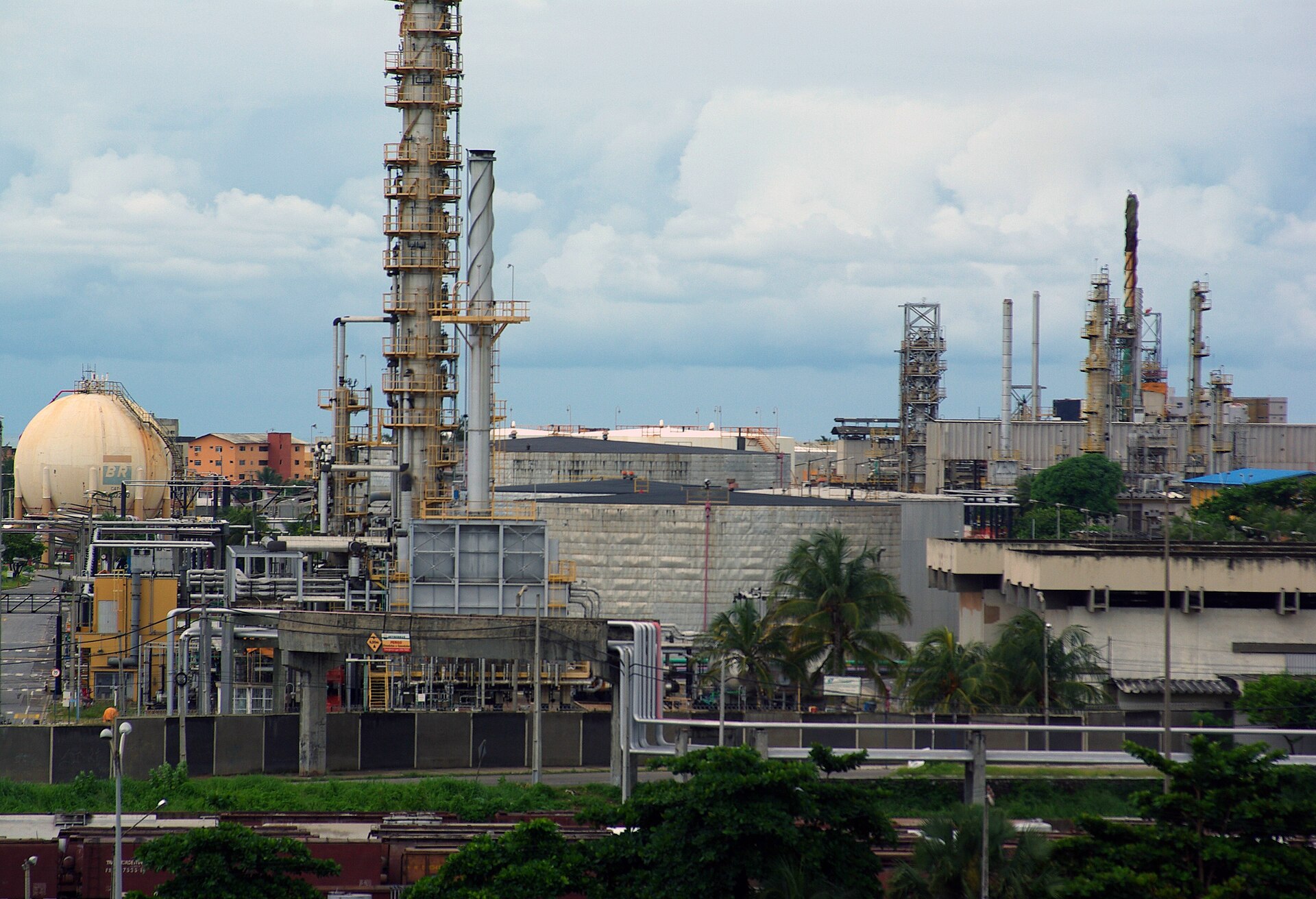
Petroterminal de Panamá, S.A. (PTP) is far more than a pipeline company; it is a parallel oil canal sitting roughly 300 kilometres west of the Panama Canal. The company owns and operates the 131-kilometre Trans-Panama Pipeline running from Chiriquí Grande on the Caribbean coast to Charco Azul on the Pacific, along with marine terminals on both sides for storage, transshipment and export of hydrocarbons.
Created in 1977 as a joint venture between the Republic of Panama and NIC Holding Corp., a US firm based in Melville, New York, PTP was originally designed to handle Alaskan crude oil that could not transit the Panama Canal due to vessel size restrictions. The government’s stake has grown over the decades, and the contractual option to acquire the private partner’s shares has been embedded in the association contract since the company’s founding.
The Legal Architecture Behind the Petroterminal de Panama Deal
Economy and Finance Minister Felipe Chapman has been unequivocal in describing the transaction as the exercise of a pre-existing contractual right, not a nationalisation by decree. The legal foundation rests on Clause Ten of the PTP Association Contract, approved by the National Assembly and accepted by all shareholders, which grants the state the right to purchase the private participation under a formula-based valuation mechanism.
The government’s official communication stresses that the operation is fully legal and legitimate, explicitly stating it is neither a unilateral modification of contractual conditions nor an expropriation. This distinction matters enormously for investor confidence across Latin America, where forced nationalisations have historically rattled markets and triggered international arbitration claims.
How Panama Will Pay Without Touching the Treasury
Perhaps the most striking feature of the announced transaction is its financing structure: the acquisition will be paid entirely from PTP’s own revenues and cash flow. The Economy and Finance Ministry has pledged that no funds will be drawn from the National Treasury, no new sovereign debt will be incurred, and spending on public works, social programmes or other state investments will remain unaffected.
While the precise instruments—whether internal loans, dividend retention or intercompany arrangements—have not been detailed in public documents, the high-level principle is clear. For bondholders and rating agencies watching Panama’s fiscal trajectory, a self-financing acquisition of a cash-generating asset reads very differently from a debt-funded expansion of the state’s balance sheet.
The Mulino Doctrine: Sovereignty and Value Capture
President José Raúl Mulino, who took office in 2024, has articulated a clear policy vision of strengthening national control over strategic assets. The presidency explicitly ties the PTP acquisition to objectives of fortifying Panamanian-controlled strategic infrastructure, increasing resources for the state, and reinforcing national sovereignty in the face of geopolitical challenges affecting strategic sectors.
Minister Chapman has added a governance dimension, pledging that once fully state-owned, PTP will be managed under international standards of efficiency, transparency and corporate governance. This suggests an intent to professionalise management and potentially prepare the asset for future partnerships or even capital-market operations, rather than running it as a politicised state enterprise.
Panama’s Expanding Energy and Logistics Ambitions
The PTP acquisition does not exist in a vacuum; it forms part of a broader repositioning of Panama as a multi-fuel, multi-modal energy hub. The country has seen major private investment into power generation, including the 670-megawatt Gatún combined-cycle LNG plant that began commercial operations in October 2024 and is described as a strategic asset for energy security and renewables integration.
Full control of PTP could allow Panama to more flexibly integrate the pipeline and terminals into regional energy trade, including potential future LPG, refined product or even renewable-linked logistics chains. The government has already signed memoranda of understanding on LPG infrastructure projects with Energy Transfer LP, signalling an appetite for leveraging state-controlled assets to attract private capital into complementary ventures.
What the Petroterminal de Panama Deal Means for Investors and Expats
For the internationally-minded audience watching Latin America, the PTP transaction sends a nuanced signal. On one hand, Panama is consolidating state ownership of a strategic asset; on the other, it is doing so through a contractually pre-agreed mechanism, with formula-based pricing, self-financing and explicit pledges of professional governance.
This approach stands in contrast to more disruptive state interventions seen elsewhere in the region and may actually reinforce Panama’s reputation for legal predictability. For expats and professionals living in Panama, the deal underscores the country’s continued investment in energy and logistics infrastructure, sectors that generate skilled employment and support the dollarised economy’s long-term competitiveness.
Unanswered Questions and What to Watch Next
As of mid-July 2026, the government has not disclosed the acquisition price, the specific closing date or the detailed payment schedule. The valuation formula and audited financial statements are cited as the basis for price setting, but the output of that formula remains confidential, making any numerical estimate of the transaction value speculative at this stage.
Investors and analysts should watch for the publication of the audited financials underpinning the valuation, any National Assembly scrutiny of the deal, and signals about future capital expenditure plans for the pipeline and terminals. The government’s ability to deliver on its governance pledges—transparency, efficiency, international standards—will be tested once PTP operates as a wholly state-owned entity, and that performance will shape perceptions of Panama’s broader investment climate for years to come.
More: Panama news in English, every day from The Rio Times.
Frequently Asked Questions
Why is Panama buying the private stake in Petroterminal de Panama now?
President Mulino’s administration views full ownership as a way to capture more of the economic value generated by the asset and reinforce national sovereignty over critical infrastructure. The government also sees PTP as a platform for future investments in energy, logistics and maritime sectors, aligning with Panama’s broader strategy to become a regional energy hub.
Will the Petroterminal de Panama acquisition affect Panama’s public debt?
No, according to official statements the transaction will be financed entirely from PTP’s own revenues and cash flow. The Economy and Finance Ministry has explicitly pledged that no National Treasury resources will be used and no new sovereign debt will be incurred, making the deal neutral for Panama’s fiscal metrics and public investment programme.
Is this a nationalisation or expropriation of foreign assets?
The government has been careful to frame the transaction as the exercise of a pre-existing contractual purchase option dating back to 1977, not as a nationalisation or expropriation. The price will be determined by a formula agreed in the original association contract and applied to audited financial statements, with the government stressing that the process is fully legal and accepted by all shareholders.
Connected Coverage
Regulators Approve the Tigo–Movistar Merger
Panama’s Children’s Hospital Will Cost Taxpayers $537.9 Million Through 2033
This article was produced by The Rio Times’ automated newsroom system. How we use AI · Report an error · Editorial responsibility: Matthias Camenzind, Editor-in-Chief