Opinion: One Year of Bolsonaro in Brazil – Threats, More Arms Sales and a Still Sluggish Economy
RIO DE JANEIRO, BRAZIL – The first year in office of Brazil’s President Jair Bolsonaro did not end without further polemics and worrying statistics.
Most recently, the Brazilian National Federation of Journalists (FENAJ) published statistics according to which Bolsonaro allegedly launched at least ten attacks per month on professional journalists, the media and the press in general during his first year in office.

In addition, arms sales to private individuals have risen sharply, state security forces that have committed crimes have been pardoned on a large scale, and attempts have been made to return to torture methods similar to those used during the military dictatorship.
Just in time for Christmas, the ultra-right-wing President issued a pardon for delinquent security forces convicted of homicide. It is particularly controversial that the pardon also covers off-duty offenses committed as the result of “an existing risk to oneself or third parties”.
The Christmas pardon is a tradition and a presidential privilege in Brazil. This year, however, it has been used almost exclusively for the benefit of police officers, military personnel and firefighters. The fire brigade in Brazil is militarized and armed according to the French model and is one of its security forces.
In the past, the government had already tried to push a law that would guarantee police officers impunity for acts committed in “justified situations of fear, surprise or intense emotion”. However, his plan failed in Congress.
In addition, the number of deaths caused by police actions and by the army forces deployed in the course of the “Operations to Guarantee Law and Order” (GLO) has risen sharply over the past year.
Sales of firearms to civilians have also skyrocketed. By November, the number of registered weapons had increased by 48 percent. Bolsonaro has now, at the beginning of the year, urged citizens to arm themselves and reduced the bureaucratic hurdles for this.
In the course of this hardliner policy, the decision to dissolve the authority fighting torture was also taken, established six years ago by the then President Dilma Rousseff and which had supervisory duties over prisons, psychiatric and detention centers.
The UN, therefore, reprimanded Brazil for breaking the International Pact against Torture. Bolsonaro himself went one step further when he threatened to use the “Pau de Arará” (macaw’s perch, a notorious torture method from the time of the military dictatorship) in corruption cases.

Bolsonaro has thus largely kept his domestic pledges. However, the balance of his first year in office is likely to be modest. The economy is not yet in full rebound and is on the brink of recession. The high unemployment rate, which should drop as a result of his labor market reforms, remains high.
Nor can he claim any success in foreign policy. His rapprochement with the USA and his inclusion in the front line against Venezuela have not brought him any economic benefits.
The Brazilian north is dependent on Venezuelan electricity supplies and in the past Brazil has benefited from cheap energy imports from Venezuela, which are now failing to materialize.
Bolsonaro’s threats of military action against his northern neighbor have been removed by the military, as they are aware of the strategic weakness of their army in the Amazon basin.
In addition, the US has recently issued the surprising threat of raising import tariffs on Brazilian steel and aluminum, which was shortly after dropped by President Donald Trump.
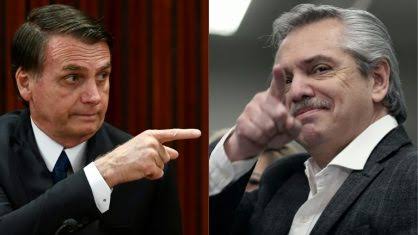
Moreover, the Mercosur regional alliance is also in crisis, despite potential ratification of the free trade agreement with the EU. Before the presidential elections in Argentina and a likely electoral success for center-left candidate Alberto Fernández, Bolsonaro’s threats ranged from excluding Argentina to a complete rupture with the alliance. However, this was put into perspective by Foreign Minister Ernesto Araújo.
After Bolsonaro had clearly stated what he thought of Fernández’s election and showed no interest in coming to his inauguration, more conciliatory tones were heard at the beginning of the year.
The Argentinean president was welcome in Brazil if he planned a visit. In addition, Bolsonaro is now hoping to work with Argentina to achieve a successful agreement with the EU.
More: Latin America news in English, every day from The Rio Times.
This article was produced by The Rio Times’ automated newsroom system. How we use AI · Report an error · Editorial responsibility: Matthias Camenzind, Editor-in-Chief