Opinion: Milei’s Victory Lessens Argument for U.S. Jet Sales to Argentina
By Pratik Chougule*
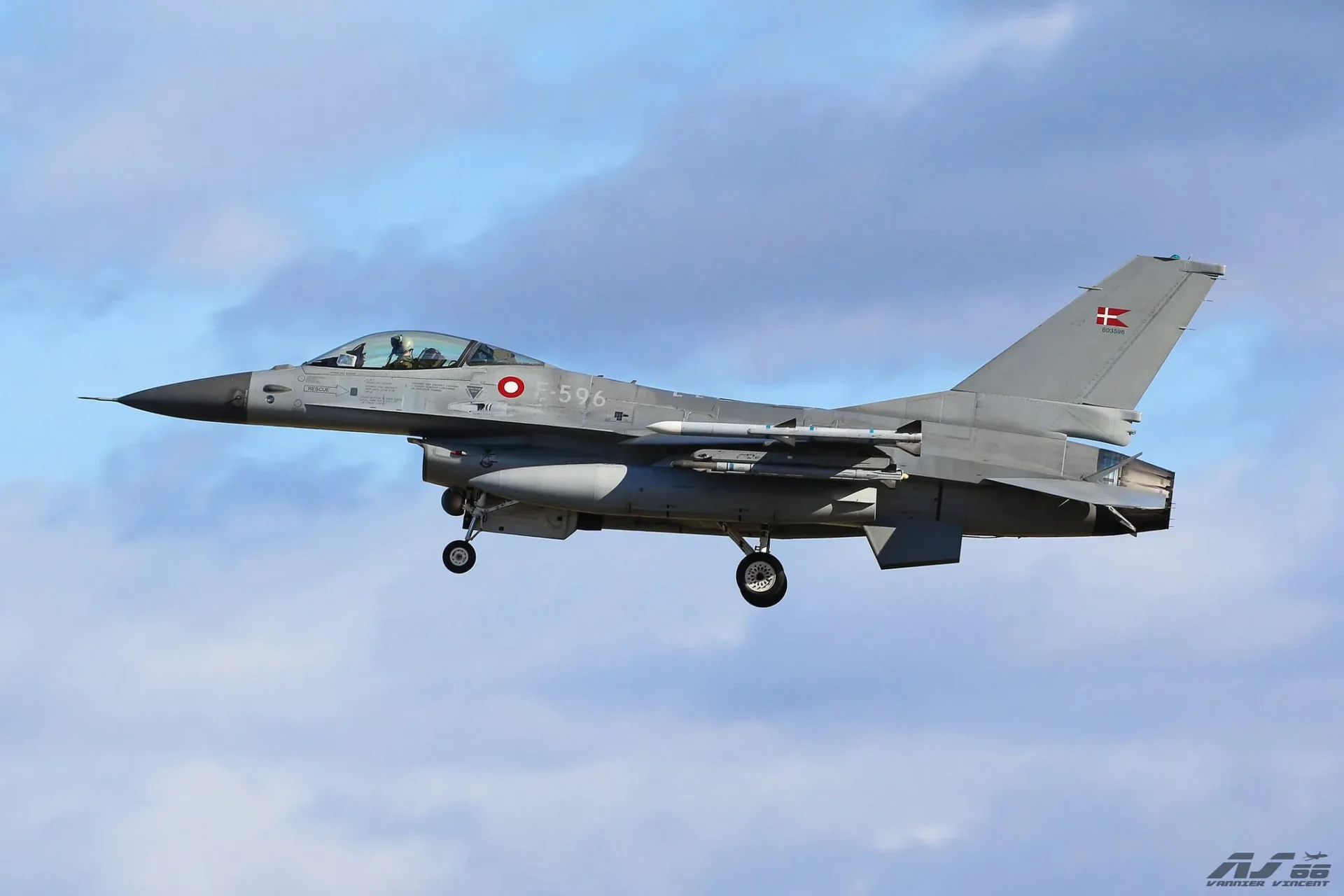
(Opinion) On the eve of Argentina’s presidential elections this November, diplomats in the State Department’s Office of Regional Security and Arms Transfer approved the transfer of 38 F-16s from Denmark to Argentina.
The deal was motivated in part by Washington’s interest in preserving U.S. influence amid an uncertain election.
As late as the evening before the elections, U.S. officials had little inclination that libertarian candidate Javier Milei was slated for a landslide victory.
A victory by Sergio Massa would have represented a vote of confidence in Argentina’s left-leaning Peronist establishment.
Milei’s victory, however, calls into question the thesis that sales of U.S. weapons are either necessary or desirable to keep Argentina in the U.S. fold.
Milei’s Shift from Peronism toward the United States
Successive Peronist governments have considered diversifying the foreign sources of their weapons programs not only out of economic considerations but also, at times, as an ideological counterweight to the United States and the neoliberal reforms it pressures Buenos Aires to implement.
When Argentina retired its 16 Dassault Mirage III fighters in 2015, Buenos Aires fielded offers to purchase the JF-17 Thunder, produced jointly by Pakistan and China, as well as the India Light Combat Aircraft Tejas.
Including a $664 million request in Argentina’s fiscal 2022 draft budget for purchasing 12 JF-17s lent credence to concerns in Washington that Buenos Aires was pursuing a tilt toward the BRICS bloc.
In a break from the Peronist approach, however, Milei campaigned on the proposition that Argentinian interests would be served with a reorientation toward the “the free world” in a “fight against socialists and statists.”
“Our geopolitical alignment is with the United States and Israel. That’s our international policy,” Milei declared after his August primary victory.
Milei has vowed that Argentina will not join the BRICS bloc under his leadership.
Argentina’s Debt
Milei also sees Argentina’s debt as a matter not only of domestic reform, but also as a foreign policy challenge.
In this sense, Milei has a mandate to raise fundamental questions about why, as Argentina’s public debt was expanding in 2021, Argentina’s defense ministry requested $664 million for multi-purpose fighter aircraft acquisitions, and why, today, as Argentina’s approaches $400 billion, it should proceed with this arms transfer worth $338.6 million.
Complicating Relations with Democratic Allies
In a context in which the Argentina’s president-elect has committed to re-orienting the country’s foreign policy toward the United States and its democratic allies, sales of advanced American fighters create more complications than they’re worth.
Transfers of F-16s and other American jets exacerbate diplomatic tensions among the very U.S.-allied democracies with which Argentina seeks closer ties.
Since the 1982 Falklands War, the UK has imposed arms-import restrictions that prohibit Argentina from acquiring aircraft with British parts.
Even as London has eased restrictions on military export licenses for end users in Argentina, it has prevented U.S. allies from selling fighters to the country.
British pressure, as an example, blocked a potential deal by Israel to provide Argentina with Kfir jets.
Undermining Argentina’s Defense Strategy
The sale of high-end American fighters would steer Argentina away from a defense strategy that has allowed the country to emerge as a stable U.S. ally.
Argentina’s successful transition from military dictatorship to democracy since the 1980s can be credited, to a large extent, to its decision to maintain military expenditures below 1 percent of GDP.
Limiting the responsibilities of the Argentinian military to a narrow range of external threats has cultivated a zone of peace among South America’s rival democracies.
Costs of Importing U.S. Fighters
Purchasing F-16s would do little to enhance Argentina’s security, but it would saddle the country with the expenses and perverse incentives that bedevil U.S. allies that import advanced U.S. fighters.
The reason why Denmark is eager to sell F16s to Argentina in the first place is to remove the fleet by the time it is replaced by 27 fully operational F-35 stealth fighters
The strategic rationale for Denmark purchasing F-35s is dubious at best. But Washington pressures U.S. allies to buy F-35s to help shield the program from scrutiny in Congressional budget debates.
This is particularly true today given that the U.S. Government Accountability Office recently reported that the Pentagon’s $1.7 trillion F-35 procurement program is impeded by serious “sustainment-related issues.”
The promise of the Milei revolution is not that Argentina can become yet another destination for overpriced American fighter jets.
It is possible that Argentina can strengthen alliances with the world’s democracies as a peace-oriented, fiscally re-balanced power.
* Pratik Chougule is a foreign policy analyst based in Washington, D.C. He served at the State Department in the George W. Bush administration.
In depth
Editorial responsibility: Matthias Camenzind, Editor-in-Chief · Editorial standards · Report an error
Read More from The Rio Times