Oil Wrap: USO Rises, Petrobras Wavers; Saudi Strikes
Key Facts
- The USO crude tracker rose 1.14% to US$156.66 after Saudi Arabia shut its East-West pipeline, the line that carries its crude to the Red Sea without passing through the Gulf.
- Petrobras shares fell 0.24% to US$21.15 even as Brazil’s pre-salt province supplied 82.4% of national oil and gas output in July 2026.
- YPF climbed 1.40% to US$56.33 as higher global crude prices improve the economics of Argentina’s Vaca Muerta shale play.
- Ecopetrol slipped 0.06% to US$17.74 in a session where Latin American state producers diverged from a stronger global benchmark.
- October WTI settled at US$102.16 a barrel, up about 2%, with Brent futures at US$105.68, extending a rally that had touched a four-month high earlier in the session.
- The Middle East was the dominant driver with roughly 4 to 5 million barrels a day of Saudi export capacity offline and no date announced for its return.
Today’s Focus
Oil settled higher on Monday, September 14, 2026. Saudi Arabia had closed its East-West pipeline after a drone strike, taking out a route that normally carries 4 to 5 million barrels a day out of service. The United States Oil Fund, which tracks WTI crude, rose 1.14% to US$156.66, and Brent November futures closed at US$105.68 per barrel.
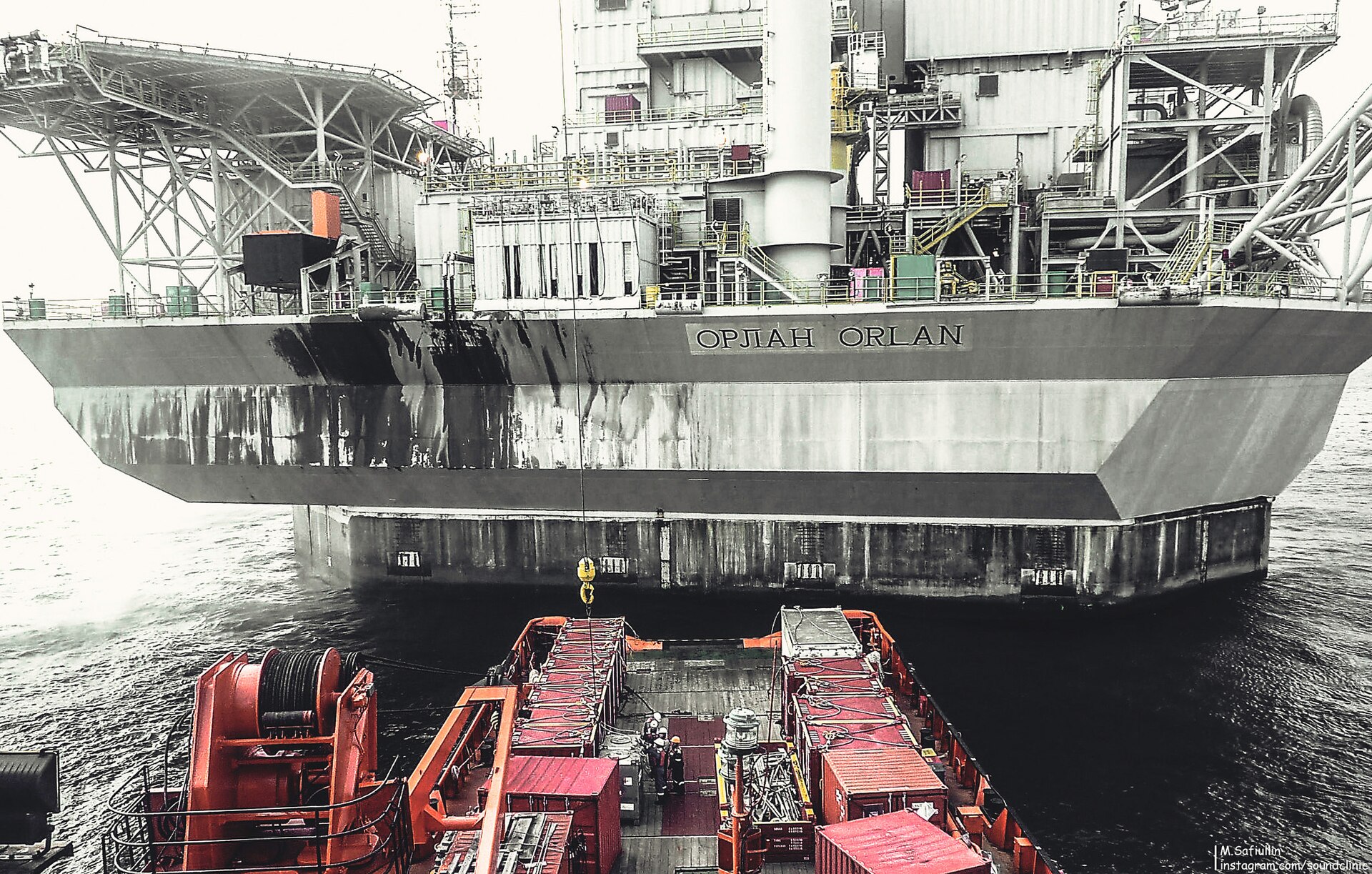
Brazil’s pre-salt story is still a production winner. The province provided 82.4% of national oil and gas output in July 2026, and Petrobras’ FPSO Alexandre de Gusmão in the Mero field hit its 180,000 barrels-per-day capacity. Yet ADRs for Petrobras itself dipped 0.24% to US$21.15, suggesting investors were less impressed by volumes than by other risks.
Argentina’s YPF gained 1.40% to US$56.33, a cleaner read on how high crude prices feed directly into Vaca Muerta’s unconventional economics. Colombia’s Ecopetrol was flat at US$17.74, down 0.06%, showing that state-owned operators do not always track the underlying market in lockstep.
What matters today. Middle East supply risk is the overriding variable, even as Latin America’s production engines keep running at full tilt.
01 The session in one read
Oil prices rose on Monday, September 14, 2026, as the shutdown of Saudi Arabia’s East-West pipeline brought real supply losses back into view. Traders pushed October WTI to US$102.16 a barrel, a gain of about 2%, while Brent November futures finished at US$105.68, up 1.02%.
The rally fed into the United States Oil Fund, which tracks WTI crude and closed up 1.14% at US$156.66. Latin American equity proxies were divided: Argentina’s YPF rose strongly, Colombia’s Ecopetrol was flat, and Brazil’s Petrobras slipped despite record domestic output.
Monday’s gain did not signal weaker physical supply from Latin America. Brazil pumped a record 4.498 million barrels of oil per day in July and Petrobras’ total operated production hit 4.87 million boe/d in the second quarter. That makes the day’s Petrobras dip notable: investors can see strong local fundamentals but are still choosing to hedge against global disruption. The variable to watch is whether the pipeline stays shut and keeps Brent above US$105. That would lift import-sensitive Latin American economies as much as it helps exporters.
02 The board
The price board reads like a contrast between global energy scarcity and local operator caution. The USO crude tracker gained 1.14% to US$156.66, while YPF added 1.40% to US$56.33 as Argentina’s shale economics improved with each dollar of crude appreciation.
Petrobras closed at US$21.15, down 0.24%, and Ecopetrol at US$17.74, down 0.06%, even though both companies stand to benefit from higher prices over time. In other words, Monday’s trading did not reward every Latin American energy name equally.
| Asset | Level | Change |
|---|---|---|
| WTI crude (USO). | US$156.66 | +1.14% |
| Petrobras | US$21.15 | -0.24% |
| Ecopetrol | US$17.74 | -0.06% |
| YPF | US$56.33 | +1.40% |
Source: RT and exchange data, 14 September 2026. Where a commodity has no spot feed, an exchange-traded tracker or leading producer is shown as a labelled proxy.
Live Market IntelligenceThe live market board
Rio Times · Live Market Intelligence
Latin America — Cross-Market Board
| Instrument | Last | Change | YoY | Prev. | High | Low | Volume |
|---|---|---|---|---|---|---|---|
| IBOV | 185,500.88 | -0.91% | +21.85% | 187,206.89 | 168,310 | 167,142 | — |
| IPSA | 11,342.39 | +1.09% | — | 11,220.60 | 11,210 | 10,984 | 1,513,213,483 |
| IPC MEX | 64,216.98 | +0.46% | +12.17% | 63,924.77 | 66,121 | 65,405 | 108,886,187 |
| MERVAL | 3,084,547 | -0.46% | +30.51% | 3,022,485 | 3,042,365 | 2,991,150 | — |
| COLCAP | 2,588.25 | -0.06% | — | 9.04 | 9.05 | 9.02 | 4,133 |
| BVL PERÚ | 59,184.75 | -0.92% | — | — | — | — | — |
| USD/BRL | 5.16 | +0.01% | -5.13% | 5.16 | 5.18 | 5.14 | — |
| EUR/BRL | 5.95 | +1.01% | -5.83% | 5.89 | 5.98 | 5.94 | — |
| USD/MXN | 17.06 | -0.24% | -8.58% | 17.10 | 17.08 | 17.01 | — |
| USD/CLP | 913.98 | +0.04% | -5.67% | 913.65 | 915.11 | 906.68 | — |
| USD/COP | 3,140 | +0.03% | -22.04% | 3,139 | 3,141 | 3,105 | — |
| USD/PEN | 3.36 | -0.66% | -4.82% | 3.38 | 3.38 | 3.35 | — |
| USD/ARS | 1,493 | +0.10% | +12.96% | 1,491 | 1,494 | 1,480 | — |
| USD/UYU | 40.27 | +1.24% | +1.80% | 39.77 | 40.27 | 40.23 | — |
| USD/PYG | 5,939 | +1.68% | -19.54% | 5,841 | 5,939 | 5,925 | — |
| USD/BOB | 11.64 | -0.76% | +72.04% | 11.73 | 11.72 | 11.64 | — |
| USD/DOP | 58.34 | +1.25% | -3.44% | 57.62 | 58.34 | 58.04 | — |
| USD/CRC | 445.92 | +0.89% | -9.71% | 441.97 | 448.50 | 445.92 | — |
Live Company IntelligencePetroleo Brasileiro Petrobras SA ADR — the full investor dossier
Wall Street view
Valuation & profitability
Price & risk
$10.6552-wk high
$21.59
Revenue trend · 6y
Ownership
Dividend
03 What moved it
The catalyst was concrete. Drones launched from Iraq’s Maysan province struck Saudi Arabia’s East-West Crude Oil Pipeline on Friday, September 11. The kingdom shut the 1,200-kilometre line, which runs from Abqaiq on the Gulf to Yanbu on the Red Sea. No group has claimed responsibility. The Houthis’ seizure of the Yemeni Red Sea coast and Perim Island had already changed the security calculus around the Bab el-Mandeb Strait.
Freight costs for Russian Black Sea crude hit record levels in the week to September 6, according to energy trade reports, which tightened the broader fuel market even before this week’s escalation. Refiners have outperformed crude majors in 2026 because the product market is even tighter than the raw oil market.
04 The Latin American read
Brazil’s pre-salt province provided 82.4% of national oil and gas output in July 2026, cementing its role as the engine of Petrobras’ export machine. The Alexandre de Gusmão FPSO in the Mero field has reached its maximum capacity of 180,000 barrels per day, and national output was 4.498 million barrels per day in July 2026.
Still, Petrobras’ New York shares closed lower, a reminder that markets price equities on more than physical output. Argentina’s YPF rose with crude because Vaca Muerta shale is highly sensitive to global prices, while Ecopetrol’s nearly flat close suggests limited immediate repricing of Colombia’s upstream potential.
05 The names to watch
YPF remains the clearest Latin American beneficiary of a sustained crude rally because Vaca Muerta output rises quickly when prices justify drilling. Petrobras is the production heavyweight, but its share move shows investors are also watching politics and capital discipline in Brasília.
Meanwhile, wealthy private investors are flocking to oil and gas assets, with energy trade reporting that global billionaires’ wealth jumped 12.8% year-on-year to US$15.1 trillion in 2025. That flow of capital adds another demand layer to the broader complex as central banks now face renewed inflation pressure from crude near US$100 or above.
06 The outlook
The path of least resistance remains higher while the pipeline stays shut. There is little chance of a diplomatic reset while shipping lanes are under direct threat. A global fuel squeeze is already visible, and record freight costs are compounding the shortage of affordable delivered barrels.
For Latin America, higher crude prices help exporters and hurt importers. The dominant variable is whether WTI holds above US$101 after Monday’s settlement, with the USO at US$156.66 offering a liquid way to track the next leg.
07 What to watch
- The East-West pipeline: Saudi Arabia has given no restart date. Every week the line stays shut keeps 4 to 5 million barrels a day out of the market and holds a premium in Brent and WTI.
- Petrobras pricing: The gap between record Brazilian production and the ADR’s 0.24% drop shows investors are watching policy risk as closely as output.
- Vaca Muerta economics: YPF’s gain of 1.40% to US$56.33 suggests that every upward tick in crude is being mapped onto Argentine shale profitability.
- Global product market: Refiner outperformance means diesel and gasoline shortages could drive oil prices higher even if crude supply stabilises.
Frequently Asked Questions
Why did oil rise on Monday?
Saudi Arabia shut its East-West pipeline after a drone strike on September 11, removing 4 to 5 million barrels a day of export capacity. Brent settled at US$105.68 and WTI at US$102.16.
Did Petrobras rise with the oil price?
No, Petrobras ADRs fell 0.24% to US$21.15 even though Brazil’s pre-salt province supplied 82.4% of national output in July 2026.
What is USO?
The United States Oil Fund is an exchange-traded fund that tracks WTI crude; it closed at US$156.66, up 1.14% on Monday.
How is Argentina benefiting?
YPF shares rose 1.40% to US$56.33 because higher crude prices improve the economics of Vaca Muerta shale drilling.
Market data: RT
This article was produced by The Rio Times’ automated newsroom system. How we use AI · Report an error
LatAm Markets: Live Signals → — real-time movers, turnover leaders and FX across Latin America.
Read More from The Rio Times