MARKETS · LATIN AMERICA
Key Facts
- —What broke The interest rate on ten-year United States government debt went above 5% during Monday’s trading. It is the benchmark price of money worldwide.
- —Why 5% matters It is the highest that rate has reached since July 2007, before the global financial crisis.
- —The catch worth knowing It never closed above 5%. The official closing rate for Monday was 4.97%, and traders watch closes, not intraday spikes.
- —What it does to Latin America Every dollar borrowed by a Brazilian, Mexican or Colombian government gets more expensive. Money leaves emerging markets for safer American bonds.
- —What happens tomorrow The US Federal Reserve decides rates on Wednesday 16 September. Futures markets put the odds of a rate rise above 85%.
- —Where the damage landed Brazil. The Ibovespa fell 0.91% to 185,500.88 while Mexico, Chile and Colombia all finished higher.
The cost of borrowing in dollars just touched a level last seen before the 2008 financial crisis. Latin America pays for that in every currency.
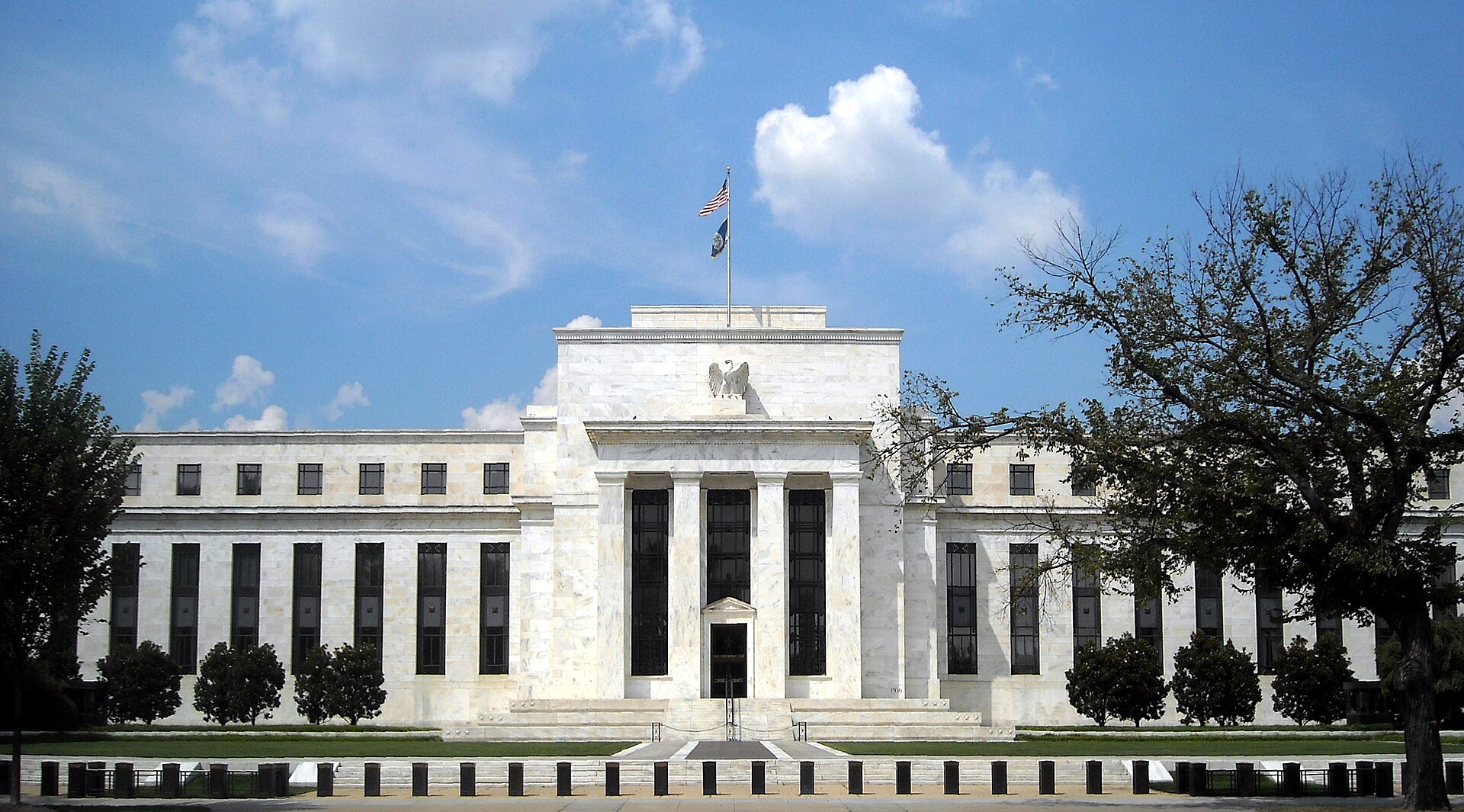
The yield on ten-year United States Treasury debt reached 5.011% on Monday and traded at 5.02% to 5.03% on Tuesday. That is the highest since July 2007, and it sets the price of money for every borrower in Latin America.
The Number and What It Is Not
The ten-year Treasury yield is the interest rate the United States government pays to borrow for a decade. It is the reference point for almost every other loan on earth.
It touched 5.011% during Monday’s session. On Tuesday it traded between 5.02% and 5.03%.
The Treasury’s official closing rate for Monday was 4.97%. A yield that spikes intraday and settles below the round number is a different event from one that closes above it.
Both versions clear the October 2023 peak. That makes July 2007 the correct comparison, not 2023.
Why a Number in Washington Sets Prices in São Paulo
A Brazilian pension fund can buy a United States government bond paying 5% with essentially no credit risk.
For that fund to buy Brazilian corporate debt instead, the Brazilian bond has to pay materially more. When the American rate rises, the Brazilian rate has to rise with it.
The same arithmetic applies to Mexican, Colombian and Chilean sovereign debt. Every government in the region refinances at a worse price when Washington borrows at 5%.
Capital also moves physically. Money parked in emerging-market funds flows back to dollar assets, which pushes local currencies down and imported prices up.
Live Market IntelligenceBrazil — Live Market Board
Rio Times · Live Market Intelligence
Brazil — Live Market Board
-0.91%
185,500.88
-0.91%
64,216.98
+0.46%
11,342.39
+1.09%
3,084,547
-0.46%
2,588.25
-0.06%
59,184.75
-0.92%
| Instrument | Last | Change | YoY | Prev. | High | Low | Volume |
|---|---|---|---|---|---|---|---|
| IBOV | 185,500.88 | -0.91% | +21.85% | 187,206.89 | 168,310 | 167,142 | — |
| USD/BRL | 5.16 | +0.01% | -5.13% | 5.16 | 5.18 | 5.14 | — |
| SELIC | 14.00% | — | — | — | — | — | |
| PETR4 | 41.64 | -0.05% | +35.19% | 41.66 | 41.97 | 41.15 | 41,499,400 |
| VALE3 | 72.97 | +0.83% | +30.75% | 72.37 | 73.54 | 72.66 | 17,658,000 |
| ITUB4 | 38.60 | -1.03% | +4.57% | 39.00 | 39.34 | 38.39 | 29,487,800 |
| BBDC4 | 16.85 | +0.36% | +3.50% | 16.79 | 16.90 | 16.67 | 19,416,900 |
| BBAS3 | 19.37 | +0.47% | +0.73% | 19.28 | 19.44 | 19.16 | 11,069,200 |
| B3SA3 | 14.26 | -0.21% | +12.73% | 14.29 | 14.47 | 14.11 | 33,037,800 |
| ABEV3 | 14.89 | -0.80% | +21.91% | 15.01 | 15.07 | 14.81 | 16,453,100 |
| WEGE3 | 47.59 | +0.49% | +29.99% | 47.36 | 48.08 | 47.36 | 3,364,600 |
| PRIO3 | 59.14 | -0.19% | +50.67% | 59.25 | 59.81 | 58.74 | 3,325,600 |
| SUZB3 | 41.33 | +2.35% | -23.55% | 40.38 | 41.48 | 40.35 | 3,914,900 |
| RENT3 | 34.68 | -0.09% | +0.84% | 34.71 | 34.96 | 34.35 | 7,979,100 |
| AZZA3 | 15.89 | -2.63% | -53.76% | 16.32 | 16.42 | 15.82 | 1,330,300 |
| CSNA3 | 4.30 | +0.47% | -42.65% | 4.28 | 4.41 | 4.26 | 10,076,100 |
| GGBR4 | 24.69 | +2.19% | +51.38% | 24.16 | 24.85 | 24.18 | 7,047,600 |
| ENEV3 | 24.21 | -1.38% | +70.49% | 24.55 | 24.64 | 23.99 | 9,297,000 |
The Fed Decides Tomorrow
The Federal Open Market Committee meets and announces on Wednesday 16 September.
Futures pricing on the CME puts the probability of a rate increase above 85%. For most of this decade the question at Fed meetings was how fast to cut.
A rise would confirm what the bond market has already priced. It would also remove the last argument for the view that this is a temporary dislocation.
Latin American central banks watch that decision more closely than their own governments do. Brazil, Mexico and Colombia all set policy partly by reference to it.
Oil Made It Worse Before It Got Better
The East-West pipeline, known as Petroline, carries Saudi crude across the peninsula to the Red Sea port of Yanbu.
It was suspended on Friday 11 September after attacks blamed on Iranian-backed fighters operating in Iraq.
Brent crude peaked at US$109.44 on Monday and had eased to around US$107 by Tuesday. It did not trade above US$110.
For Brazil and Colombia, both oil exporters, a higher crude price is a partial offset. For Chile and most of Central America, which import nearly all their fuel, it is a straight cost.
The Technology Selloff Was About Safety, Not Earnings
A second jolt hit the same session and has been widely misdescribed as a growth scare.
Anthropic’s Dario Amodei published an essay urging the industry to slow the advance of artificial-intelligence capability. Sam Altman agreed publicly and ruled out an OpenAI listing this year. Elon Musk also agreed.
The Nasdaq 100 fell 1.2% intraday to a six-month low. Nvidia lost 3%, AMD between 4.5% and 5%, Micron 5.4%, ASML 6%, and SoftBank more than 10%.
Separately, Steve Bannon and Bernie Sanders speak back-to-back on Tuesday afternoon at the Future of Life Institute’s Pro-Human Assembly in Washington. They do not appear jointly, and no technology chief executives are attending.
Brazil Took the Hit Alone
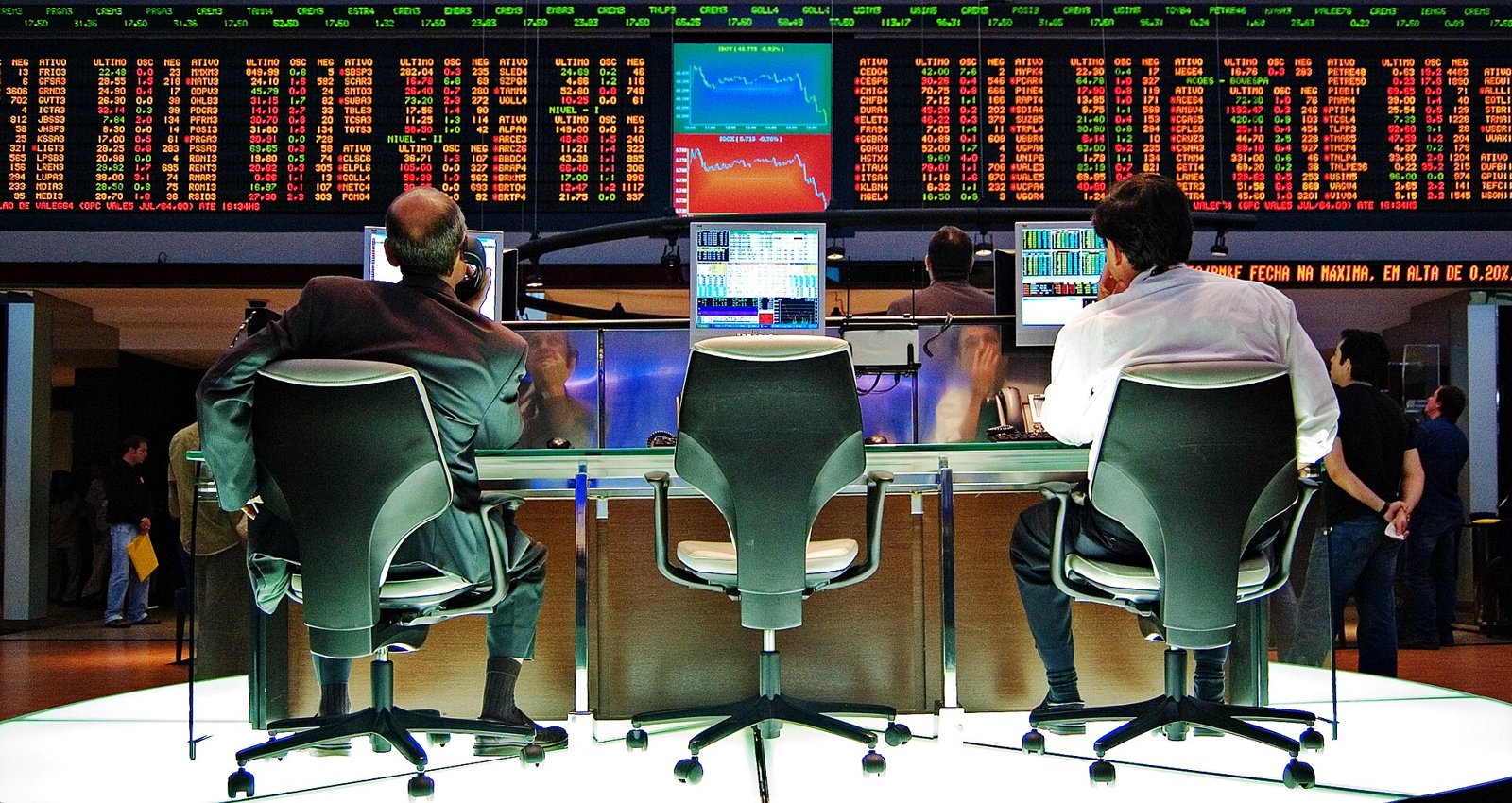
The Ibovespa closed at 185,500.88, down 0.91%. Vale fell 3.48%, the heaviest drag on the index.
The Brazilian volatility index, VXBR, rose 5.24% to 30.15. That is the highest reading since the index launched in March 2024. The index has a short history, so it is not a record of fear.
Mexico’s IPC rose 0.26%. Chile’s IPSA gained 0.46%. Colombia’s COLCAP was essentially flat at minus 0.06%.
The regional selloff that the headline numbers imply did not happen. Brazil fell and its neighbours did not.
Argentina Is Not the Story It Was
Argentine country risk sits at 485 basis points and did not move.
That is close to multi-year lows. The 2026 low was 404 basis points in July, and the September 2025 peak was 1,454.
Reports of Argentine risk climbing toward 500 describe a level the market has already been sitting at for weeks.
Argentina spent most of the past decade above 1,000 basis points. Flat at 485 is the achievement, not the alarm.
What to Watch
The Fed announcement on Wednesday afternoon is the single event that matters this week.
After that, the question is whether the ten-year yield closes above 5% rather than merely touching it. A close changes how every treasurer in the region models next year’s funding.
Petroline’s restart would take several dollars off Brent quickly.
And the Brazilian volatility index is worth watching for the opposite reason to the one usually given. It is measuring a court in Brasília as much as a bond market in New York.
More: Business and markets, every day from The Rio Times.
Frequently Asked Questions
How high did the US 10-year yield go?
It reached 5.011% intraday on Monday 14 September and traded at 5.02% to 5.03% on Tuesday. The official close for Monday was 4.97%.
When was it last this high?
July 2007, before the global financial crisis. The October 2023 peak has been exceeded.
Why does it affect Latin America?
It raises the cost of borrowing in dollars for every government and company in the region. It also pulls money back to the United States.
What did Latin American markets do?
Brazil’s Ibovespa fell 0.91% to 185,500.88. Mexico, Chile and Colombia all finished flat or higher.
When does the Federal Reserve decide?
Wednesday 16 September. Futures markets price the chance of a rate rise above 85%.
Is Argentine country risk rising?
No. It is 485 basis points and unchanged, near multi-year lows.
Sources: US Department of the Treasury, CME FedWatch, B3, Bolsa Mexicana de Valores, Bolsa de Santiago, Bloomberg, Reuters.
This article was produced by The Rio Times’ automated newsroom system. How we use AI · Report an error
Read More from The Rio Times