Nigeria Told Drivers to Switch to Gas. Then the Nigeria CNG Price Rose 65% in a Year.
NIGERIA · ENERGY
Key Facts
- —The background Nigeria scrapped its petrol subsidy in 2023 and pump prices multiplied almost overnight.
- —The alternative The state pushed compressed natural gas, which Nigeria has in abundance and burns cheaper.
- —What drivers did Thousands converted buses, taxis and three-wheelers, paying for the conversion themselves.
- —What happened next The gas price rose 65% in one step, from about US$0.17 a cubic metre to US$0.29.
- —This week The state oil company says it is forcing more gas to filling stations to ease the squeeze.
- —The catch Who set that higher price is disputed. The government’s own gas initiative denied doing it.
Removing the petrol subsidy in 2023 was the hard part. Persuading Nigerians that gas is cheaper has turned out to be harder.
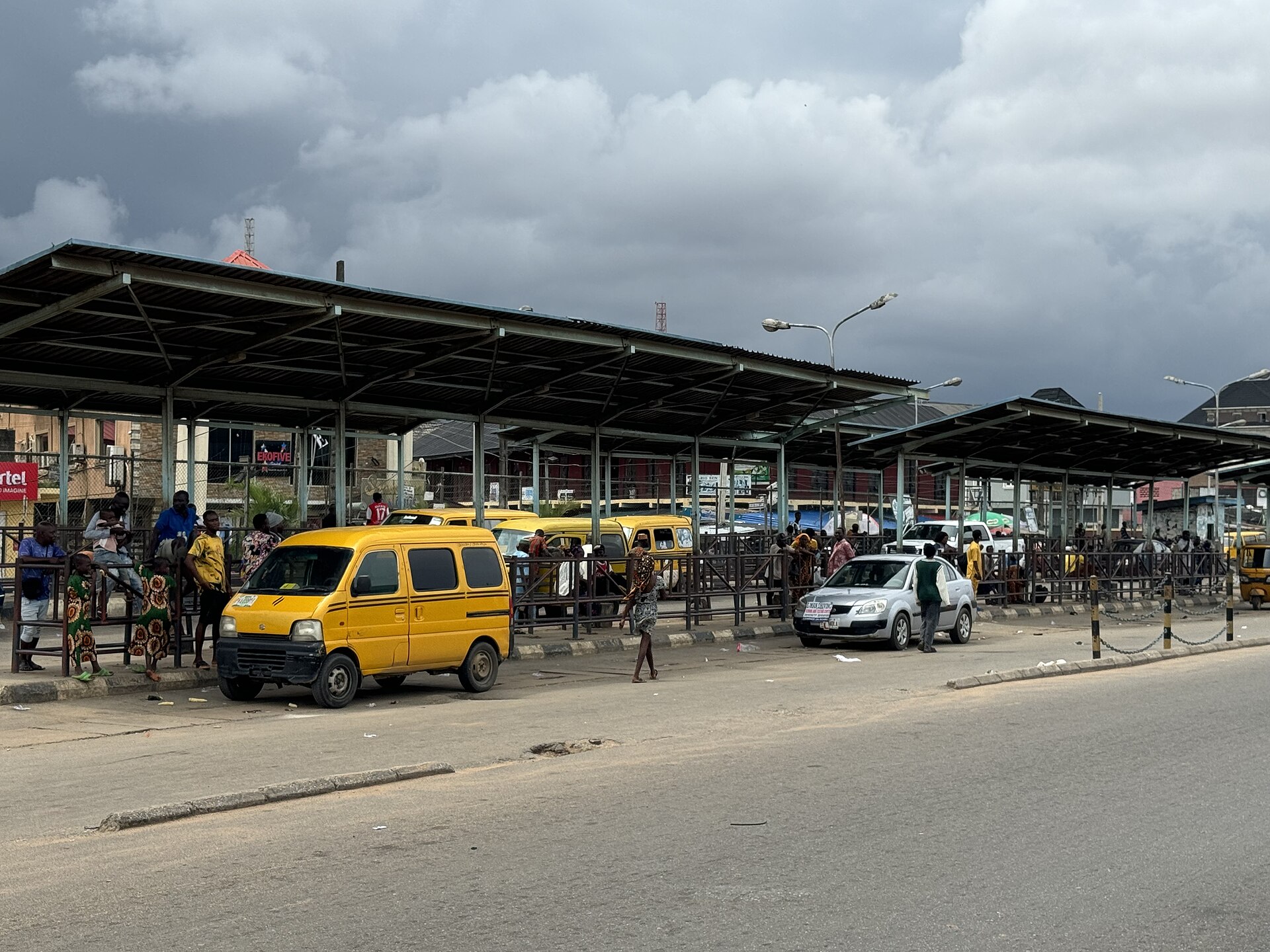
In May 2023 Nigeria’s new president ended the petrol subsidy in one sentence of his inaugural address. The pump price roughly tripled, and the Nigeria CNG price became the alternative on offer.
The government’s answer was to point at gas. Nigeria has some of the largest reserves in the world, and compressed natural gas burns cheaper than petrol in a converted engine.
What Drivers Were Asked to Do
Converting a vehicle to run on compressed natural gas is not a small undertaking. It means fitting a pressurised cylinder and a separate fuel system, and it costs money up front.
Commercial drivers went first, because they burn the most fuel and the arithmetic mattered most to them. Buses, taxis and the three-wheelers Nigerians call keke went over in the thousands.
A 2023 partnership between the state oil company and a private operator envisaged 35 filling stations. Capacity was put at more than 200,000 vehicles a day.
The promise underneath it was simple. Convert now, pay less every day afterwards.
What Happened to the Price
On 1 September 2025 the Nigeria CNG price in Lagos and Abuja jumped 65% in one step. It went from 230 naira a cubic metre, about US$0.17, to 380.
At today’s rate of 1,326.52 naira to the dollar, 380 naira is about US$0.29 a cubic metre. The old 230 naira was roughly US$0.17 at that same rate.
The two cities were catching up with a rate already applied elsewhere rather than being singled out. That nuance was lost on anyone who had just paid for a conversion.
Who imposed the increase is genuinely disputed. Reports attributed it to the federal government, and three days later the Presidential Initiative on CNG publicly denied it.
Its spokeswoman said no directive or policy had been issued to alter pump prices, and blamed private operators’ costs. A separate account credited the state oil company’s gas marketing arm.
The 380 figure was restated in August 2026 by the automotive council. Heavy vehicles pay 450 naira, about US$0.34, so the structure has held for a year.
This Week’s Announcement
Against that background, the state oil company says it is increasing supply. Olalekan Ogunleye, its executive vice president for gas, power and new energy, made the announcement.
The mechanism is enforcement rather than investment. Nigerian producers carry domestic gas delivery obligations, and the company says it is enforcing them.
A gas master plan launched on 30 January 2026 had added 791 million standard cubic feet a day by August. The target is 4.6 billion a day by 2030.
That puts progress at about 17% of the target. These are daily rates rather than cumulative volumes, which matters because Nigeria produces gas in the billions of cubic feet every day.
Who Wins and Who Waits
Operators and fleet owners gain if supply becomes reliable. A converted bus only saves money when there is gas in the pump at the end of the route.
Petrol importers lose ground as vehicles switch, and domestic gas producers gain leverage over them. That reordering is the point of the policy.
Consumers sit in between, facing high petrol prices and a gas price that has also climbed. The affordability promise depends entirely on whether supply grows faster than demand.
So far it has not. The gap between the official Nigeria CNG price and what a Lagos driver actually pays is the recurring complaint.
The Bigger Bet
Nigeria is trying to trade dependence on imported petrol for the monetisation of its own gas. On paper that suits a country sitting on enormous reserves.
In practice it is constrained by pipelines, compressors and filling stations that do not yet exist in sufficient numbers. Infrastructure is slower than announcements.
The same calculation is being made across the continent, as governments look for fuel systems they control. Nigeria is the largest test of whether it works.
More: Africa news in English, every day from The Rio Times.
Frequently Asked Questions
What is the Nigeria CNG price now?
380 naira per standard cubic metre for passenger vehicles in Lagos and Abuja, about US$0.29 at 1,326.52 naira to the dollar. Heavy vehicles pay 450 naira, about US$0.34.
How much did it rise?
From 230 naira a cubic metre, about US$0.17, to 380 on 1 September 2025, an increase of 65%. Some retailers were reported charging more.
Who raised the price?
This is disputed. Reports attributed it to the federal government, but the Presidential Initiative on CNG denied issuing any directive and blamed operators’ costs. Another account credited the state oil company’s gas marketing arm.
What did the state oil company announce?
That it is enforcing domestic gas delivery obligations to push more supply to filling stations, small liquefaction plants and other gas projects.
Why did Nigerians switch to gas at all?
Because the petrol subsidy was removed in 2023 and pump prices roughly tripled. Compressed natural gas was promoted as the cheaper domestic alternative.
Sources: Vanguard and Premium Times of September 2026, Nairametrics of September 2025, allAfrica, Arise News and Legit.ng.
This article was produced by The Rio Times’ automated newsroom system. How we use AI · Report an error
Read More from The Rio Times