Mystery and Menace: Unveiling Costa Rica’s “Cave of Death”
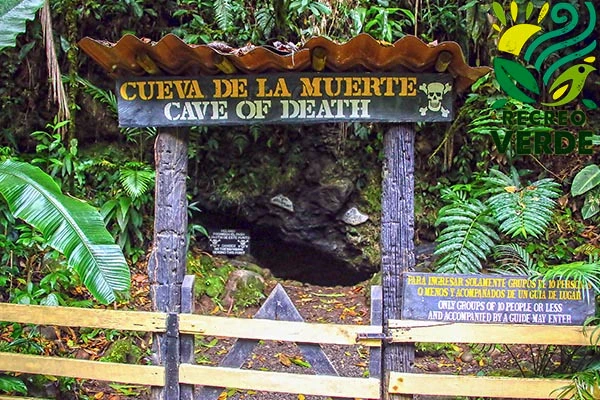
Tucked in Costa Rica’s verdant wilderness near superb thermomineral springs, the “Cave of Death” offers a deadly mystery fatal to any trespasser.
This natural wonder is notorious for its deadly environment, where small animals and potentially humans die almost instantly upon entering.
A foreboding skull and bones sign reinforces strict safety measures, warning everyone to stay away from the ‘Cueva de la Muerte’.
So, why such a dark name? Buried within, this geological marvel emits carbon dioxide (CO₂), a gas denser than air by 1.5 times.
At elevated levels, it extinguishes life by depleting the oxygen, rendering the cave uninhabitable for any organism.
Consider this alarming fact: the cave releases 30 kilograms of CO₂ each hour. This emission matches the carbon footprint of a car traveling 256 kilometers.
Annually, it spews roughly 263 tons of CO₂, akin to driving 2.2 million kilometers or encircling the globe 56 times.
Belgian researcher Guy van Rentergem provided these stark figures, underscoring the cave’s environmental significance.
Nestled near Poás Volcano and Toro Amarillo River, the cave’s entrance is narrow, keeping most at a safe distance.
The fatal gases stem from organic matter in deep-seated mineral deposits, formed under harsh conditions within the Earth’s magma.
Despite its peril, the “Cave of Death” has become a popular tourist spot. From the San Carlos area, thrill-seekers join guided tours.
Guides, bearing torches, highlight the cave’s lack of oxygen, adding to the eerie allure.
This natural spectacle serves as more than a tourist attraction; it’s a vivid reminder of nature’s hidden forces.
Exploring such sites offers deep insights into Earth’s intricate systems and the fragile balance vital for life.
Visiting the “Cave of Death” educates on geological dynamics and the effects of natural CO₂ emissions on our ecosystem.
This article was produced by The Rio Times’ automated newsroom system. How we use AI · Report an error · Editorial responsibility: Matthias Camenzind, Editor-in-Chief
Read More from The Rio Times