IBOV 185,147.15 ▼ 0.02% IPSA 11,315.26 ▼ 1.14% IPC MEX 64,639.55 ▼ 0.35% MERVAL 3,034,599 ▼ 0.48% COLCAP 2,565.50 ▲ 0.82% BVL PERÚ 59,789.81 ▼ 0.28% USD/BRL5.13▼ 0.01% USD/MXN16.97▲ 0.37% USD/CLP933.48▼ 0.12% USD/COP3,126▼ 0.07% USD/PEN3.35▼ 0.18% USD/ARS1,511▲ 0.15% USD/UYU40.24— 0.00% USD/PYG5,947— 0.00% USD/BOB12.40— 0.00% USD/DOP59.00— 0.00% USD/CRC448.67— 0.00% USD/GTQ7.63— 0.00% USD/HNL26.84— 0.00% USD/NIO36.62▲ 0.69% USD/VES812.65▲ 0.78% USD/PAB1.00— 0.00% USD/BZD2.00— 0.00% USD/JMD 157.28 — 0.00% USD/TTD6.71— 0.00% EUR/BRL5.96▲ 0.14% BRENT 88.88 ▼ 0.03% WTI 83.11 ▼ 0.11% IRON ORE 161.91 — — COPPER 6.61 ▲ 0.03% GOLD 4,461 ▲ 1.78% SILVER 65.59 ▲ 1.26% SOY 1,184 ▲ 3.20% CORN 480.50 ▲ 10.02% WHEAT 655.00 ▲ 3.93% COFFEE 317.25 ▼ 5.51% SUGAR 16.43 ▼ 1.79% ORANGE JUICE 138.55 ▼ 0.47% COTTON 85.03 ▲ 2.33% COCOA 5,719 ▲ 3.18% BEEF 223.60 ▼ 3.93% CATTLE 339.10 ▼ 3.16% LITHIUM 75.20 ▲ 1.47% PETR4 41.64 ▼ 0.05% VALE3 72.97 ▲ 0.83% ITUB4 38.60 ▼ 1.03% BBDC4 16.85 ▲ 0.36% ABEV3 14.89 ▼ 0.80% BBAS3 19.37 ▲ 0.47% B3SA3 14.26 ▼ 0.21% WEGE3 47.59 ▲ 0.49% PRIO3 59.14 ▼ 0.19% SUZB3 41.33 ▲ 2.35% RENT3 34.68 ▼ 0.09% AZZA3 15.89 ▼ 2.63% CSAN3 3.22 ▼ 1.83% RAIZ4 0.25 — 0.00% PCAR3 2.75 ▼ 0.36% GMAT3 3.65 ▼ 1.08% PSSA3 48.13 ▼ 0.54% CVCB3 1.33 ▼ 2.92% POSI3 3.36 ▲ 2.44% SLCE3 13.34 ▲ 0.30% NATU3 8.14 ▼ 0.73% IBOV 185,147.15 ▼ 0.02% IPSA 11,315.26 ▼ 1.14% IPC MEX 64,639.55 ▼ 0.35% MERVAL 3,034,599 ▼ 0.48% COLCAP 2,565.50 ▲ 0.82% BVL PERÚ 59,789.81 ▼ 0.28% USD/BRL 5.16 ▲ 0.01% USD/MXN 17.06 ▼ 0.24% USD/CLP 913.98 ▲ 0.04% USD/COP 3,140 ▲ 0.03% USD/PEN 3.36 ▼ 0.66% USD/ARS 1,493 ▲ 0.10% USD/UYU 40.27 ▲ 1.24% USD/PYG 5,939 ▲ 1.68% USD/BOB 11.64 ▼ 0.76% USD/DOP 58.34 ▲ 1.25% USD/CRC 445.92 ▲ 0.89% USD/GTQ 7.62 ▲ 2.21% USD/HNL 26.79 ▲ 1.57% USD/NIO 36.62 ▲ 0.69% USD/VES 762.44 ▼ 0.13% USD/PAB 1.00 — 0.00% USD/BZD 2.00 — 0.00% USD/JMD 157.28 — 0.00% USD/TTD 6.70 ▲ 0.61% EUR/BRL 5.95 ▲ 1.01% BRENT 88.88 ▼ 0.03% WTI 83.11 ▼ 0.11% IRON ORE 161.91 — — COPPER 6.61 ▲ 0.03% GOLD 4,461 ▲ 1.78% SILVER 65.59 ▲ 1.26% SOY 1,184 ▲ 3.20% CORN 480.50 ▲ 10.02% WHEAT 655.00 ▲ 3.93% COFFEE 317.25 ▼ 5.51% SUGAR 16.43 ▼ 1.79% ORANGE JUICE 138.55 ▼ 0.47% COTTON 85.03 ▲ 2.33% COCOA 5,719 ▲ 3.18% BEEF 223.60 ▼ 3.93% CATTLE 339.10 ▼ 3.16% LITHIUM 75.20 ▲ 1.47% PETR4 41.64 ▼ 0.05% VALE3 72.97 ▲ 0.83% ITUB4 38.60 ▼ 1.03% BBDC4 16.85 ▲ 0.36% ABEV3 14.89 ▼ 0.80% BBAS3 19.37 ▲ 0.47% B3SA3 14.26 ▼ 0.21% WEGE3 47.59 ▲ 0.49% PRIO3 59.14 ▼ 0.19% SUZB3 41.33 ▲ 2.35% RENT3 34.68 ▼ 0.09% AZZA3 15.89 ▼ 2.63% CSAN3 3.22 ▼ 1.83% RAIZ4 0.25 — 0.00% PCAR3 2.75 ▼ 0.36% GMAT3 3.65 ▼ 1.08% PSSA3 48.13 ▼ 0.54% CVCB3 1.33 ▼ 2.92% POSI3 3.36 ▲ 2.44% SLCE3 13.34 ▲ 0.30% NATU3 8.14 ▼ 0.73%
since 2009
Tuesday, September 8, 2026

Brazil Business - Brazil

Most Brazilian Companies Feel the Strain from U.S. Trade Policy

By · July 1, 2025 · 2 min read

Daily Brief

The morning intel from across Latin America. Free.

By subscribing you agree to our privacy policy. We never share your email.

A majority of Brazilian companies now report that U.S. trade policy changes are hurting their business.

According to a recent survey by the Brazilian Institute of Economics at the Getulio Vargas Foundation, more than half of Brazil’s manufacturers say they have already felt, or expect to feel, negative effects from new U.S. tariffs.

The United States remains Brazil’s third-largest export market, buying 12% of all Brazilian exports in 2024. However, the U.S. government has sharply increased tariffs on key Brazilian goods. In June 2025, tariffs on Brazilian steel and aluminum doubled from 25% to 50%.

A new 10% tariff now applies to nearly all Brazilian exports to the U.S. These measures target major sectors like steel, aluminum, auto parts, and even agricultural products such as orange juice and coffee.

Brazil is the second-largest steel supplier to the U.S., shipping 4.1 million tons in 2024. The steel and aluminum sectors feel the most immediate impact. Over 60% of Brazil’s steel exports and 15% of aluminum exports went to the U.S. last year.
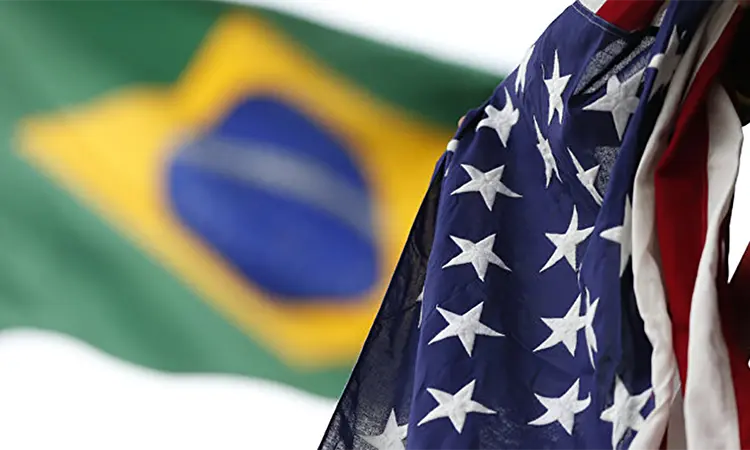
Most Brazilian Companies Feel the Strain from U.S. Trade Policy
Most Brazilian Companies Feel the Strain from U.S. Trade Policy.
One-stop reference
Company Intelligence
Every listed company in Latin America — financials, ownership and structure for 1,450+ companies across 26 exchanges, in one place.
Browse the directory →
RT
Ask Rio Times
Latin American markets, currencies and companies.
Open the full Ask Rio Times →

Companies that rely on exports for 10% to 50% of their revenue are the most vulnerable, with over 80% saying the tariffs have already affected them or will soon do so. The effects go beyond lost sales.

Many companies now face higher costs for imported materials, which squeezes profit margins. Some manufacturers worry that goods from other countries, blocked from the U.S. by similar tariffs, may flood the Brazilian market, increasing competition and putting more pressure on local prices.

Uncertainty is another major concern. Over a third of companies say they do not yet know how the new tariffs will affect them. This makes it harder for businesses to plan investments or hire new workers.

The Brazilian government has not yet imposed retaliatory tariffs but passed a law allowing it to respond if needed. Officials say they will defend Brazilian interests, possibly through the World Trade Organization.

Some sectors, like agribusiness, may see small gains if U.S. competitors lose market share elsewhere. However, only 3.3% of surveyed companies believe they could benefit from the new trade barriers. Most expect more challenges than opportunities.

The U.S. justifies these tariffs as a way to protect its industries, but official data shows the U.S. had a $7 billion trade surplus with Brazil in goods in 2024. The Brazilian government argues that the new tariffs are unfair and violate trade agreements.

As trade tensions rise, Brazilian companies face higher costs, more competition, and greater uncertainty. This situation forces many to rethink their strategies and look for new markets, while policymakers weigh how best to respond.

The future of Brazil-U.S. trade remains uncertain, and most Brazilian businesses are bracing for a tough road ahead.

This article was produced by The Rio Times’ automated newsroom system. How we use AI · Report an error

LatAm Markets: Live Signals → — real-time movers, turnover leaders and FX across Latin America.

Read More from The Rio Times

The Rio Times · Power Map
See who really holds power in Latin America
Click to open the Power Map

Rotate for Best Experience

This report is optimized for landscape viewing. Rotate your phone for the full experience.