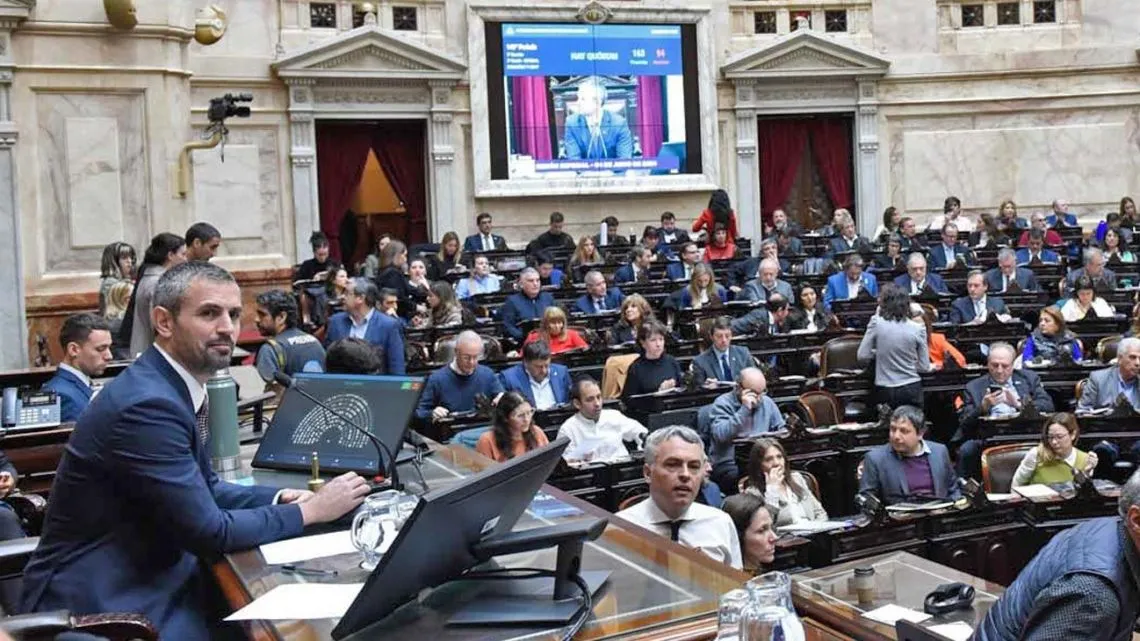
On June 27, 2024, the Argentine Chamber of Deputies endorsed President Javier Milei’s Base Law, part of a broader effort to deregulate the economy.
The proposal, with 232 articles, secured 142 votes for and 106 against, showcasing support from multiple political blocs.
This success is pivotal for the subsequent detailed review of the Fiscal Package, which aims to implement significant tax reductions, labor reforms, and a restructure of public agencies.
The upcoming debates, set to last 12 hours, will focus on key changes, including tax reductions and modifications to personal asset taxation, areas previously revised by the former Economy Minister.
These reforms are part of Milei’s broader strategy to tackle the severe inflation troubling Argentina, aiming to rejuvenate economic activity and address systemic fiscal challenges.
The process involves not just legislative change but also complex negotiations with provincial leaders about revenue and tax policies.
However, this reflects a significant shift in Argentina’s approach to governance and economic management.
Background
Two weeks ago, the Argentine Senate approved President Javier Milei’s major reform bill, the Law of Bases, by a close vote of 37 to 36.
Vice President Victoria Villarruel cast the decisive vote, breaking the tie. Consequently, the bill now returns to the Chamber of Deputies for further debate due to amendments.
This legislative milestone, seen as the most significant in forty years, aims to transform Argentina’s economic, political, and social frameworks.
It includes proposals to privatize key state enterprises like Aerolíneas Argentinas and Correo Argentino.
Moreover, it seeks to enhance the Incentive Regime for Major Investments (RIGI), increasing the nation’s attractiveness to substantial investors.
Additionally, the bill reformed social policies by removing a contentious measure. This measure would have altered pension qualifications, affecting citizens with insufficient contributions.
More: Argentina news in English, every day from The Rio Times.
This article was produced by The Rio Times’ automated newsroom system. How we use AI · Report an error
In depth
Read More from The Rio Times