Milei’s Bold Promise: Argentina Aims for Global Economic Leadership Amid Fiscal Overhaul
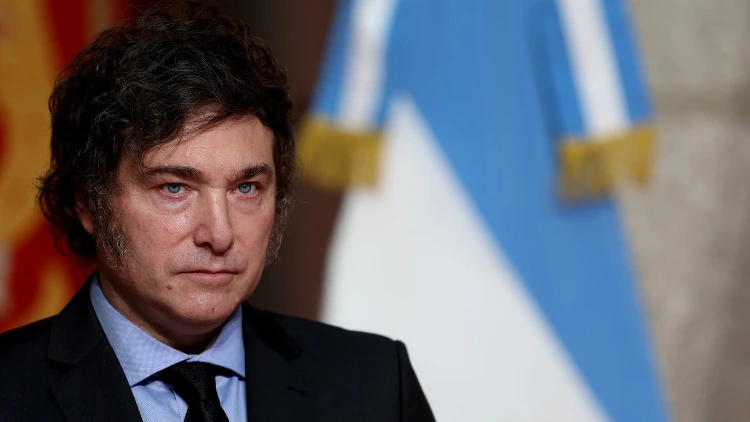
Argentine President Javier Milei electrified a crowd of 7,000 at Madrid’s Vistalegre arena by declaring that Argentina will become the world’s top power. He made this pledge at the Madrid Economic Forum, presenting official figures to support his vision.
Milei’s speech combined his trademark showmanship with a clear message: Argentina’s future rests on radical economic reform and a sharp break from past policies.
Milei’s government has implemented a strict fiscal adjustment, cutting public spending by 30% in real terms and reducing the state’s share of GDP from 38% to 32%. He eliminated thousands of public jobs, froze public works, and slashed subsidies.
These measures produced Argentina’s first annual budget surplus in over a decade, with a primary fiscal surplus of $1.1 billion reported in early 2025. Official data from the National Institute of Statistics and Census shows monthly inflation, once at 25.5%, now stands at 2.5%.
The government achieved this by freezing the money supply and restricting the central bank’s ability to print new pesos. The peso stabilized, and the gap between official and parallel exchange rates narrowed.
After a sharp recession in 2023 and early 2024, Argentina’s GDP grew by 4.7% in the first quarter of 2025, with forecasts of up to 7% growth in the second quarter.
Milei’s Market Revolution
Investment and business activity have rebounded, and economic projections for the year remain positive. However, the austerity program sparked protests due to cuts in education and pensions, and poverty remains a challenge.
Milei’s approach appeals to business interests by reducing state intervention and promoting market liberalization. When Milei talks about making Argentina the “world’s top power,” he means achieving economic leadership through market reforms and fiscal discipline.
He points to official figures as proof of progress and promises further tax cuts and deregulation. He envisions Argentina as a country where private enterprise leads, government interference is minimal, and markets set the rules.
While his policies have produced rapid macroeconomic improvements, the social costs and long-term viability remain debated. The official data confirms a sharp economic turnaround, but the country remains deeply divided over his approach.
More: Argentina news in English, every day from The Rio Times.
This article was produced by The Rio Times’ automated newsroom system. How we use AI · Report an error
In depth
Read More from The Rio Times