Louis Dreyfus to Build $400m Sunflower and Soy Plant in Argentina
SOUTH AMERICA · ECONOMY
Key Facts
— —French agribusiness giant Louis Dreyfus Company will invest about $400m in a new oilseed plant in Argentina.
— —The plant, in the port city of Bahía Blanca, will crush sunflower seeds and soybeans into oil and meal.
— —With capacity of up to 4,000 tonnes a day, it will be among the largest sunflower-crushing sites in the world.
— —Construction is due to begin late in 2026, on land where the company already runs port and storage facilities.
— —The plant will run its heat system on renewable biomass made from the sunflower husk it produces.
— —Economy Minister Luis Caputo framed the deal as a vote of confidence in President Javier Milei’s program.
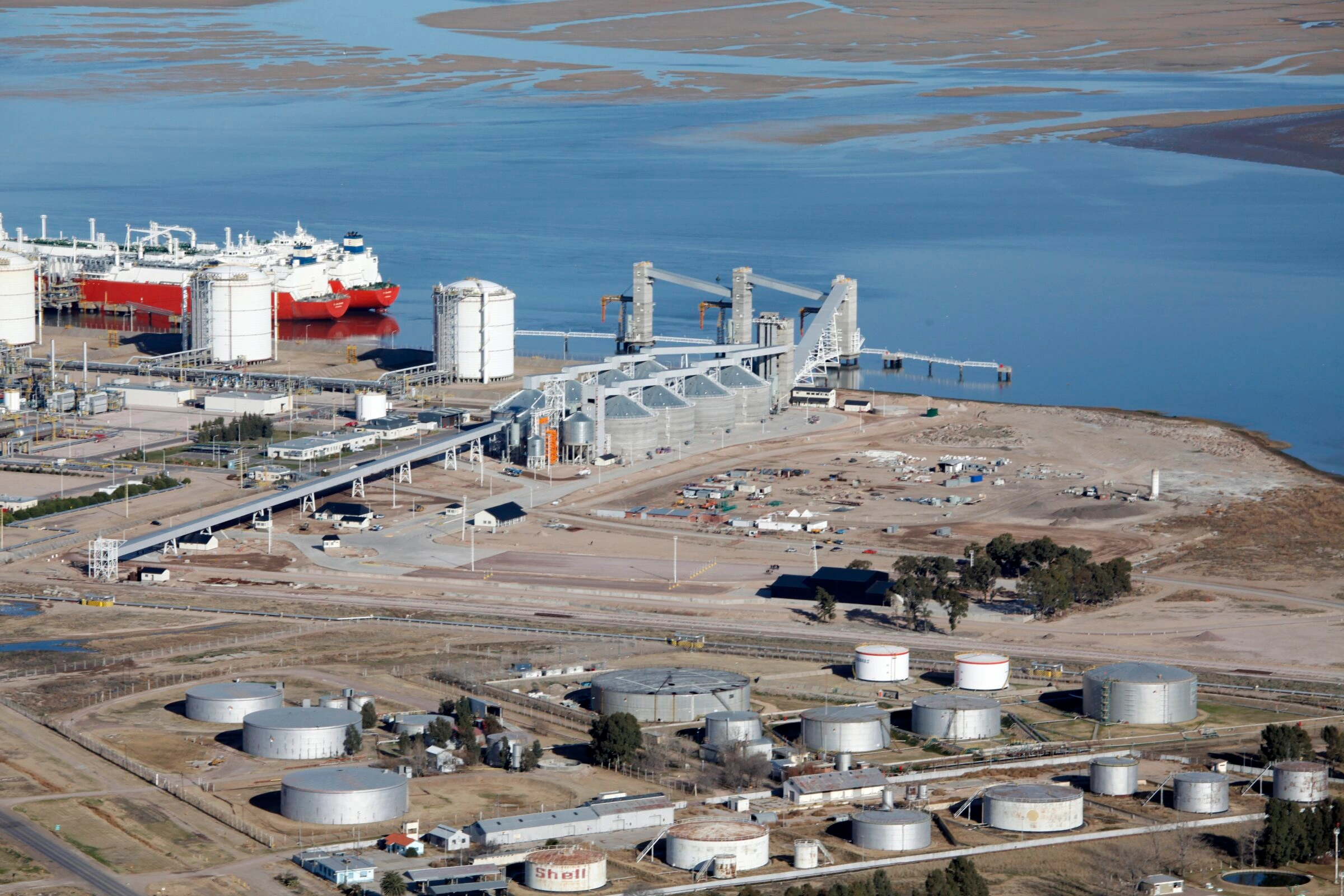
A new Louis Dreyfus Argentina project worth around $400m will build one of the world’s largest sunflower and soy processing plants in the port city of Bahía Blanca, a significant bet on a country trying to win back foreign investment.
What the Louis Dreyfus Argentina plant will do
Louis Dreyfus Company, known in the trade simply as LDC, is one of the world’s largest traders and processors of farm goods, a 175-year-old firm that moves grain, oilseeds and other commodities around the planet. Its new project is a crushing plant, the kind of factory that turns raw seeds into two valuable products: vegetable oil for food and fuel, and protein-rich meal for animal feed.
The plant will process both sunflower seeds and soybeans, switching between the two depending on what farmers are harvesting, with a capacity of up to 4,000 tonnes a day. The company says that will make it one of the biggest sunflower-crushing operations anywhere in the world.
The location is no accident. Bahía Blanca, in the south of Buenos Aires province, is a major export hub, and LDC already operates port, storage and logistics facilities on the site, so the new plant plugs straight into a deep-water harbour from which finished products can be shipped abroad.
Why it matters for Argentina
For a country that has long exported raw crops, the key word is value. Crushing seeds at home, rather than shipping them out whole, means Argentina captures more of the profit and creates more local jobs, turning a basic farm product into higher-value oil and meal before it leaves the docks.
That fits a broader national push. Argentina is one of the world’s top suppliers of soy and sunflower products, and global demand for vegetable oils keeps rising, so extra processing capacity in a prime growing region is designed to lift the country’s industrial exports over time.
There is an environmental angle too. The plant’s heating system will run entirely on renewable biomass, using the sunflower husk left over from its own crushing process, which the company says will cut the site’s carbon footprint and make it one of the most energy-efficient of its kind.
Live Market IntelligenceArgentina — Live Market Board
Rio Times · Live Market Intelligence
Argentina — Live Market Board
—
205,082.56
+0.47%
69,889.73
-0.51%
10,746.36
-0.31%
3,017,221
—
2,541.57
+0.52%
57,021.19
-0.08%
| Instrument | Last | Change | YoY | Prev. | High | Low | Volume |
|---|---|---|---|---|---|---|---|
| MERVAL | 3,017,221 | — | +30.51% | 3,022,485 | 3,042,365 | 2,991,150 | — |
| USD/ARS | 1,493 | +0.10% | +12.96% | 1,491 | 1,494 | 1,480 | — |
| YPF | 7,810 | +0.26% | +72.84% | 7,790 | 7,850 | 7,600 | 1,763,858 |
| GGAL | 6,980 | -0.78% | +1.82% | 7,035 | 7,115 | 6,920 | 1,564,062 |
| PAMPA | 5,115 | +0.69% | +26.70% | 5,080 | 5,140 | 5,000 | 721,190 |
| TXAR | 747.50 | -2.35% | +18.67% | 765.50 | 770.00 | 742.50 | 771,892 |
| ALUAR | 938.00 | -1.21% | +29.83% | 949.50 | 951.00 | 932.50 | 135,426 |
| TGS | 8,870 | -0.17% | +15.05% | 8,885 | 9,075 | 8,720 | 143,546 |
| CEPU | 2,156 | +1.84% | +28.36% | 2,117 | 2,165 | 2,086 | 404,146 |
| MIRGOR | 1,650 | -1.20% | -92.90% | 1,670 | 1,670 | 1,635 | 20,877 |
| COME | 40.93 | -0.73% | -30.47% | 41.23 | 41.60 | 40.50 | 4,258,884 |
| LOMA NEGRA | 3,130 | +0.08% | +5.80% | 3,128 | 3,205 | 3,090 | 182,992 |
| BYMA | 275.00 | -1.70% | +35.14% | 279.75 | 282.50 | 272.00 | 1,409,575 |
| TELECOM ARG | 4,233 | -0.70% | +55.19% | 4,263 | 4,335 | 4,160 | 31,896 |
| GLOBANT | 38.10 | -2.26% | -49.65% | 38.98 | 38.70 | 36.77 | 793,552 |
| MERCADOLIBRE | 1,870 | -3.59% | -20.71% | 1,940 | 1,927 | 1,870 | 329,640 |
A political signal as much as a factory
The announcement arrived in an unusual way. The company’s global chief executive, Michael Gelchie, sent a letter confirming the investment to Argentina’s economy minister, Luis Caputo, who then posted it on social media and presented it as proof that international capital is returning.
Caputo said the decision grew out of a meeting with the company in New York and described it as a sign of confidence in President Javier Milei’s economic program. That framing matters because Milei has staked his government on the idea that cutting inflation and opening the economy will pull in exactly this kind of foreign money.
A single plant does not prove a recovery, and announcements are easier to make than to build. Even so, a long-term commitment of this size from a global trader is the sort of concrete bet the government has been hoping to point to.
What happens next
Work on the plant is expected to start late in 2026, and the build phase alone should bring construction activity and jobs to the Bahía Blanca region before the factory itself comes online. LDC already has a deep footprint in Argentina, with several industrial and port complexes and more than a thousand employees.
For foreign observers, the takeaway is straightforward. One of the world’s biggest agricultural houses is putting serious money into Argentine processing, betting that the country’s farm strength and a steadier economy will pay off over the long run.
Frequently Asked Questions
How big is the investment?
Louis Dreyfus Company will invest around $400m to build the plant. It is one of the largest agro-industrial investments announced in Argentina in recent years.
Where will it be built and what will it make?
It will be built in the port city of Bahía Blanca, in Buenos Aires province. The plant will crush sunflower seeds and soybeans into vegetable oil and protein meal, with capacity of up to 4,000 tonnes a day.
Why is it significant for Argentina?
It adds processing that turns raw crops into higher-value exports at home, supporting jobs and industrial output. The government also casts it as a sign that foreign investment is returning under President Milei.
When does construction start?
Construction is expected to begin late in 2026. The plant will run its heating system on renewable biomass made from sunflower husk.
Connected Coverage
How the Trump-Milei Trade Pact Locks Argentina Into Washington’s Orbit
Thiel Brings Palantir Surveillance to Argentina for Milei
Brazil Pitches Its Defense Industry to Argentina
This article was produced by The Rio Times’ automated newsroom system. How we use AI · Report an error · Editorial responsibility: Matthias Camenzind, Editor-in-Chief