How Internal Displacement Is Redrawing Latin America From Within
LATIN AMERICA · SECURITY
Key Facts
—The headline. Latin America and the Caribbean recorded 1.6 million new violence-driven internal displacements in 2025, per the IDMC.
—The trend. The figure has climbed from 700,000 in 2022 to 800,000 in 2023, around 1.5 million in 2024, and 1.6 million last year.
—The concentration. The IDMC says 87 percent of all displacement caused by criminal violence worldwide was recorded in the Americas.
—The hardest hit. Haiti logged almost 977,000 displacements, Colombia about 394,000, and Ecuador close to 132,000 in 2025.
—The total. The Americas now host a record 10.5 million people living in internal displacement, most of it from conflict and violence.
—The blind spot. Much of this displacement is invisible, unfolding in rented rooms and relatives’ homes rather than camps.
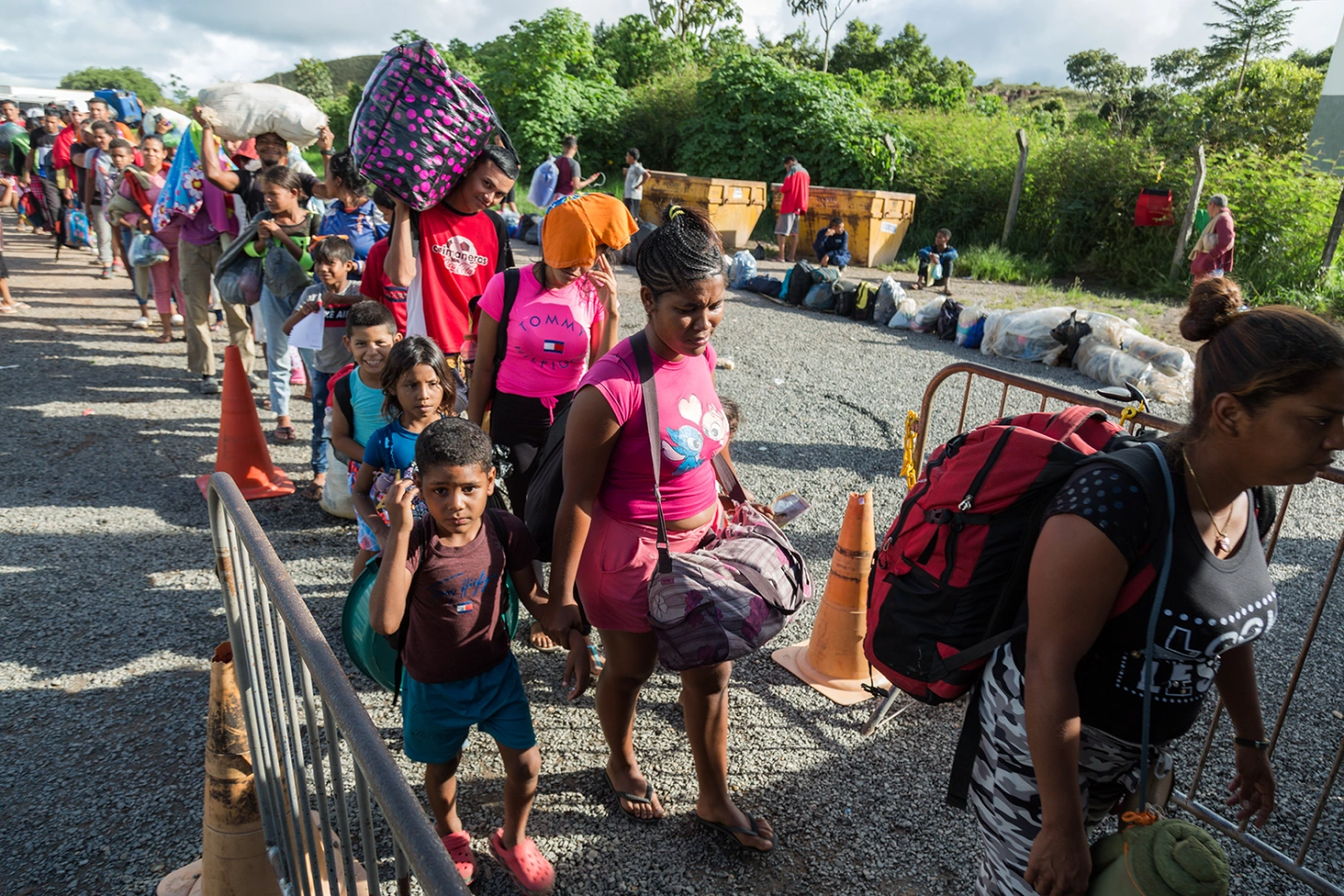
Internal displacement in Latin America reached 1.6 million new cases in 2025, and the figures reveal a region where criminal violence is quietly redrawing the map, pushing families from their homes while trapping them inside borders that failed to protect them.
A rising tide of internal displacement
The numbers come from the Internal Displacement Monitoring Centre, whose Global Report on Internal Displacement 2026 is the main international source for tracking the issue.
It found 1.6 million new violence-linked displacements across Latin America and the Caribbean in 2025, the latest step in a crisis the centre describes as shifting from chronic to accelerating.
Crucially, these are not cumulative totals but new movements each year. A single person can flee, return and flee again, so the count captures repeated upheavals rather than a fixed population.
Displacement is often described as staying within your own country, but in practice it can mean losing the place you thought you lived in without ever crossing a frontier.
When a family flees, the centre notes, the map has already changed around them. A street corner belongs to someone else, and a school route has become a warning.
Counting everyone still living uprooted, the Americas now hold around ten and a half million internally displaced people, up from about nine and a half million a year earlier and a new regional record.
Crime as a form of rule
The starkest finding is where this fear is concentrated. The IDMC reports that 87 percent of all displacement caused by criminal violence worldwide was recorded in the Americas.
That should unsettle anyone who still treats organized crime as a policing matter rather than a territorial one. Armed groups are not just causing chaos; they are governing.
They tax, recruit, punish and decide who belongs, according to the report’s framing. Displacement becomes a tool of control, not just a side effect of fighting.
The trigger is rarely a formal declaration of war. It is a rumour, a threat, or a motorbike that slows outside a house, the report suggests, and then a family is gone.
Families leave, in this reading, not only when violence erupts but when it settles in and hardens into a rival form of administration in their neighbourhoods.
Haiti shows the pattern at its most extreme, where the language of collapse can obscure a grimmer truth, that armed groups have built a working order of their own.
Three countries, three warnings
Haiti carries the heaviest load, with the IDMC estimating almost 977,000 displacements in 2025, a fifth straight record year and a cumulative total it puts near 1.4 million.
Colombia, long accustomed to the term, reached a grim new high of about 394,000, the most the centre has ever documented for the country in a single year.
In one border department alone, the first two months of the year produced more displacement than the whole of 2024, as armed groups fought over corridors and the cocaine economy.
Ecuador, once sold as an island of calm, saw close to 132,000 displacements in 2025 as criminal networks turned ports, prisons and poor districts into strategic assets.
Mexico and Honduras also report persistent violence-driven displacement, but weak official registers make the true scale hard to see, a gap the report calls partly political.
What governments do not count, the centre observes, they can more easily defer, leaving displaced people outside official policy and beyond the reach of basic support.
Violence overtakes disaster
The report marks a global turning point. Worldwide, 2025 was the first year on record in which conflict and violence drove more displacement than disasters did.
In the Americas the picture is mixed: disasters still triggered more raw movements, around 4.3 million, yet violence is increasingly the defining and more permanent pressure.
That distinction matters because displacement reshapes states from the inside, emptying rural areas, swelling informal settlements and straining schools and clinics.
The family uprooted today in Port-au-Prince, Buenaventura or Guayaquil can become tomorrow’s asylum case, labour shortage or cross-border migration story.
It also tests sovereignty in the hardest way, asking whether a state can protect a child walking home or shield a family that reports extortion from reprisal.
The crisis that stays invisible
Part of what makes this displacement so easy to overlook is how it looks. There are no tent cities and no border posts, only relatives’ sofas, rented rooms and church shelters.
That invisibility has consequences, the IDMC warns, since humanitarian funding stays thin and international attention often arrives only once displacement spills across a border.
Under-counting is itself part of the crisis, with insecurity, weak registration and official denial all likely to mean the real figures are higher than recorded.
As one regional aid director put it, without data the displaced are left out of public policy, services and basic protection, deepening the very crisis the numbers describe.
The displacement crisis, in the centre’s framing, is ultimately a measure of who controls territory and whose citizenship is treated as conditional.
On that reading the figures are less a humanitarian footnote than a political forecast, and the forecast for the region is darkening rather than clearing.
For investors, governments and migration planners alike, that shift is a signal worth reading now, long before it arrives at a distant border as someone else’s problem.
More: Brazil news in English, every day from The Rio Times.
Frequently Asked Questions
What is internal displacement?
It is when people are forced to flee their homes but remain inside their own country, rather than crossing a border as refugees, often moving repeatedly over time.
How bad is it in Latin America?
The IDMC recorded 1.6 million new violence-linked displacements in 2025, and says 87 percent of all criminal-violence displacement worldwide was in the Americas.
Which countries are worst affected?
Haiti, with almost 977,000 displacements in 2025, followed by Colombia at about 394,000 and Ecuador near 132,000, with Mexico and Honduras likely undercounted.
Why does it matter beyond the region?
Displacement reshapes states from within and often feeds later cross-border migration, so today’s internal crisis can become tomorrow’s regional and diplomatic challenge.
Connected Coverage
Colombia’s election and the security-state vote
This article was produced by The Rio Times’ automated newsroom system. How we use AI · Report an error · Editorial responsibility: Matthias Camenzind, Editor-in-Chief