A $9.6bn Private Bid to Reroute South America’s Grain to Asia
Region · Infrastructure
Key Facts
—The plan. A private consortium has pitched a $9.6bn rail corridor linking Argentina to Chile’s Pacific coast.
—The centrepiece. A 54-kilometre tunnel under the Andes would let trains cross all year, whatever the weather.
—The backers. Chile’s Beler and Singapore’s International Nusantara Investment are behind it, with no public money.
—The target. It aims to move grain from Argentina, Brazil, Paraguay and Uruguay to Asian buyers.
—The pitch. Backers claim a cost of about ninety-five dollars a tonne, below the Panama Canal and Peru’s Chancay port.
—The caveat. It has no government approval in either country and remains at an early, pre-feasibility stage.
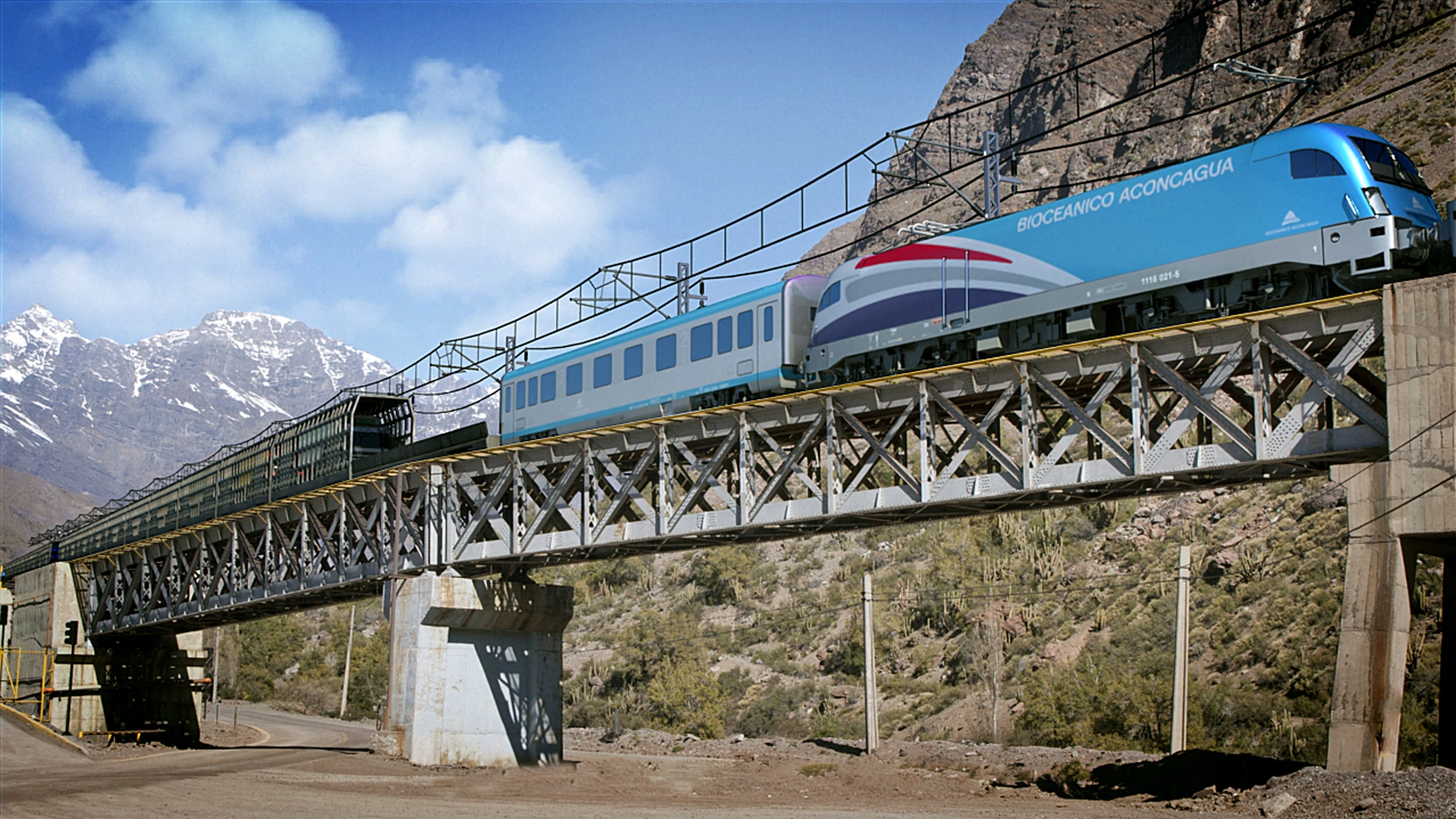
A privately funded South America rail corridor would tunnel under the Andes to send the continent’s grain to Asia, a bold bid to undercut both the Panama Canal and China’s new port in Peru.
South America grows a vast share of the world’s grain, but getting it to Asia is slow and costly. Most of it sails the long way, through the Panama Canal or around the continent.
A private consortium thinks it has a shortcut. It has proposed a nine point six billion dollar railway to carry that grain across the Andes to the Pacific instead.
What the South America rail corridor would build
The heart of the plan is a tunnel. A fifty-four-kilometre bore under the Andes would link Uspallata, in Argentina’s Mendoza province, to the Chilean town of Los Andes.
That matters because the existing mountain pass shuts often. Heavy winter snow regularly closes the main road crossing, stranding trucks and cargo for days at a time.
A tunnel would sidestep the weather entirely. Trains could run all year, the backers say, giving shippers a reliability the current route cannot offer.
Around it sits a wider network. The plan adds roughly four hundred and twenty kilometres of electrified double track, a logistics hub at Longotoma and a deep-water port on the coast at La Ligua.
The case against Panama and Chancay
The economics are pitched squarely at exporters. Backers put the cost at about ninety-five dollars a tonne shipped through the new port.
That undercuts the alternatives on their own numbers. They cite the Panama Canal at around one hundred and fifteen dollars a tonne and Peru’s Chinese-built Chancay port higher still.
The prize is enormous. Argentina and Brazil alone ship more than three hundred and eighty million tonnes of soy, corn and wheat a year, the bulk of it bound for China and the rest of Asia.
Capturing even a slice of that flow would be transformational for Chile’s central coast. It is why the project is framed as a strategic asset rather than a mere transport upgrade.
Why investors should treat it with caution
For all the ambition, this is still a proposal on paper. The corridor has no official approval in either Argentina or Chile, and no construction date has been set.
It sits in an early evaluation phase. The consortium is in talks with regional authorities in Chile’s Valparaíso area to settle the legal and financial framework.
There is a fresh sign of political traction, however. A Chilean lawmaker has asked the foreign ministry to make the corridor a priority and treat it as a strategic national project.
The promoters also lean on an existing treaty. A 2009 accord between Argentina and Chile gives them a legal basis to push a binational infrastructure scheme of this kind.
A century-old idea, revived
None of this is wholly new. A trans-Andean railway linked Mendoza and Chile for much of the twentieth century before it closed in 1984.
That line fell victim to diplomatic spats, avalanches and the sheer cost of keeping a mountain railway running. Reviving it has surfaced as an idea many times since.
What is different now is the backing. A privately financed consortium, rather than cash-strapped governments, is the one putting a price tag and a plan on the table.
For a foreign reader, that is the real signal. Private capital is circling South American logistics, betting that the region’s grain trade is worth a tunnel through the Andes.
The wider race is already on. Peru’s Chancay port, backed by China, opened in late 2024, and the four-country bioceanic road corridor through Paraguay is advancing with development-bank money.
This rail plan is a rival answer to the same question. Whoever builds the cheapest, most reliable link to the Pacific stands to win decades of South American export traffic.
More: Brazil news in English, every day from The Rio Times.
Frequently Asked Questions
What is the proposed South America rail corridor?
It is a privately backed plan, costing about nine point six billion dollars, to build a railway and a fifty-four-kilometre Andes tunnel linking Argentina to Chile’s Pacific coast, aimed at moving South American grain to Asian markets.
How would it compete with the Panama Canal?
Its backers claim a shipping cost of around ninety-five dollars a tonne through a new Pacific port, which they say is cheaper than the Panama Canal and Peru’s Chancay port, offering exporters a faster land route to Asia.
Is the project going ahead?
Not yet. It has no government approval in either country and remains at an early, pre-feasibility stage, with the consortium still in talks with regional authorities over the legal and financial framework.
Connected Coverage
This article was produced by The Rio Times’ automated newsroom system. How we use AI · Report an error · Editorial responsibility: Matthias Camenzind, Editor-in-Chief