LATAM Investment Guide 2026: Where to Put Your Money in Latin America
Key Facts
—Brazil:. The largest and most liquid LatAm equity market (~$1T USD cap); core allocation anchor; commodity + carry + banking. ETF: EWZ.
—Mexico:. Single clearest nearshoring beneficiary; USMCA manufacturing reshoring story has a decade-long runway. ETF: EWW or FLMX.
—Chile:. World’s largest copper producer; direct energy transition play; lithium optionality. ETF: ECH.
—Suggested allocation split:. Brazil 50–60%, Mexico 20–25%, Chile 10–15% of LatAm budget; speculative positions (Colombia, Peru, Argentina) 0–10%.
—China risk:. China is Brazil’s largest trade partner; Chinese slowdown is Brazil-negative and Mexico-positive (accelerates nearshoring).
Latin America is not a monolith. Brazil, Mexico, Chile, Colombia, Argentina, and Peru represent six radically different economies, six different risk profiles, and six different reasons to be interested or cautious in 2026. The investor who treats the region as a single risk-on/risk-off bet misses most of what matters. This guide goes country by country with the directness serious investors need: what the thesis is, what the risks are, how to get exposure, and how to size a rational portfolio allocation.
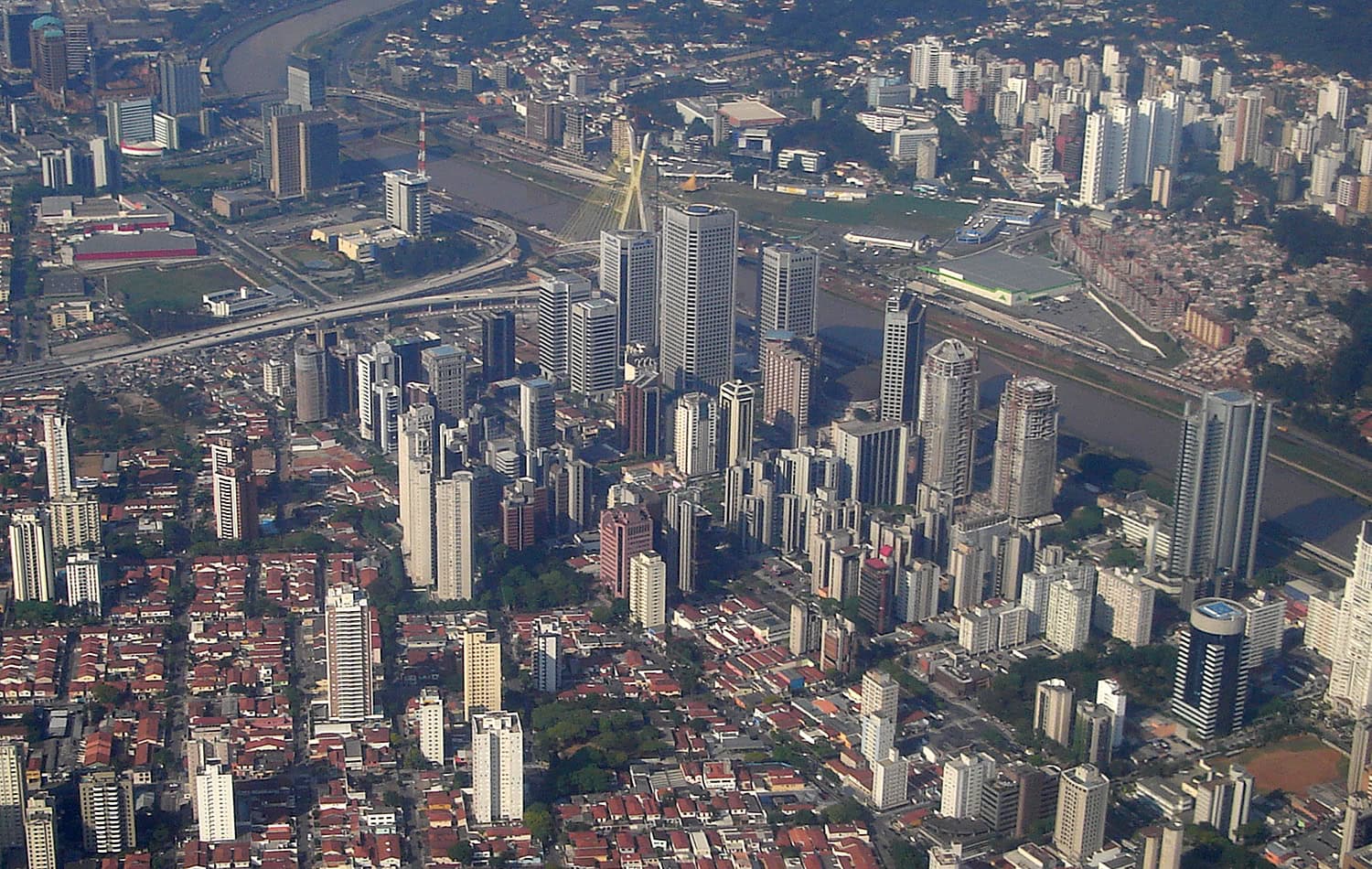
Invest in Latin America: Country-by-Country Guide to LatAm Equity Markets and ETFs (2026)
The LatAm Macro Backdrop: Three Forces Shaping the Region in 2026
The commodity supercycle’s second act: China-driven demand for iron ore and soybeans has slowed, but the energy transition is creating new vectors. Copper (essential for EVs, grid infrastructure, data centers) has a structural demand floor that iron ore does not. Lithium is a geopolitical asset. Chile and Argentina sit atop the Lithium Triangle.
The investor who distinguishes between transition minerals (copper, lithium) and legacy industrial commodities (iron ore) will make better decisions than one who treats “LatAm commodities” as a single thesis.
The nearshoring revolution: De-globalization and US-China trade friction have redirected massive manufacturing investment toward Mexico. USMCA membership, 2,000-mile US border, competitive labor, existing infrastructure — Mexico is the obvious beneficiary.
Industrial real estate vacancy in Monterrey, Juárez, Tijuana, and the Bajio region hit historic lows in 2023–2025. This is a multi-year structural shift, not a cyclical trade.
Central bank cycles: Most LatAm central banks are in easing cycles from post-2021 inflation peaks, but at different speeds. Brazil’s SELIC remains elevated; Banxico (Mexico) began cutting in 2024; Colombia and Peru face rate normalization complicated by political uncertainty.
Brazil: The Core LatAm Allocation
B3’s market capitalization of ~$1 trillion USD makes it by far the region’s largest and most liquid equity market. The Ibovespa offers commodity exposure (Vale, Petrobras), banking profitability (Itaú, Bradesco, Banco do Brasil), and a growing domestic consumer and tech cohort.
High real interest rates support the BRL carry trade and create a structural bid for Brazilian fixed income.
Political risk under Lula is manageable — the fiscal concerns are real but the governance apocalypse that markets feared in 2022 did not materialize. Brazil’s ETF (EWZ) is heavily concentrated in Vale, Petrobras, and the large banks — understanding those 6–8 names means understanding the index. Target allocation: 50–60% of LatAm exposure.
Live Market IntelligenceBrazil — Live Market Board
Rio Times · Live Market Intelligence
Brazil — Live Market Board
-0.17%
205,079.25
-0.17%
69,010.67
+0.12%
10,920.58
-0.47%
3,017,221
—
2,521.34
-1.75%
59,664.64
+0.40%
| Instrument | Last | Change | YoY | Prev. | High | Low | Volume |
|---|---|---|---|---|---|---|---|
| IBOV | 205,079.25 | -0.17% | +21.85% | 205,430.33 | 168,310 | 167,142 | — |
| USD/BRL | 5.16 | +0.01% | -5.13% | 5.16 | 5.18 | 5.14 | — |
| SELIC | 14.00% | — | — | — | — | — | |
| PETR4 | 41.64 | -0.05% | +35.19% | 41.66 | 41.97 | 41.15 | 41,499,400 |
| VALE3 | 72.97 | +0.83% | +30.75% | 72.37 | 73.54 | 72.66 | 17,658,000 |
| ITUB4 | 38.60 | -1.03% | +4.57% | 39.00 | 39.34 | 38.39 | 29,487,800 |
| BBDC4 | 16.85 | +0.36% | +3.50% | 16.79 | 16.90 | 16.67 | 19,416,900 |
| BBAS3 | 19.37 | +0.47% | +0.73% | 19.28 | 19.44 | 19.16 | 11,069,200 |
| B3SA3 | 14.26 | -0.21% | +12.73% | 14.29 | 14.47 | 14.11 | 33,037,800 |
| ABEV3 | 14.89 | -0.80% | +21.91% | 15.01 | 15.07 | 14.81 | 16,453,100 |
| WEGE3 | 47.59 | +0.49% | +29.99% | 47.36 | 48.08 | 47.36 | 3,364,600 |
| PRIO3 | 59.14 | -0.19% | +50.67% | 59.25 | 59.81 | 58.74 | 3,325,600 |
| SUZB3 | 41.33 | +2.35% | -23.55% | 40.38 | 41.48 | 40.35 | 3,914,900 |
| RENT3 | 34.68 | -0.09% | +0.84% | 34.71 | 34.96 | 34.35 | 7,979,100 |
| AZZA3 | 15.89 | -2.63% | -53.76% | 16.32 | 16.42 | 15.82 | 1,330,300 |
| CSNA3 | 4.30 | +0.47% | -42.65% | 4.28 | 4.41 | 4.26 | 10,076,100 |
| GGBR4 | 24.69 | +2.19% | +51.38% | 24.16 | 24.85 | 24.18 | 7,047,600 |
| ENEV3 | 24.21 | -1.38% | +70.49% | 24.55 | 24.64 | 23.99 | 9,297,000 |
Mexico: The Nearshoring Play
Mexico is the single clearest beneficiary of supply chain restructuring away from China. USMCA coverage, geographic proximity to the US market, labor cost arbitrage, and existing manufacturing infrastructure combine to make Mexico the default destination for North American production reshoring.
This is not theoretical: FDI into Mexican manufacturing reached records in 2023–2025; industrial real estate vacancy in key hubs remains near historic lows; major US and Asian companies have announced or broken ground on Mexican facilities.
The complications: Pemex fiscal liability, AMLO energy nationalism legacy, MXN sensitivity to US-Mexico political friction. BMV exposure via EWW (iShares MSCI Mexico) or FLMX (Franklin FTSE Mexico, lower cost). Target allocation: 20–25% of LatAm exposure.
Chile: Copper and the Energy Transition
Chile is the world’s largest copper producer and the most direct equity expression of energy transition commodity demand. Electric vehicles require 4x the copper of conventional vehicles; grid infrastructure for renewables is copper-intensive; data centers run on copper wiring.
The secular copper demand story is among the strongest in the commodity complex, and Chile’s Atacama reserves are the world’s largest. The Lithium Triangle (Chile, Argentina, Bolivia) adds battery materials optionality, though lithium prices have corrected sharply from their 2022–2023 peak as Australian and Chinese supply came online.
Political risk under Boric (higher royalties, pension reform proposals) and regulatory uncertainty in mining create a persistent discount. ECH (iShares MSCI Chile ETF) is the primary vehicle; Southern Copper (SCCO, NYSE) is the cleanest individual name with Chilean and Peruvian operations. Target allocation: 10–15% of LatAm exposure.
Colombia, Peru, and Argentina: The Speculative Tier
Colombia (GXG ETF): Genuinely undervalued at single-digit P/E, but Petro government policy (anti-fossil fuel, pension reform, business friction), oil dependency, and thin ETF liquidity make it a small satellite position rather than a core allocation.
Peru (EPU ETF): High-quality copper and gold mining assets (Las Bambas, Cerro Verde, Southern Copper’s Peruvian operations) at a political instability discount — six presidents in under a decade. Social conflict around mining projects (blockades at Las Bambas have halted operations multiple times) is the most direct operational risk.
Argentina (ARGT ETF): High-risk, high-potential-reward. The Milei reform program has produced a genuine, if fragile, fiscal surplus and meaningful inflation deceleration from the 211% peak. Argentine banking ADRs (GGAL, BMA) and YPF are the direct reform plays.
The ARGT ETF headline return is inflated by MercadoLibre (a global business, not a pure Argentina play). Size any Argentine position assuming potential total drawdown is acceptable. Target allocation: 0–5% per country, only for investors with specific conviction and appropriate risk tolerance.
LatAm ETF Comparison (mid-2026)
EWZ (iShares MSCI Brazil): 0.59% expense ratio, ~$4.5B AUM, 3-year USD return ~+18%; commodity and bank concentrated, most liquid Brazil vehicle.
EWW (iShares MSCI Mexico): 0.50%, ~$1.8B, 3-year ~+34%; consumer and industrial tilt, nearshoring beneficiary.
ILF (iShares Latin America 40): 0.48%, ~$1.1B, 3-year ~+22%; blended regional (~60% Brazil, ~25% Mexico).
FLMX (Franklin FTSE Mexico): 0.09%, ~$380M; lowest-cost Mexico option.
ECH (iShares MSCI Chile): 0.57%, ~$420M, 3-year ~+10%; SQM (lithium), copper miners, Santander Chile.
ARGT (Global X MSCI Argentina): 0.59%, ~$310M, 3-year ~+47% — dominated by MercadoLibre (a global business), not representative of Argentine domestic equity. EWW’s outperformance of EWZ over the period reflects nearshoring outperforming commodity/carry. The question for 2026–2028: whether the nearshoring premium has been fully priced or has further to run.
LatAm Fintech: The Cross-Border Growth Stories
MercadoLibre (MELI, Nasdaq): The Amazon and PayPal of Latin America; Mercado Libre (e-commerce) + Mercado Pago (digital payments and fintech) have built one of the most durable competitive moats in emerging markets. Primary markets: Brazil, Mexico, Argentina.
Nasdaq-listed; accessible from any brokerage. Growth premium valuation, but the business quality warrants it.
Nubank (NU, NYSE): World’s largest digital bank outside China by customer count; 100M+ customers in Brazil, Mexico, Colombia; net-income positive since 2023; expanding ARPAC through cross-selling. NYSE-listed, Cayman-incorporated; no Brazilian account required. Both MELI and NU provide LatAm fintech exposure without country-specific custody risk.
More: Brazil news in English, every day from The Rio Times.
Currency Risk: Managing the LatAm Volatility Layer
LatAm currencies can move 15–25% against USD in a single year. BRL volatility is among the highest of any major EM currency. Three approaches:
(1) Accept the exposure — over long periods, Brazil’s high nominal yields (SELIC + equity dividends) have historically compensated for BRL depreciation, but this breaks badly in crisis years.
(2) Natural hedge — USD-earning investors with long time horizons in Brazilian assets benefit from the carry differential without hedging costs.
(3) Currency-hedged ETFs (HEWZ for Brazil) — capture local equity returns in USD terms, but the hedging cost reflects the interest rate differential and is substantial for BRL. General guidance: for 5+ year time horizons, unhedged exposure is usually preferable to paying ongoing hedge costs. Shorter tactical positions may warrant hedging.
Brazil ETF (most liquid): EWZ (iShares MSCI Brazil) — NYSE Arca, available from any US brokerage.Mexico ETF: EWW (iShares MSCI Mexico) or FLMX (Franklin FTSE Mexico) for lowest cost.Broad LatAm blend: ILF (iShares Latin America 40) — primarily Brazil + Mexico in one ticker.
Copper/Chile: ECH (iShares MSCI Chile) or individual SCCO (Southern Copper, NYSE).
LatAm fintech (no EM account needed): MELI (MercadoLibre, Nasdaq) and NU (Nubank, NYSE).
Further reading on this site: Brazil’s Top B3 Stocks: Sector-by-Sector Guide · Argentina Economic Crisis 2026
This article is for informational and educational purposes only. Nothing in this piece constitutes personalized investment advice. Investing in emerging markets involves significant risk, including potential loss of principal, currency risk, political risk, and liquidity risk. Past performance does not guarantee future results. Consult a qualified financial advisor before making investment decisions. Last updated: August 2026.
Frequently Asked Questions
Is Latin America a good investment in 2026?
Yes, selectively. LatAm offers three things difficult to find elsewhere: copper/lithium exposure to the energy transition (Chile, Peru), the nearshoring structural theme (Mexico), and genuine equity value in markets trading at substantial discounts to US equivalents (Brazil P/E ~7–9x vs. S&P 500 20x+). The risks — currency volatility, political unpredictability, commodity sensitivity — are real and justify the discount, but for Brazil and Mexico specifically, we believe the discount is at least partially excessive in 2026.
What is the best LatAm ETF?
Depends on objective. Broad LatAm: ILF (primarily Brazil + Mexico). Brazil only: EWZ (most liquid). Mexico/nearshoring: EWW or FLMX (lowest cost). Copper/energy transition: ECH (Chile). From a forward-looking perspective, EWW has the longest structural runway via nearshoring — Mexico’s manufacturing story is least dependent on commodity cycles. Argentina (ARGT) is dominated by MercadoLibre, which is really a global business, not a pure Argentina play.
Should I invest in Brazil or Mexico?
Both, with different weights based on your thesis. Overweight Brazil if you believe commodity prices (iron ore, oil) will be strong. Overweight Mexico if you believe US manufacturing reshoring accelerates. A 60/40 Brazil/Mexico split within your LatAm allocation captures both stories as a default. Brazil is a commodity + carry trade; Mexico is a manufacturing + US consumer story — they are genuinely uncorrelated, which makes holding both rational.
How does China affect Latin American markets?
Directly and asymmetrically. China is Brazil’s largest trade partner — its slowdown compresses Brazilian export revenues, weakens BRL, and pressures the Ibovespa via Vale and Petrobras. Chilean and Peruvian miners face copper demand headwinds but have the energy transition floor. Mexico is largely insulated — the China slowdown actually accelerates nearshoring investment into Mexico as US companies diversify supply chains. For Brazil, watch Chinese PMI and steel output data as leading indicators for the Ibovespa.
→ Brazil’s Top Stocks on B3: A Sector-by-Sector Guide for Foreign Investors (2026)
→ Argentina’s Economic Crisis: What It Means for Brazil and Investors (2026)
→ How to Invest in the Brazilian Stock Market (B3/Bovespa) as a Foreigner
→ BRL to USD: Understanding the Brazilian Real Exchange Rate (2026 Guide)
This article was drafted with automated assistance and reviewed before publication. How we use AI · Report an error · Editorial responsibility: Matthias Camenzind, Editor-in-Chief
Fresh reporting on this topic, refreshed automatically as new stories are published.
- Oct 20What to Do in Rio in October 2026
- Oct 19Latin American Pulse for Tuesday, October 20, 2026
- Oct 19Brazil Court Ends Americanas Restructuring
- Oct 19Brazil Events Calendar: Carnival, Réveillon and Festivals
- Oct 19Brazil Sorghum Exports Hit 790,800 Tons
- Oct 17What to Do in Belo Horizonte in October 2026: Quilombo Cinema, Gypsy Culture and Bocelli
- Oct 16Brazil Economy Grows 0.3% in August
- Oct 13Who Qualifies for Brazil’s MEI Debt Relief