Kenya’s Port Authority Says It Paid US$1.5m for Machines It Never Received
Key Facts
- The country Kenya, home to about 57 million people, is East Africa’s largest economy. At about US$136 billion a year, its output is roughly a thirtieth of Britain’s.
- Why it matters The state-run Kenya Ports Authority (KPA) operates Mombasa, the main sea gateway for Uganda, South Sudan and eastern DR Congo. Tanzania’s Dar es Salaam port competes for that cargo.
- Why now Court papers reported this week reveal KPA’s loss claim, and a judge has suspended the police investigation until 5 October.
- What happened KPA says it paid KSh195 million (about US$1.5 million) for five container-stacking machines due in March 2025. It alleges they were diverted in October 2025 and sold to a port in Tanzania.
- Who is involved KPA has sued Kalmar, the Finnish maker, and Power Parts, its Kenyan agent, for a full refund. At Power Parts’ request, a Mombasa judge suspended the police probe on 16 September.
- What it means for you For firms selling to Kenyan state agencies, procurement disputes can quickly turn criminal, and courts may step in early.
- Still open The loss is KPA’s allegation; no court has ruled on it. Local media reported detectives were still searching for three of the five machines, and the refund lawsuit is pending.
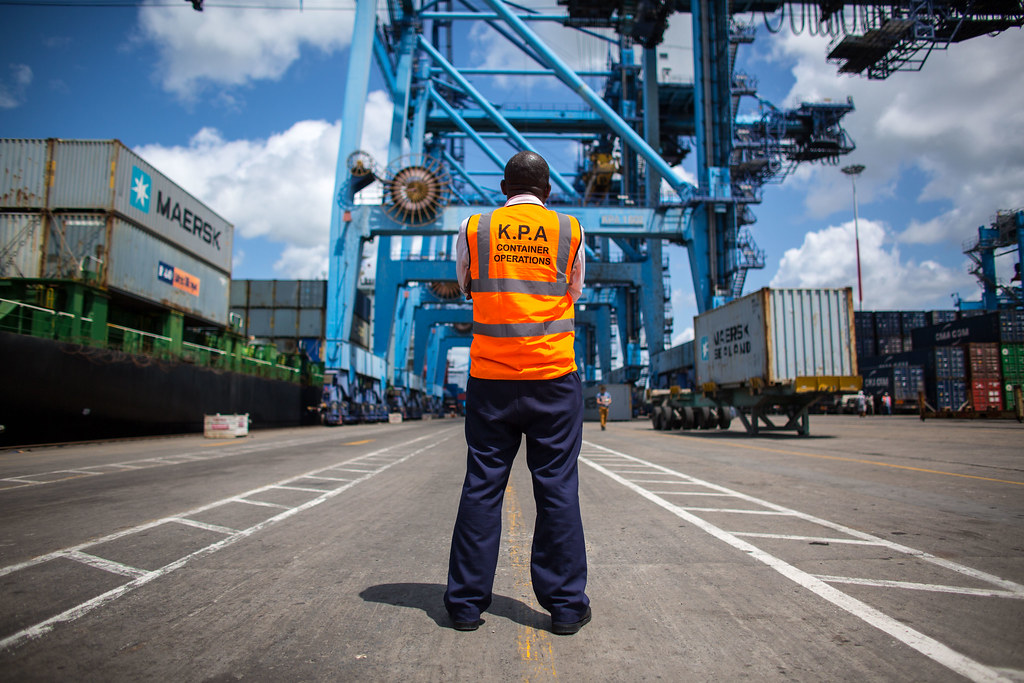
Kenya Ports Authority (KPA), the state agency that runs Mombasa port, is chasing a KSh195 million (about US$1.5 million) refund. In the KPA container handler deal, it says five machines it paid for were diverted to Tanzania instead of being handed over.
Mombasa is the main sea gateway for landlocked Uganda, South Sudan and the eastern Democratic Republic of Congo. According to court documents, KPA’s five machines were allegedly diverted and sold to a port in rival Tanzania.
Inside the KPA container handler deal
The dispute centres on five Kalmar empty container handlers, machines that stack empty shipping containers in port yards. KPA bought them from Kalmar, a Finnish manufacturer, and Power Parts (Kenya), its local agent.
The machines were due in March 2025, according to the complaint KPA filed with the police. KPA alleges they were instead diverted in October 2025 and sold to a port in Tanzania.
Two of the five machines have since come back to Kenya and are held at the Port Police Station in Mombasa. Detectives were still searching for the other three, according to local reports.
KPA’s complaint says it lost KSh195 million (about US$1.5 million) in public funds on the deal. Dollar figures use KSh129.5 per US dollar, the 25 September 2026 market rate from open.er-api.com.
KPA has separately sued Kalmar and Power Parts for a full refund. No court has yet ruled on whether the money was lost or who is to blame.
Court halts criminal probe into Power Parts
Power Parts went to the High Court in Mombasa after detectives summoned its directors. On 16 September 2026, Justice Wendy Kagendo Micheni issued interim orders suspending the criminal investigation.
The orders bar the Directorate of Criminal Investigations (DCI), Kenya’s national detective agency, from arresting or charging Power Parts or its staff. They also suspend KPA’s 1 September complaint and a warrant a Mombasa magistrate issued on 8 September.
KPA is also barred from pursuing a criminal complaint over matters in the pending civil case. The orders hold until the judge hears the application on 5 October 2026.
Mombasa port at the centre of regional cargo competition
The alleged diversion to Tanzania lands in the middle of a long-running East African logistics contest. Mombasa port has long been the region’s main gateway, but Dar es Salaam has invested heavily to win more transit cargo.
Container handling equipment is a sensitive asset in that competition. Faster turnaround times and reliable equipment help decide whether shipping lines and cargo owners route freight through Kenya or Tanzania.
The case shows how port equipment contracts have become politically sensitive as regional trade grows. Such contracts now draw attention from investigators, courts and rival ports alike.
Earlier disputes and procurement lessons
In 2024, Power Parts sued KPA after the authority cancelled two contracts for Kalmar spare parts. A High Court judge sent that earlier case to arbitration in March 2025.
The new orders link the criminal complaint to the pending civil suit over the same machines. For now, KPA’s refund claim can move ahead only through the civil courts.
For contractors working with Kenyan state agencies, the case shows how quickly procurement disputes can turn into criminal investigations. It also shows that Kenyan courts are willing to step in early.
The great-power and South-South angle
East African port competition is not only a regional story. Global shipping lines, Chinese-built infrastructure and development finance all converge on Mombasa and Dar es Salaam.
The alleged diversion of equipment from Kenya to Tanzania feeds into wider debates over who controls the region’s trade corridors. Read more about this dynamic in Africa: The New Scramble.
For Brazil and other South-South trade partners, reliable East African ports lower the cost of trade across the Indian Ocean. Equipment problems at Mombasa can affect shippers well beyond Kenya.
What to watch next
On 5 October 2026 the court is due to consider whether the orders shielding Power Parts should stay in place. The DCI is expected to defend its right to investigate, and the ruling will shape any criminal case.
In the civil suit, KPA must prove the machines were never delivered as agreed and that it is owed a refund. Kalmar and Power Parts will have their own account of what happened between March and October 2025.
The case could also push Kenyan authorities to tighten oversight of port equipment contracts. Any new procurement rules would affect suppliers, logistics firms and shipping lines operating across East Africa.
Frequently Asked Questions
What is Kenya Ports Authority?
Kenya Ports Authority (KPA) is the state agency that runs Mombasa, Kenya’s main seaport. Mombasa is also the main sea gateway for landlocked Uganda, South Sudan and eastern DR Congo. It competes with Tanzania’s Dar es Salaam for that transit cargo.
How much does Kenya Ports Authority say it lost in the container handler deal?
KPA says it lost KSh195 million (about US$1.5 million) paid for five Kalmar empty container handlers that were never handed over at Mombasa port. The loss is an allegation that no court has yet ruled on.
Who has KPA sued over the container handler deal?
KPA has sued Kalmar, the Finnish manufacturer, and Power Parts (Kenya), its local agent, for a full refund. Separately, Power Parts went to the High Court in Mombasa to stop a police probe.
When is the next court hearing in the KPA container handler dispute?
The High Court in Mombasa is due to hear Power Parts’ application on 5 October 2026. Interim orders issued on 16 September 2026 suspend the criminal investigation until then.
Connected Coverage
Sources
- standardmedia.co.ke
- the-star.co.ke
- kenyainsights.com
- kenyalaw.org
- kalmarglobal.com
- World Bank (Kenya population and GDP, 2025)
- monitor.co.ug (Mombasa transit cargo)
More Africa news: Nigeria | South Africa | Kenya | Egypt | Ghana | Morocco | DR Congo | Angola | Ethiopia | Tanzania
This article was produced by The Rio Times’ automated AI newsroom. Editorial responsibility: Matthias Camenzind, Publisher and Editor-in-Chief. The Rio Times also runs Ask Rio Times, which answers from 100,000+ of our own articles, the daily Latin America Power Map, and prediction-market odds on elections and markets.. How we use AI · Report an error
LatAm Markets: Live Signals → — real-time movers, turnover leaders and FX across Latin America.