Judicial Rulings Set Precedent to Consolidate ‘Uberization’ of App Workers in Brazil
RIO DE JANEIRO, BRAZIL – The Fifth Chamber of the Superior Labor Court (TST) unanimously ruled on Wednesday to deny a driver’s employment link with the Uber Transport App. The decision has an immediate impact only in the case of the specific driver who brought the lawsuit, but it sets the first precedent of its kind in a higher Brazilian Labor Court. Until now, related cases had been dealt with in lower and regional courts, with conflicting decisions on the matter.

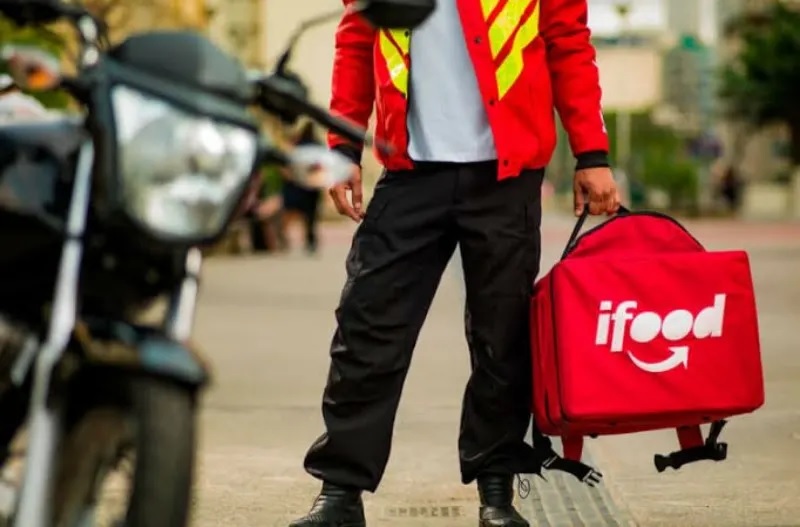
Although other courts are not required to follow the ruling, it should end up serving as a guideline for similar lawsuits. The ruling also comes a few days after the São Paulo Labor Courts denied a public civil action that requested an employment link between the iFood platform and delivery personnel.
According to Claúdio Castro, a partner in the labor area of Martinelli Attorneys, the ruling in Brasília may mark a trend, but it still represents only the opinion of a chamber. “It is not a game that is played. It’s not an absolute decision,” he says.
The discussion about whether or not to recognize the link still sparks much debate among the courts. Rodrigo Carelli, a labor prosecutor in Rio de Janeiro, says if Brazil follows this path, it will run counter to the countries that have been dealing with the issue for the longest time. “In California (USA), where the App was created, there is already a law that considers the link between the platform and the employees. Just like in Portugal. In France, courts are also heading towards this understanding. In Germany, it’s not even mentioned anymore, it’s already a decided issue”, he explains.
In the case tried on Wednesday, a driver from Guarulhos claimed to have worked for almost a year with the App, between July 2015 and June 2016 and applied for the contract to be registered on his worker’s record book. The request was denied in the lower court, but then the Regional Labor Court of the 2nd Region decided that there had been indeed an employment link.
When the TST rejected the link, the rapporteur of the appeal, Judge Breno Medeiros, found that the evidence showed that the driver had autonomy to choose when he would be connected to the platform. Moreover, according to the Judge, Uber provides a mediation service, which does not typify an employment link. Drivers get 75 to 80 percent of the price of trips.
Judge Douglas Alencar Rodrigues pointed out that the “old criteria” for labor relations, as provided for in the CLT, do not apply to new links involving platforms and Apps. The TST also claimed that the payment received by the driver is not a salary, but rather a business partnership in which the money is divided between the platform and the drivers.
This Wednesday’s decision was celebrated by Uber. In a statement, the company says it has already won 75 rulings in regional courts and 240 sentences in labor courts across the country. In the lawsuit, Uber argued that it is not a transport company, but rather a technology platform.
A specific law
At the conclusion of the ruling, one of the TST judges stressed the urgent need for a specific law to regulate labor relations involving transport Apps. Castro, of Martinelli Attorneys, agrees that Uber drivers can no longer be framed in the CLT because they enjoy autonomy at work, but must be regulated. “The advent of these Apps introduced new labor practices, which does not mean they do not deserve some new rule of protection. But it’s only natural that first, the social fact should occur and then it should be regulated. Until the 1960s, divorce didn’t exist, but people were already separating and didn’t believe that marriage had to be forever,” he says.
For prosecutor Carelli, there is no need for other legislation since the current one can prove the drivers’ subordination. “It’s a romantic view to think that they are all entrepreneurs. The drivers work for someone else’s company, Uber. And the customers are from the platform. The drivers are not independent,” he explains.
With the increase in the number of people who find in the App the only means of earning an income in a country where 11.6 million are looking for work, the precarious nature of the job will increase, according to the prosecutor. The mobility and product delivery platforms have approximately 5.5 million registered professionals, according to the Locomotiva Institute. “These are jobs that do not consider labor laws, overtime. If drivers fall ill, they simply lose money. By becoming micro-entrepreneurs, they contribute to lower social welfare, which can make the social security system increasingly unsustainable, and their own retirement,” he says.
Source: El País
More: Brazil news in English, every day from The Rio Times.
This article was produced by The Rio Times’ automated newsroom system. How we use AI · Report an error · Editorial responsibility: Matthias Camenzind, Editor-in-Chief