Analysis: President Bolsonaro and Brazil’s new ministers’ five main challenges
RIO DE JANEIRO, BRAZIL – In all, six ministries had their heads changed in an attempt to manage the crisis in various sectors of the government. Still, the “dance of the chairs” will not be synonymous with calm for the president.
The changes, which affected the Government Secretariat, the Chief of Staff, Foreign Affairs, Defense, Justice, and the Office of the Solicitor General (AGU), come in the wake of friction and increased pressure on Bolsonaro from Congress.

The Legislature demands tougher action from the federal government to control the advance of Covid-19, which shows no signs of slowing down the rate of contamination or accelerating vaccination. The federal government’s erratic conduct led the president of the Chamber, Arthur Lira (PP-AL), an ally of Bolsonaro, to raise the tone of the charges.
In the economic sector, the charges were made explicit through a letter: businesspersons, bankers, and economists demanded concrete measures to confront the pandemic. Besides, the agendas dedicated to the government’s sector to Congress continue to be blocked by urgent issues related to the health crisis in Brazil.
Bolsonaro and the new ministers face five main obstacles, set out below:
Foreign Relations
With a deteriorated image after the ideological performance of Ernesto Araújo at the head of Itamaraty, the new foreign minister, Ambassador Carlos França, former head of the Planalto’s ceremonial staff, will face a scenario of scorched earth.
Brazil’s largest trading partner, China, was not treated cordially by Araújo, who made it difficult to import vaccines and worked to ban Chinese companies from implementing 5G in the country. Diametrically opposite, the United States of Donald Trump has often been acclaimed by the chancellor, but Joe Biden’s arrival to power immediately shook the diplomatic relationship.
Another difficulty to be faced by França is that, despite having been promoted to ambassador by merit, the diplomat has never taken over an embassy. Colleagues point out his lack of international experience as a possible obstacle.
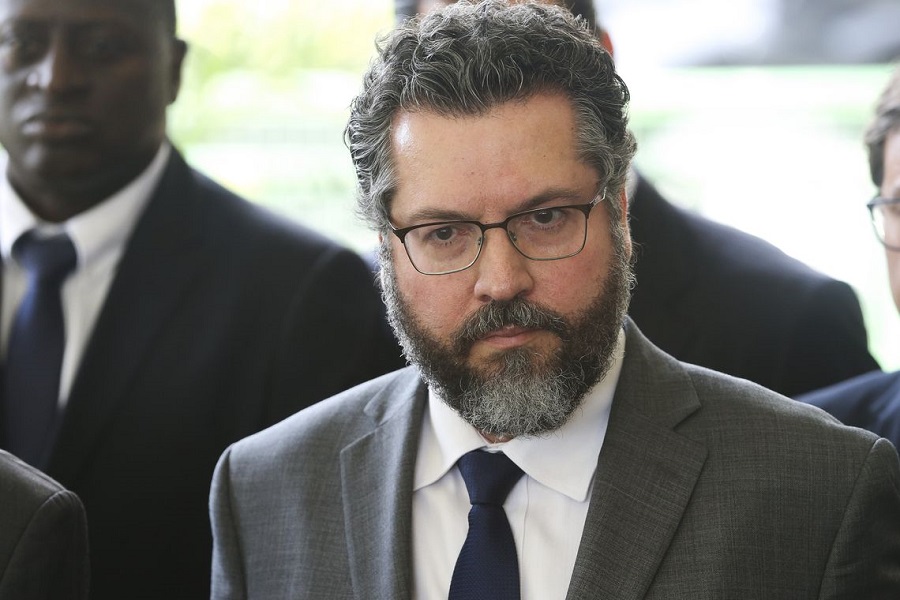
In practice, França’s lack of experience in the position could mean a continuation of the policy adopted for foreign relations, highly influenced by the “ideological wing” of the Bolsonaro government and by the president’s son, deputy Eduardo Bolsonaro.
Military
With a succinct letter and without much explanation, General Fernando Azevedo e Silva left the Defense Ministry after increased pressure for the Army to give more backing to President Jair Bolsonaro’s statements. “In this period, I have preserved the Armed Forces as state institutions,” Azevedo emphasized in his text, making it clear that the agency does not work for the government nor political parties.
According to columnist Malu Gaspar, Azevedo told close interlocutors that he left the portfolio because he did not want to repeat what he experienced last May. May 2020 was the month in which Bolsonarists held several demonstrations calling for military intervention and attacking the Supreme Court. On that occasion, the president spoke at a coup demonstration and even stated, “the Armed Forces are on our side.”
The sudden departure shook the spirits of the three Armed Forces – Army, Navy, and Air Force – who met on Monday night to discuss a possible joint resignation of their positions as a reaction to Azevedo’s departure from Defense. The new defense minister summarily fired all three heads: Edson Pujol, from the Army, Ilques Barbosa Junior, from the Navy, and Antonio Carlos Moretti Bermudez, from the Air Force.
Centrão voting bloc
The nomination of federal deputy Flávia Arruda (PL-DF) to assume the post of Minister in charge of the Secretariat of Government consolidates the Planalto’s rapprochement with the Centrão, after the positive results of the victories in the House and Senate presidency elections.
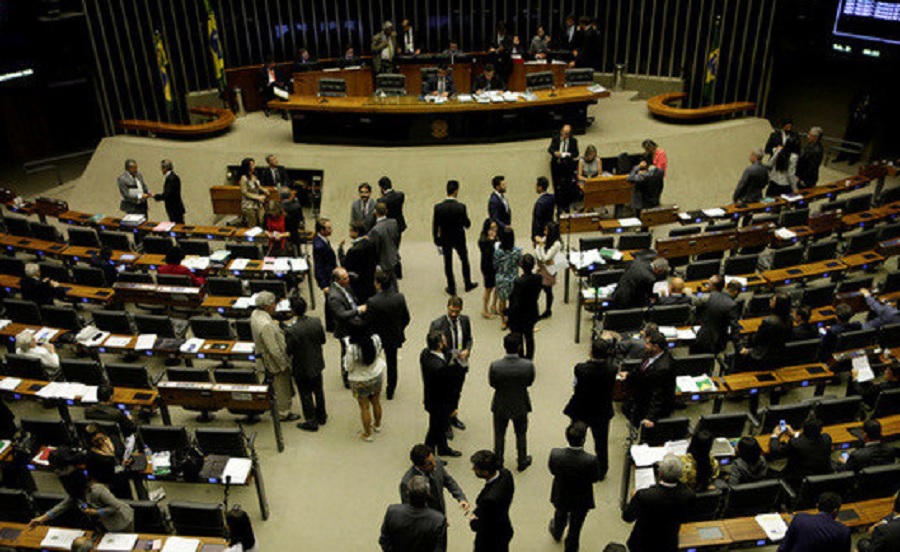
The deputy is married to the former governor of the Federal District, José Roberto Arruda, who became ineligible in the last elections after being convicted and imprisoned for participating in a corruption scheme.
With Luiz Eduardo Ramos commanding the Secretariot, the influential PL party was dissatisfied with coordination of the approval of the 2021 Budget and threatened to obstruct the vote. Behind the scenes, party leaders accused the Government Secretariat of favoring senators in the distribution of amendments.
Arruda will be responsible for the government’s political coordination and liaison, replacing Ramos, who will, in turn, replace Walter Braga Netto as Chief of Staff. However, the proximity – both physical and symbolic – of the Centrão with the government does not give Bolsonaro carte blanche: for the time being, Congress has not indicated that it will relax its control over the actions of the Executive, nor that it will reduce the pressure of parliamentarians for positions and amendments.
Economic Market
Completely congested by the pandemic’s consequences, the relationship between the federal government and the economic players is not good. The pessimism in this area was confirmed by a letter signed by about 200 economists, bankers, businesspersons, and academics entitled “Country Demands Respect; Life Needs Science and Good Government.”
The text classifies the current scenario as “bleak” and does not shy away from pointing out that the government “underuses or misuses” the resources at its disposal, including ignoring or neglecting the scientific evidence in the design of actions to deal with the pandemic. In all, the document bears the signatures of four former finance ministers and five former presidents of the Central Bank and the BNDES.
Another point of weakness in this sector is the government’s reform agenda, which has advanced very little in recent months. Stalled in Congress due to the consequences of the health crisis generated by Covid-19, projects such as tax reform, administrative reform, and a series of privatizations, show no signs that they will be analyzed with the speed that the federal government needs.

Pandemic
More than a year after the arrival of Covid-19 in Brazil, the country has become the world epicenter of contamination and gets negative headlines internationally. A new record on the rolling average of deaths by the virus was reached on Monday: the number reached 2,655, up 34% compared to the calculation two weeks ago. In all, 314,268 lives have now been lost to the new coronavirus.
The constant rise in the number of infected people is causing the collapse of the health network in almost every state in the Federation. Waiting in line for a hospital bed has become common. Even the “intubation kit” stocks to treat the critically sick are affected, because the new Health Minister Marcelo Queiroga intends to implement protocols to save on the use of oxygen in the country.
The national immunization campaign’s pace is also slow: nationwide, 16,258,743 people received the first dose of a vaccine, equivalent to 7.68% of the Brazilian population. The second dose of the vaccine, in turn, has been applied to 4,819,324 people, or 2.28% of the population.
Source: Exame
More: Brazil news in English, every day from The Rio Times.
This article was produced by The Rio Times’ automated newsroom system. How we use AI · Report an error · Editorial responsibility: Matthias Camenzind, Editor-in-Chief