Invasion of the Two-Wheelers! Yet Another Challenge for Congested Brazilian Cities?
RIO DE JANEIRO, BRAZIL – Suddenly, it seems, they are everywhere. Weaving against the flow of traffic; whizzing silently among unsuspecting pedestrians; occasionally clustered in day-glo streetside herds; or randomly abandoned, alone, in unexpected locales.
The streets – and sidewalks – of Brazil’s cities have been invaded. By scooters!

For many of us, they are the stuff of childhood reminiscence, or perhaps just another irritating hipster affectation, but scooters are back – with a vengeance – and they have been electrified!
In fact, in what seems like just a few months, the streets of Brazil’s largest cities have been inundated with electric scooters.
And Brazil is not alone. US-based electric scooter (E-scooter) sharing companies (like Bird and Lime) have expanded aggressively into a range of traffic-congested Latin American cities followed, eventually, by local alternatives.
Grin, the first Latin American E-scooter start-up, launched in Mexico City in 2018 while Yellow and Scoo, both based in São Paulo, are now their two largest Brazilian competitors.
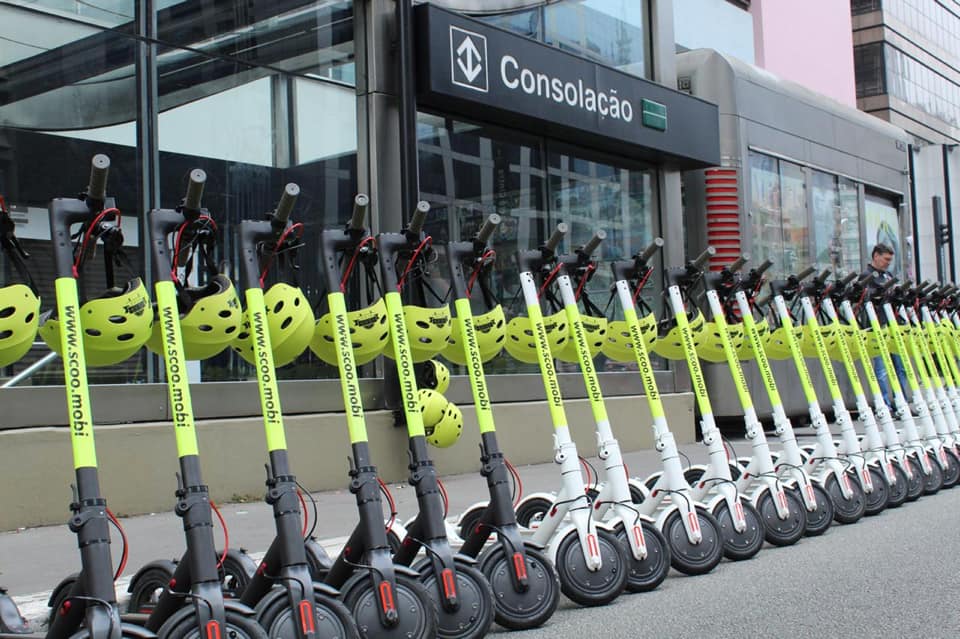
At this point, the global E-scooter market is expected to reach US$28.56 (R$114) billion by 2025. Heralded as a novel and much-needed micro-mobility alternative, most E-scooter sharers operate an app-based model which allows users to unlock them by smartphone.
Being dockless means E-scooters (unlike rental bikes) can be abandoned at whim and without any obligation to search for parking spots. Importantly, electric battery power makes them environmentally friendly as their use doesn’t contribute to urban smog or global climate change (although these claims don’t necessarily apply to their fabrication).
So why are these zippy newcomers to the Latin American urban scene potentially controversial?

In Brazil, as in countries throughout the world, genuine concerns surround the rapid proliferation of E-scooters in environments of relatively little – or even zero – regulation and, thus far, the total absence of any planning for their presence in already very congested cities.
Perhaps the most pressing issue is that of safety as escalating numbers of scooter users vie for space on over-crowded streets. Accidents with cars or motorcycles – and falls due to poorly maintained surfaces – are the most common causes of a growing list of E-scooter injuries ranging from sprains and bruises to facial and head trauma.
Such mishaps are compounded by the fact that E-scooter riders are typically not required to wear helmets. In fact, regulations concerning E-scooter use are still scarce and, where they do exist, poorly enforced.
São Paulo and Rio de Janeiro, for example, have only recently introduced basic regulation concerning rental E-scooters, and it remains unclear how these new rules will be policed.
Unlike many European cities which have at least adapted to and planned for high levels of (non-recreational) cycle use, Latin American cities simply aren’t physically equipped for the rapid growth of E-scooters as a commuting reality.
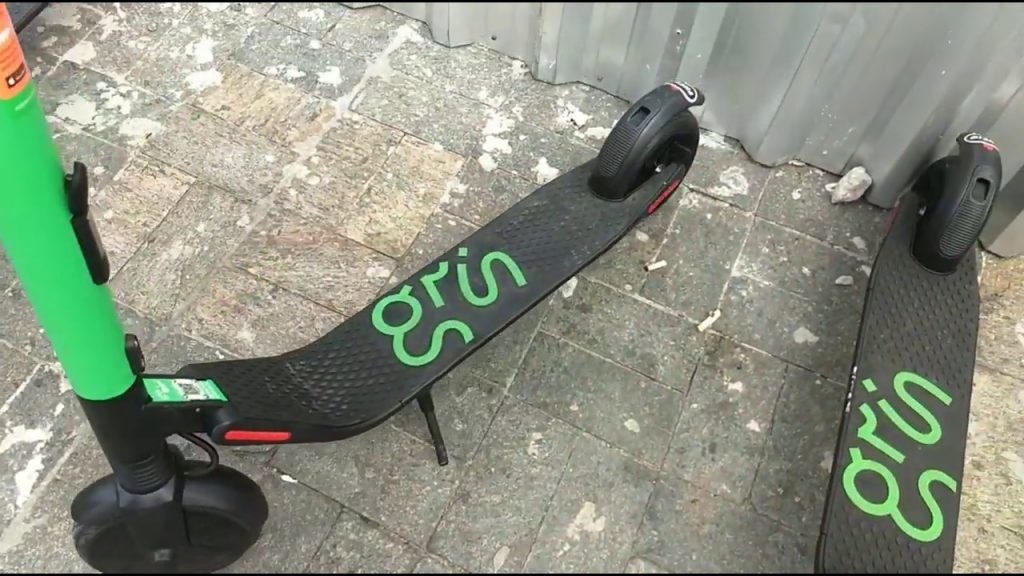
Likewise, non-users are increasingly complaining about E-scooters being operated dangerously on crowded sidewalks and park paths or strewn, abandoned, across pavements and walkways creating real hazards for the elderly, blind, wheelchair users – and even the average (often screen-distracted) pedestrian.
Arguably, E-scooters represent a perfect example of creative technology outstripping both social norms and urban planning practice. As things stand, it seems unlikely that Latin America’s congested cities can accommodate a significant E-scooter presence without both conscious societal accommodation and a concerted physical retrofitting.
Given this reality, it is difficult – yet crucial – to discover whether E-scooters really offer a potentially vital contribution to a new green urbanism, as an ecologically sound solution for short-distance city commuting – or whether they are just another passing fad.
More: Brazil news in English, every day from The Rio Times.
This article was produced by The Rio Times’ automated AI newsroom. Editorial responsibility: Matthias Camenzind, Publisher and Editor-in-Chief. The Rio Times also runs Ask Rio Times, which answers from 100,000+ of our own articles, the daily Latin America Power Map, and prediction-market odds on elections and markets.. How we use AI · Report an error
Brazil runoff, Sunday, October 25: When is the Brazil runoff election. Latest: Brazil runoff polls, Flávio 51%, Lula 49%.