In Europe, Criteria for Calculating Covid-19 Deaths Differ by Country
RIO DE JANEIRO, BRAZIL – Rumors like these have multiplied in recent days on social media: “Germany and the Netherlands are hiding corpses under the carpet”; “in the United Kingdom, permission is sought from relatives of a deceased coronavirus patient to decide whether to include him/her in the official counting”.

And many others circulate after the Netherlands’ criticism of Spain, the controversy over coronabonds (a dispute over economic aid in the European Union) and the astonishment over the low mortality rate of the disease in Germany, for which scientists still have no clear explanation (although they point to the high number of tests performed).
Experts in epidemiology alert that not all deaths from the coronavirus are being correctly accounted for. And this is a fact in all countries. The controversy in France focuses on the cases that do not enter the statistics: all deaths outside hospitals.
In Spain, according to regional health secretaries, people who die in nursing homes or at home without having undergone a diagnostic examination are not counted either.
These differences, combined with each country’s difficulties in drawing up an accurate picture, render mortality rates unreliable. With the aggregate problem that when a very small part of the real contagions is detected (as is happening in Spain and Brazil due to lack of testing capacity), the percentage of deaths over the total number of infections is higher.
“Later, we will be able to do a more or less accurate analysis, but it will always be an estimate,” says Ildefonso Hernández, spokesperson for the Spanish Society of Public Health (SESPAS).
Italy includes all patients who tested positive and died in the registry of coronavirus victims, regardless of other aspects of their clinical history, following the Superior Institute of Health’s criteria.
This body is responsible for conducting an epidemiological study to investigate the causes of death of patients with the Covid-19 and publishes a report twice a week on whether these people were suffering from other conditions.
The director of Civil Protection, Angello Borrelli, in charge of reporting the official figures, often notes that they are “deaths with coronavirus and not by coronavirus,” until deepening the clinical records.
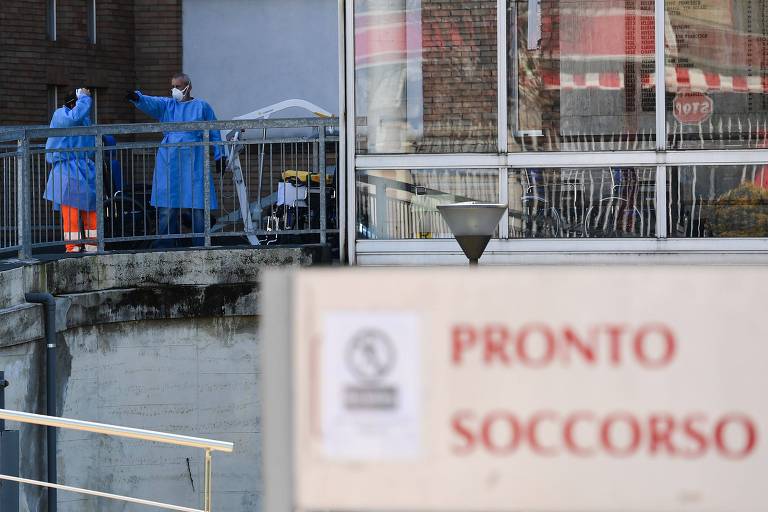
The majority of the scientific community assumes that the lack of further detection tests – since the outbreak’s origin until March 28th, 429,526 have been performed – the real numbers, both of infections and of deaths, could be much higher than the official figures.
Until the advent of the coronavirus epidemic in the UK, when a patient died in hospital from a respiratory infection, the direct cause of this infection was not recorded, unless it was a mandatory “reportable disease” required by law –for instance, botulism, malaria, and tuberculosis.
The medical reports stated only bronchopneumonia, pneumonia, advanced age or a similar designation. Since March 5th, the Covid-19 has been included on the mandatory notification list. Seasonal flu, however, is not recorded.
So far, most tests are performed in hospitals, where patients are prone to the effects of any infection, or in people who showed symptoms severe enough for a test to be performed.
That is why the British health authorities alerted, when the number of positive cases stood at around 500, that the reality could be closer to 5,000 or 10,000 infections. The death rate in the United Kingdom, which currently stands at six percent, would actually be much lower, several experts point out.
Since the epidemic began, in France only those who died in hospital are counted, that is, collecting daily data from the country’s 600 hospitals and clinics ” capable of taking in Covid-19 patients”.
Although the mortality rate is higher among older people (86 percent of those killed in France are 70 years of age or older), the official statistics do not include the elderly who die in their homes or, more importantly, in the 7,000 nursing homes that accommodate more than 700,000 people.
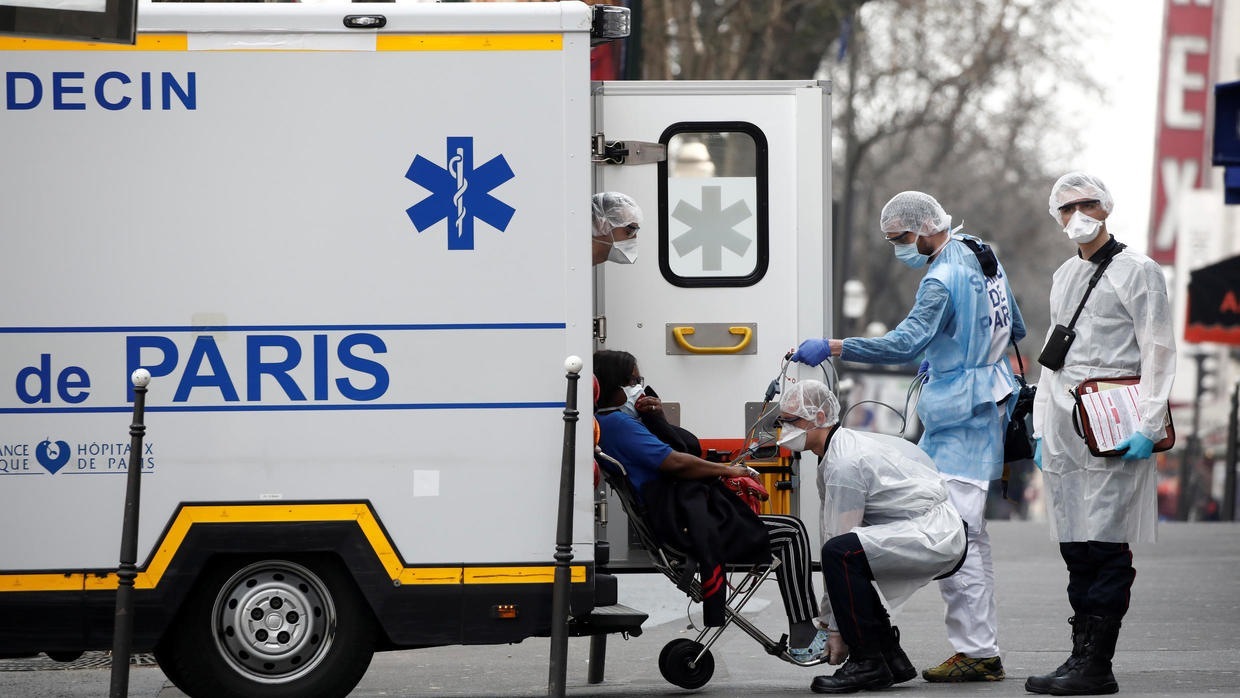
The same is true for Spain, where at least 352 people had died in nursing homes by last Thursday. The Ministry of Health does not provide figures.
Since large-scale deaths began to be reported in these facilities in France, Emmanuel Macron’s government has embraced a new approach and announced that, starting this week, it will carry out “daily mortality monitoring” in nursing homes.
In Germany, with a mortality rate of 0.72 percent, there has been a degree of controversy because the data provided daily by the Robert Koch Institute (RKI) is lagging behind the data provided by Johns Hopkins University, which collects information from around the world. They are similar, yet the RKI takes time to validate them after they are sent by states.
The RKI explains that “all deaths related to the Covid-19 disease have been recorded in the notification data: both people who died directly from the disease and patients with underlying conditions that are infected and for whom it is impossible to clearly prove the ultimate cause of death”.
Should there be any suspicion, the institute adds, “they can be examined postmortem,” but it does not clarify whether all suspected cases undergo autopsy.
France, like Spain, monitors excess mortality. Data from its National Institute of Statistics show that in its main focus, eastern France, it comes to 37.8 percent this month. In Spain, the latest report by the Carlos III Institute of Health points out that the excess of deaths in relation to the historical series between March 21st and 25th was nearly 17 percent. But there are still no disaggregated figures on cause of death.
In the Netherlands, coronavirus testing is reserved for hospitalized patients. The official body in charge of the count provides figures for deaths, contagion, and hospital discharges and states that the actual count may be higher because these are only the confirmed cases.
Source: El País
This article was produced by The Rio Times’ automated newsroom system. How we use AI · Report an error · Editorial responsibility: Matthias Camenzind, Editor-in-Chief
Read More from The Rio Times