Brazil’s Basic Health Units Become Skeletal Structures: Report
By Xiu Ying, Contributing Reporter
RIO DE JANEIRO, BRAZIL – A report obtained by Brazilian news outlet “Metrópoles” shows that several Basic Health Units (UBS) or Emergency Care Units (UPA) have become mere skeletal structures since 2012, with no patient care.

President Fernando Henrique Cardoso’s government introduced what seemed to mayors of Brazilian municipalities like a solution for the chronic public health issue.
At the time, the Ministry of Health formed a career technical staff aimed at studying and finding solutions for the Unified Health System (SUS). Years later, the group became the Project Management Coordination (Cogpab).
With a R$23 (US$5.75) billion budget, Cogpab finances infrastructure works so that cities may perform basic health care, the first service need of the population. As a result, many mayors received the money, and health facilities were built.
However, without staff, they have become another set of sad concrete skeletons and bricks deteriorating while nothing is happening.
Waste of Public Resources
Alongside the chronic problem of poor health care, there was yet another chronic problem in Brazil: waste and the misappropriation of public resources.
A Cogpab report obtained exclusively by “Metrópoles” shows that, of the 47,000 health units built with federal funds since 2012, at least 1,967 are completely abandoned.
The damage to public coffers is claimed to total R$5.4 billion, as each UPA abandonment represents dumping R$2 to R$3.7 million down the drain.
So why are healthcare facilities not operating if they were all delivered by the federal government through Cogpab, and some of them inaugurated by the mayors themselves?
Part of the reason is that many such facilities were inaugurated during election campaigns. After the inauguration, the administrator did not do his part, namely, assign nurses and doctors to work in the facilities. After election day, the facility would close its doors without having seen a single patient.
The strongest evidence that building UPAs and UBS’s has often been nothing more than free electoral propaganda for mayors seeking re-election, is the number of canceled projects filed with Cogpab’s Basic Care Department.
Once they have shown the facilities to TV cameras and had their minute of fame at someone else’s expense, mayors abandon the unit or suspend the agreement made with the federal government, claiming lack of resources.
The state of Minas Gerais holds the highest number of cancellations: 580 filed with the Ministry of Health to date. Goiás aborted 80 projects.
The UBS/UPA National Infrastructure Program also covers regions in Brazil’s North, where poor communities live in neglect due to their geographical location.
These municipalities are difficult to access and can generally only be reached by river. As a solution, the technical group of the Ministry of Health created the Fluvial UBS, a barge equipped to operate as a health care unit.
The federal government ministry financed 76 Fluvial UBS barges to provide healthcare to these communities by water. Each one cost an average of R$ 2 million.
This was the first stage of 104 boats for municipalities from Acre to Tocantins. In all, ten states applied for the benefit.
Today, the picture of neglect is disheartening: only 26 Fluvial UBS facilities are in operation and then only in the rainy season. During the dry season, when water levels are low, they cannot travel without risking running aground.
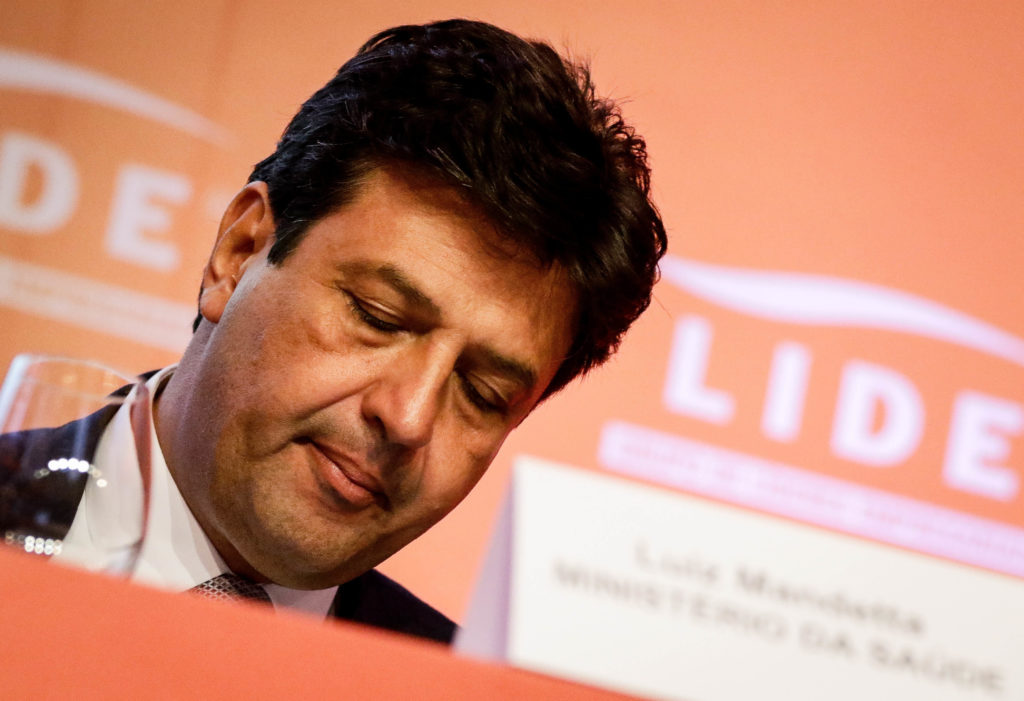
Health Minister Luiz Henrique Mandetta explains in a statement that he has made efforts to get the health units up and running.
In January 2017, the Ministry of Health issued an ordinance relaxing the operating rules of units funded with federal money so that they would not become idle. In May 2018, the readjustment of the SUS physical network reinforced the ordinance.
According to this measure, states and municipalities will be able to use the units for any purpose within the health area, without having to return federal funds.
(Source: Metrópoles)
More: Brazil news in English, every day from The Rio Times.
Editorial responsibility: Matthias Camenzind, Editor-in-Chief · Editorial standards · Report an error