How Coronavirus Will Change Our Lives: Trends for a Post-Pandemic World
RIO DE JANEIRO, BRAZIL – Covid-19 has changed our lives. Not simply when it comes to changing the routine in these days of isolation, when we may no longer go hiking or to our favorite bars and restaurants. Yes, all this has changed our daily lives – and very much so.
But let’s not dwell on the deeper changes, on the transformations that must shape the reality around us and, naturally, our lives after the novel coronavirus mitigates. Therefore it might be best to begin by saying that the coronavirus will change our lives. But how? What likely scenarios are starting to emerge and should prevail in the post-Pandemic world?

The post-Pandemic world will be different
Understanding what a new world means is necessary to prepare for what is to come. Because one thing is certain: the world will not be like before, as the biologist Átila Iamarino has alerted us.
“The world has changed, and that world (before coronavirus) no longer exists. Our life is going to change greatly from now on, and someone who seeks to preserve the status quo of 2019 is someone who has not yet accepted this new reality,” said Átila, who holds a doctorate in microbiology from the University of São Paulo and a post-doctoral degree from Yale University, in an interview with BBC Brazil.
“Changes that the world would take decades to undergo, that we would take a long time to implement voluntarily, we are now forced to implement in a matter of months,” he says.
Pandemic marks the end of the 20th century
Still along this line, there is a perception among experts that a symbol for the end of the 20th century, a time highly marked by technology, was lacking.
And that milestone is the coronavirus pandemic, according to historian and anthropologist Lilia Schwarcz, professor at the University of São Paulo and Princeton University, in an interview with Universa. “[British historian Eric] Hobsbawm said that the long 19th century only ended after World War I [1914-1918]”.
“We use the time marker: the century turned, everything changed. But it doesn’t work that way, it’s the human experience that builds time. He’s right, the long 19th century ended with the First World War, with deaths, with the experience of grief, but also what it meant of destructive capacity. This pandemic of ours is thought to mark the end of the 20th century, which was the century of technology. We experienced great technological development, but now the pandemic is showing those limits,” Lilia says.
Coronavirus, a future accelerator
Several international futurists say the coronavirus works as a futures accelerator. The pandemic anticipates changes that were already underway, such as remote work, distance education, the search for sustainability, and society’s demands for companies to be more socially responsible.
Other changes were more embryonic and perhaps not as perceptible yet, but now they are taking on a new meaning in the face of the review of values prompted by an unprecedented health crisis for our generation. As examples, we can point to the strengthening of values such as solidarity and empathy, as well as the challenging of a model of society based on consumerism and profit at any cost.
“Life after the virus will be different,” said futurist Amy Webb, a professor at New York University’s Business School, to the Newsday website. “We have a choice to make: do we want to challenge beliefs and make significant changes for the future, or simply preserve the status quo?”
Effects of the coronavirus should endure for nearly two years
The transformations are countless and include politics, economics, business models, social relations, culture, social psychology and the relationship with the city and the public space, among other aspects.
The starting point is to realize that the effects of the pandemic should endure for almost two years, as the World Health Organization estimates that it will take at least 18 months to secure a vaccine against the novel coronavirus. This means that countries must rotate between periods of opening and isolation during this time.
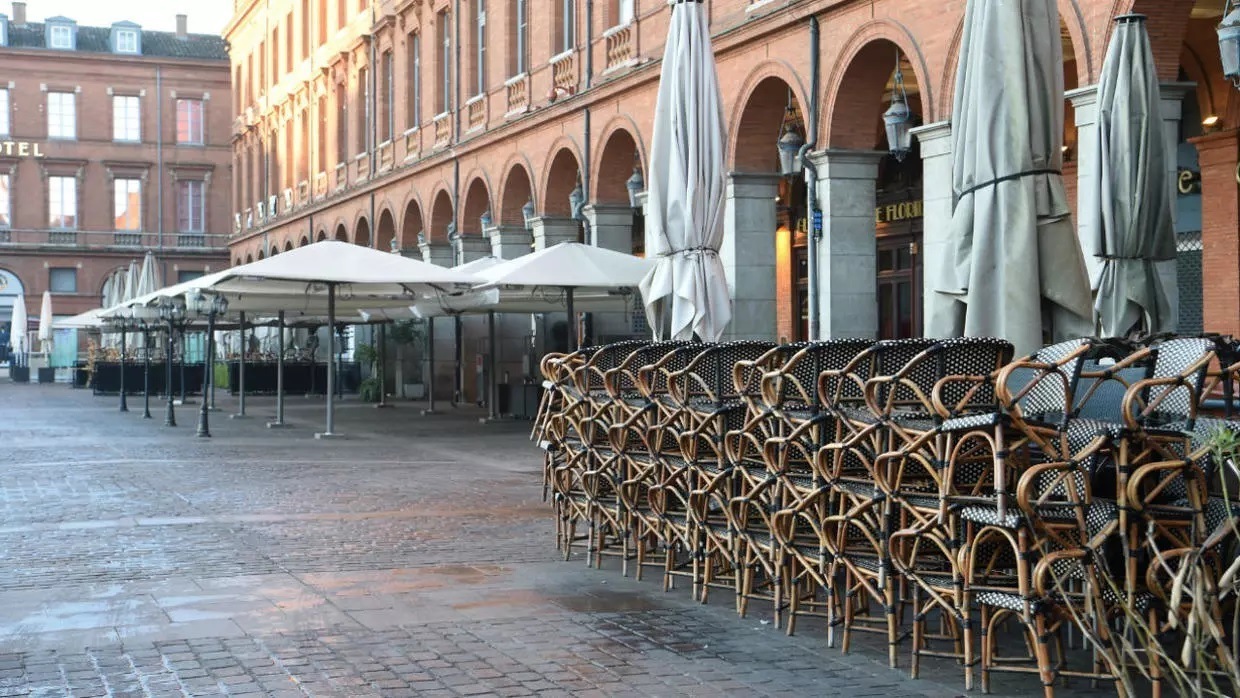
From this perspective, what about recreation, culture, gastronomy, and entertainment activities in the center and throughout the city during this time? What will change after this period? These are still open questions, but there are indicators that allow for some reflection.
To understand these and other questions and determine the likely scenarios, it was sought to learn what trends futurists, researchers, and national and international research bureaus are drawing for the post-Pandemic world. From these readings and also from a glance at the issues concerning downtown São Paulo and urban life in general, a list was compiled with some of these trends.
The 10 trends for the post-Pandemic world
1. Review of beliefs and values
The public health crisis is defined by a number of researchers as a reset, a kind of watershed capable of bringing about profound changes in people’s behavior. “A crisis like this can change values,” says Pete Lunn, head of Trinity College Dublin’s behavioral research unit, in an interview with Newsday.
“Crises force communities to come together and work more as teams, whether in neighborhoods, among company employees, or otherwise… And that may affect the values of those living in this period – as it does for generations who have lived through wars”.
We are already starting to see these signals in Brazil – and in the center of São Paulo, with several examples of people uniting to help the elderly, for one.
2. Less is more
The financial crisis resulting from the pandemic alone will be a motive for people to save more and review their consumption habits. As the Copenhagen Institute for Futures Studies says, the idea of “less is more” will guide consumers from now on.
But lack of money at present will not be the only reason. People should review their relationship with consumption, reinforcing a trend that was already happening. “Consuming for consumption’s sake is out of fashion,” writes Sabina Deweik, a master in semiotic communication at PUC and a researcher on behavior and trends.
The other aspect of this process is a greater questioning of the capitalist model based purely and simply on maximizing profits for shareholders. “Coronavirus has brought the need to revisit priorities into the business and personal context. What used to generate financial results in an organization, by persuading, encouraging consumption, increasing production and sales, no longer works,” says Sabina.
“Today, it is necessary to consider the value awarded to people, the environmental impact, the production of a positive impact on society or the engagement with a cause. It is necessary to definitively look at employees with confidence since the home office is no longer an alternative but a need. It is necessary to rethink the consumer society and reflect on what is essential”.
3. Reconfiguration of trade areas
The pandemic will heighten people’s fear and anxiety and encourage new habits. Thus, health care and wellbeing, which will be on the rise, must be extended to public areas, particularly closed ones, as the concern for crowded areas should remain.
“When people return to public areas, after the restrictions are lifted, companies should invest in strategies to deeply engage consumers, by creating settings that give them the feeling of being home,” says a report by WGSN, one of the world’s largest trend-setting research bureaus.
This is a point of attention for bars, restaurants, cafes, gyms and coworking spaces, which must redesign their spaces to reduce crowding and ease access to hygiene products, such as hand sanitizer. Shared areas, such as coworking spaces, face a major challenge in this new scenario.
4. New business models for restaurants
One of the ten trends pointed out by futurist Rohit Bhatgava is what he refers to as “ghost restaurants”, a term used to describe the establishments that operate exclusively with delivery. With the potential for new waves of the pandemic in the near future, the restaurant industry must keep an eye on changes in its business model, and delivery services will continue to boom and may become the main source of revenue in many cases.
5. Immersive cultural experiences
In response to social isolation, artists and cultural producers began to invest in online shows and performances, and virtual tours through museums gained more prominence. This behavior should evolve into what can be called immersive cultural experiences, which try to connect the real with the virtual from the use of technologies that are already out there, but which should spread, such as augmented and virtual reality, virtual assistants and intelligent machines.
According to the Hype Cycle study by the international consultancy Gartner, immersive experiences are one of the three major trends in technology. The cultural area is particularly noteworthy, but this also extends to other sectors, such as sports and retail travel, as shown in the ‘A Post-Corona World’ report, produced by Trend Watching, a global trend platform.
6. Working remotely
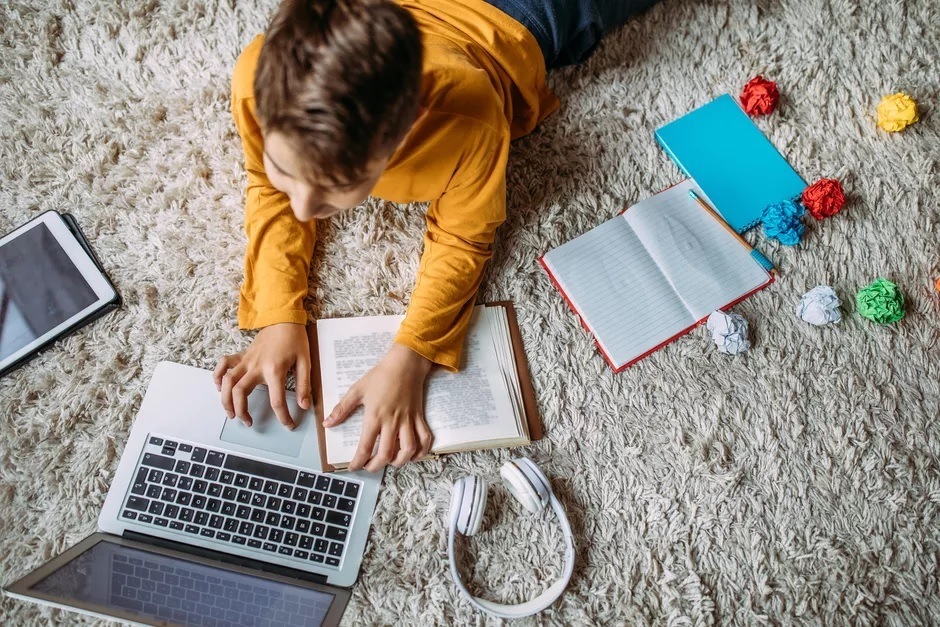
Home office was already a reality for many people, from freelancers and self-employed professionals, to employees of companies that had already adopted the model. But this model will grow even more. With the pandemic, more companies -of different sizes- began to organize themselves to work with this model. In addition, remote work avoids the need to spend time in crowded areas, such as buses and subways, particularly at rush hour.
7. Living close to work
This was already a trend, and living in downtown São Paulo became an object of desire for many people just because of this, among other reasons. But, fearing new waves of contagion, living near work, to the point of walking instead of using public transports, should become an even more valued asset.
8. Shop streaming
With social isolation, live streams exploded, particularly on Instagram. Internet sales also became an option for stores that until then were only selling at their physical locations. Considering the combination of these factors, this is what shop streaming is all about. An Instagram version of the old ShopTime.
9. Search for new knowledge
In a world in constant and rapid transformation, updating your knowledge is a matter of survival in the market (as well as a pleasure). But the age of uncertainty triggered by the pandemic has heightened this feeling in people, who are now more in touch with online courses in order to learn new things, have fun and/or prepare for the post-pandemic world. After all, many jobs are being closed, some activities are losing ground while other services are gaining market share.
10. Distance Education
If the search for knowledge is on the rise, the channel for this from now on will be distance education, the growth of which will increase rapidly. In this context, a new character should step into the scene: the virtual tutor. Trend Watching believes that new platforms or services should emerge to connect tutors and teachers to people who want to learn about different subjects.
Source: El País
More: Brazil news in English, every day from The Rio Times.
This article was produced by The Rio Times’ automated newsroom system. How we use AI · Report an error · Editorial responsibility: Matthias Camenzind, Editor-in-Chief