Household Debt Breaks Record; Two Million Request Payment Deferral
RIO DE JANEIRO, BRAZIL – The economic crisis caused by the Covid-19 pandemic has already led two million customers to seek out the five largest banks in Brazil to renegotiate R$200 billion (US$40 billion) in loans.

The survey released on Monday, April 6th by the Brazilian Federation of Banks (FEBRABAN) does not disclose, however, the total amount that has been negotiated so far by Banco do Brasil, Bradesco, Caixa, and Santander.
Itaú Unibanco reported that it has renegotiated 302,000 contracts, with an extension of installments equivalent to R$679 million (in all, these contracts total R$12.1 billion). According to the bank, all renegotiation requests are being met, provided that the conditions of the offer are met. The main condition is to be up to date with the financing.
Pressed by criticism from companies and individuals over difficulties to negotiate a deferral of installments in two or three months, the FEBRABAN said it understands the “anxiety” of several sectors, but it is “necessary to understand that this is a gradual and complex process, which demands several measures and, in many cases, involve regulatory changes”.
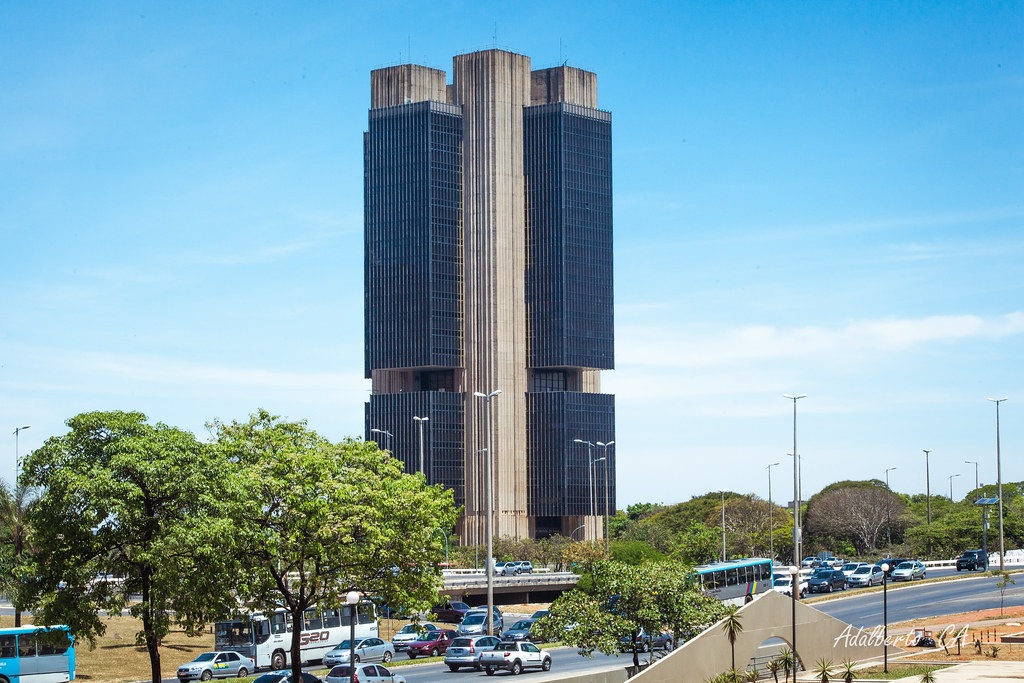
The association mentions as an example of changes in regulations that needed to be made the release of compulsory deposits by the Central Bank.
The compulsory deposit is made up of a portion of the money deposited in the banks by account holders. These funds are kept in the Central Bank and banks cannot use them to make loans, for instance.
So far, the Central Bank has announced the injection of R$1.2 trillion into the financial system. Part of the resources still hinges on regulation in order to start, in fact, reaching financial institutions, but the Central Bank has stated that the market is now “liquid” and that further measures are underway.
“Unlike what occurred in the 2008 crisis, this time we are not observing a pooling, but rather a substantial increase in the need for net resources, which makes this crisis very different from the last one,” said the FEBRABAN in the note.
On Saturday, during an online conference with retail representatives, the Minister of Economy, Paulo Guedes, stated that the “pooling” of resources in banks would be slowing the emergence of aid for those in need in the crisis.
Therefore, the government is focusing on allowing the Central Bank to directly negotiate credit portfolios and corporate bonds. The measure is provided for in the “war budget” Constitutional Amendment, which has already been passed by the Chamber of Deputies and needs the Senate’s approval.
The FEBRABAN advisory body says there is no dispute with Minister Guedes, but “only a clarification of the sector”. In addition, the body says that international banks have cut the credit lines for Brazilian banks, which has reduced the supply of resources in the market.
According to the director of Teros Consulting, Juan Ferres, this is not a lack of liquidity at the moment, since the funding of CDBs (Bank Deposit Certificates) and other similar instruments by banks has increased in recent days.
“This is an operational problem of risk assessment to unlock the process,” says the economist, who has set up a real-time platform on the Internet, with data on the impact of the crisis on various real economy indicators.
“No matter how much liquidity is injected, the banks are experiencing great difficulty in preparing a credit proposal to their clients, since there are no parameters to price this credit”.
The economist explains that neither the banks nor the companies know for sure how long and how intense the crisis will be, so that it is difficult to define, for instance, what shortfall a business establishment will need in order to start paying off the debt or even whether the establishment will be able to sustain itself after the crisis. This uncertainty would lead to an extension of the time it takes to analyze requests.
According to Ferres, the reduction in the granting of credit to storeowners or companies can be seen, for instance, in the flow data of anticipated credit card receivables.
The drop is due to two factors: the lack of receivables (and guarantees) from these companies, since the usual financial flow dropped between 30 and 70 percent, depending on the sector; and the uncertainty as to the severity and length of the crisis that still exists.
Indebtedness
A recent survey by the National Confederation of Commerce (CNC) showed that in March the debt hit a record: 66.2 percent of workers had debts including credit cards, overdraft, personal credit, consigned credit, car loans, real estate loans. Although more heavily indebted, family default was relatively stable, which should change now.
“The banks don’t want to give new money, nor do they want to stretch it. They want to buy only public bonds. The Central Bank has to reduce interest further so that banks earn less money when they buy public bonds,” says Carlos Thadeu de Freitas, chief economist at the CNC.
The trade sector had projected a three percent increase in retail sales in the year, but the projection is now for a four percent decline. According to Freitas, the country must prevent entering a depression. “We are not yet in a depression. We are starting a recession. Now, depression is more serious. We have to wait a little longer.”
Source: InfoMoney
More: Brazil news in English, every day from The Rio Times.
This article was produced by The Rio Times’ automated newsroom system. How we use AI · Report an error · Editorial responsibility: Matthias Camenzind, Editor-in-Chief