Guyana Protests to Venezuela Over Border Shootings Near Its Oil Fields
Defense
Key Facts
Guyana has formally protested to Venezuela over repeated gunfire on their remote jungle border, a standoff that has now wounded ten soldiers and sits at the centre of South America’s biggest oil story. A binding world-court ruling on who owns the oil-rich territory is expected within months.
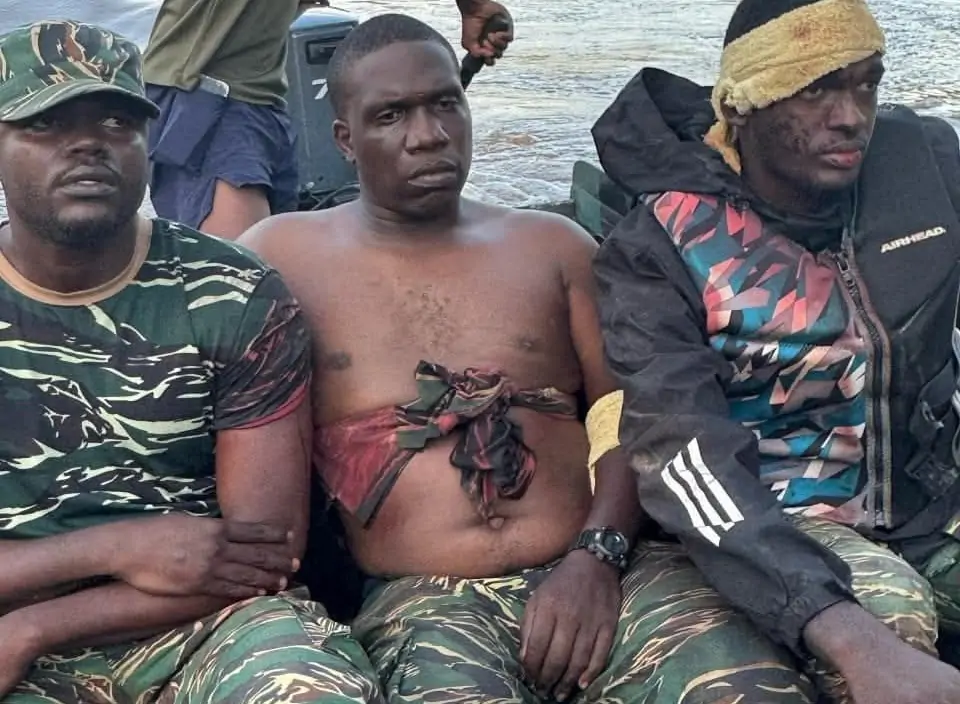
The shooting happened on Friday, May the twenty-ninth, on the Cuyuni River, a waterway that traces part of the frontier between Guyana and Venezuela. A patrol from the Guyana Defence Force came under fire from the Venezuelan bank at around midday.
One soldier was hit and flown to the capital, Georgetown, for treatment. The force said he is in a stable condition, and that the patrol returned fire and got the civilians it was protecting out of the area safely.
What makes this more than an isolated skirmish is the pattern. According to the Guyanese newspaper Kaieteur News, citing the army’s own statement, Friday’s casualty was the tenth Guyanese soldier wounded by Venezuelan gunfire along this single stretch of river.
It was also the second shooting in under a month. An earlier attack, in early May, left a soldier with two gunshot wounds to the leg.
Back in early 2025, an ambush in the same corridor wounded eight at once.
Guyana has lodged a formal protest note with Caracas, demanding an investigation into the shootings and an end to the cross-border fire. The army says its patrols will keep escorting civilians along the Cuyuni, even as the attacks go unpunished.
Why this Guyana Venezuela border shooting matters to investors
To understand why a remote river firefight is worth an investor’s attention, you have to look just offshore. Guyana, a small country of under a million people on South America’s northern shoulder, has become one of the fastest-growing oil producers on earth.
An ExxonMobil-led group struck oil there in twenty fifteen and now pumps roughly nine hundred thousand barrels a day, with plans to push past a million within two years. That output is rewriting the country’s economy almost overnight.
The catch is geography. Most of that wealth lies in and around a region called Essequibo, which makes up about two-thirds of Guyana’s land and which neighbouring Venezuela claims as its own.
The river where the soldiers are being shot runs along the edge of that disputed zone.
For now the violence has not touched the offshore platforms, which sit well out at sea. But each incident raises the political temperature around an oil province that global energy majors are betting billions on for decades to come.
A court ruling that may settle nothing
The legal fight is reaching its climax just as the shootings intensify. The International Court of Justice in The Hague, the United Nations’ top court, held its final hearings on the case from the fourth to the eleventh of May and is now weighing its decision.
Guyana wants the judges to confirm a boundary drawn back in eighteen ninety-nine. A binding ruling is expected within months, with many observers pointing to late twenty twenty-six at the earliest.
The problem is enforcement. Venezuela‘s acting president, Delcy Rodríguez, used the May hearings to argue that political talks, not a court ruling, should settle the dispute, and has said Caracas will not accept any verdict against it. The court has no police force of its own to enforce one.
That leaves a strange standoff. A favourable verdict would hand Guyana a powerful diplomatic card, yet it may change little on a river where armed men keep firing from the trees.
The human cost of escorting a boat
The detail that lingers is what the soldiers were doing when they were shot. They were not on the attack.
They were shepherding local traders and their cargo along a river that has become too dangerous to travel alone.
Guyanese officers describe being fired on by groups using the dense jungle on the Venezuelan side as cover, and say the authorities across the river cannot possibly be unaware of it. The army insists it will keep up its presence along the western frontier.
Frequently Asked Questions
What happened in the latest Guyana Venezuela border shooting?
On Friday, May the twenty-ninth, a Guyana Defence Force patrol on the Cuyuni River was fired on from the Venezuelan bank while escorting civilian boats. One soldier was wounded and evacuated to Georgetown, where he is reported to be stable.
Why does Venezuela claim part of Guyana?
Venezuela says the Essequibo region was within its colonial-era boundaries and rejects the border drawn by international arbitrators in eighteen ninety-nine. The dispute, dormant for years, flared again after huge offshore oil discoveries made the territory immensely valuable.
Could this threaten Guyana’s oil production?
Not directly, for now. The producing fields lie far offshore, away from the land border where the shootings occur.
The risk is indirect, through rising tension that could unsettle investment in one of the world’s most important new oil frontiers.
Connected Coverage
For the legal showdown behind these clashes, see our report on how Venezuela rejected the world court’s authority over the Essequibo dispute. For the bigger economic picture, read our analysis of Guyana’s race to build an economy that outlasts oil. And for how Georgetown is hardening its offshore defenses, see how Guyana cut its oil-spill response time from a week to days.
This article was produced by The Rio Times’ automated newsroom system. How we use AI · Report an error · Editorial responsibility: Matthias Camenzind, Editor-in-Chief
Read More from The Rio Times