Guyana’s Take From Its Own Oil Jumps to 39.8% Now That Exxon Has Paid Itself Back
Guyana · Oil
Key Facts
- —What happened Guyana’s share of oil from the Stabroek block has jumped to 39.8%, President Irfaan Ali said on Tuesday.
- —How big a jump The share rose from roughly 14.5% to 39.8% — a 2.7-fold increase, not the tripling some headlines suggest.
- —The real story The rise came because ExxonMobil’s consortium finished recovering its US$55 billion investment, so less output goes to cost oil.
- —The catch No contract changed; the 2016 deal promised this split once costs recovered, two years early.
- —Who it touches Guyana’s 840,000 people, already the world’s top oil producer per head, plus Latin American governments watching the precedent.
- —What comes next Errea Wittu, a fifth vessel, arrives this week; output stays below a million barrels daily until Q4.
For years Guyana’s critics said the country gave its oil away for 12.5%. This week the government put a new number on it — and the arithmetic behind it is worth understanding.
President Irfaan Ali said on Tuesday that Guyana is now entitled to 39.8% of the crude produced at the Stabroek block. Nothing was renegotiated. The Guyana oil share rose because the ExxonMobil-led consortium finished recovering the US$55 billion it has spent since 2014, and under the contract that is the point at which the split shifts.
What actually changed, in plain terms
A production-sharing contract is not a tax. It is closer to a mortgage the oil company writes against the field.
The operator spends its own money finding and developing the oil, then recovers that spending out of production itself, barrel by barrel. That recovered portion is called cost oil, and in Guyana’s contract it can take up to 75% of output in any month. What is left is profit oil, split 50–50 between the state and the consortium. Guyana also takes a 2% royalty on all production.
That is where 12.5% came from. If cost oil runs at the 75% cap, only 25 barrels in every 100 are profit oil, and Guyana’s half of that is 12.5. Add the royalty and its total take was about 14.5%. Now that the consortium has recovered its US$55 billion, the monthly cost-oil draw has fallen to roughly a quarter of production — and the same contract delivers 39.8%.
Two things follow. The contract did not improve; it reached the stage it was always going to reach, earlier than Exxon itself had modelled. And the shift is not a switch that has been flipped. Cost recovery is recalculated every month, and Exxon is still spending on Uaru, Whiptail and Hammerhead, so cost oil never falls to zero.
The number that is not yet true
You will read that Guyana is producing more than a million barrels a day. It is not, and output has recently been falling.
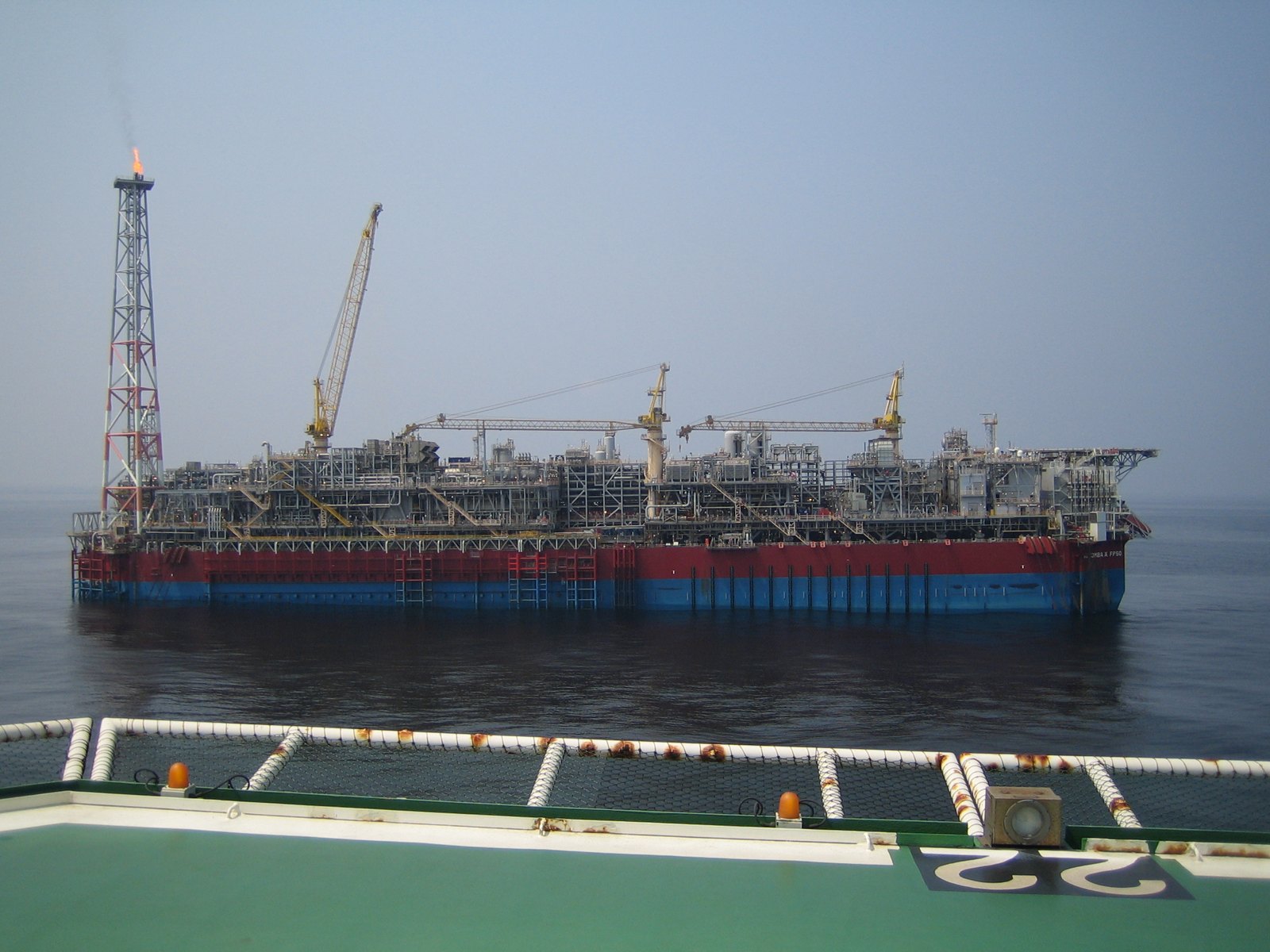
Government figures put production at about 902,000 barrels a day in April, 895,000 in May and 869,000 in June, with the drop concentrated at the two Liza vessels while Payara and Yellowtail held steady. Four vessels are on the block: Liza Destiny, Liza Unity, Prosperity and ONE GUYANA.
The fifth is the Errea Wittu, built by MODEC for the Uaru development, rated at 250,000 barrels a day. It sailed from Singapore in June, and President Ali said on 18 August that it arrives in Guyanese waters this week. First oil is targeted for the fourth quarter. If it starts on schedule, that is what would take the country past a million barrels a day for the first time — a forecast about a vessel still to be hooked up, not a milestone already passed.
Why this matters beyond Guyana
Guyana has about 840,000 people and already produces more oil per head than any country on earth. Moving from roughly 14.5% to 39.8% of production is not a rounding change to that — it is the difference between a windfall and a transformation.
For the rest of Latin America, the interesting part is the precedent. Governments across the region have been told for a decade that production-sharing terms which look thin at the start are fine, because the state’s share improves once costs are recovered. Guyana is the first large-scale test of whether that actually happens on schedule. It happened early.
The argument now moves to what the money does, and how durable the number is. The opposition APNU, through MP Saiku Andrews, called on 8 August for no new project approvals until Guyana is receiving 52% plus royalties. And because each new development opens a fresh cost bank, a sixth and seventh project would pull the percentage back down again.
More: Brazil news in English, every day from The Rio Times.
Frequently Asked Questions
How much of Stabroek’s oil does Guyana get now?
39.8% of production, announced by President Irfaan Ali on 18 August 2026. That figure already includes the 2% royalty.
Why did the share go up?
The ExxonMobil-led consortium finished recovering the US$55 billion it had invested since 2014. Less of each month’s production is now taken as cost oil, so more of it is profit oil, which is split 50–50.
Did Guyana’s share really triple?
Not quite. The widely quoted 12.5% was the profit-oil share alone. Counting the 2% royalty, the earlier total take was about 14.5%, so the rise to 39.8% is roughly 2.7-fold.
Was the contract renegotiated?
No. This is the 2016 production-sharing agreement working as written, and it contains no mechanism for the state to reopen it unilaterally. The change came about two years earlier than Exxon had scheduled because the block was built out very fast.
Is Guyana producing a million barrels a day?
No. Output was about 869,000 barrels a day in June, down from roughly 914,000 in the first quarter. A fifth vessel of 250,000 barrels a day is due to start in the fourth quarter.
Who owns the Stabroek block?
ExxonMobil operates it with 45%, Hess — acquired by Chevron in July 2025 — holds 30%, and CNOOC holds 25%.
Connected Coverage
ExxonMobil AI Guyana Exploration Finds 4 New Oil Prospects
Sources: Offshore Engineer — Guyana entitled to nearly 40% of Stabroe; Kaieteur News — ExxonMobil confirms US$55bn recovered; OilNOW — output declined in May and June, mostly at Liza
This article was produced by The Rio Times’ automated newsroom system. How we use AI · Report an error · Editorial responsibility: Matthias Camenzind, Editor-in-Chief