Soybeans, Corn, Wheat Pull Back After Rally; China in Focus
Key Facts
- Soybeans pulled back the soybean-tracking fund SOYB settled at US$28.08, a dip of 0.14% on the session.
- Corn led the decline the corn-tracking fund CORN settled at US$19.98, down 1.43% as traders took profits.
- Wheat followed lower the wheat-tracking fund WEAT settled at US$25.99, easing 1.22% after Black Sea risks kept a floor in view.
- China demand is central traders are squaring positions ahead of expected talks between Donald Trump and Xi Jinping, with Chinese buying of US soybeans already passing half of its 25 million metric-ton commitment.
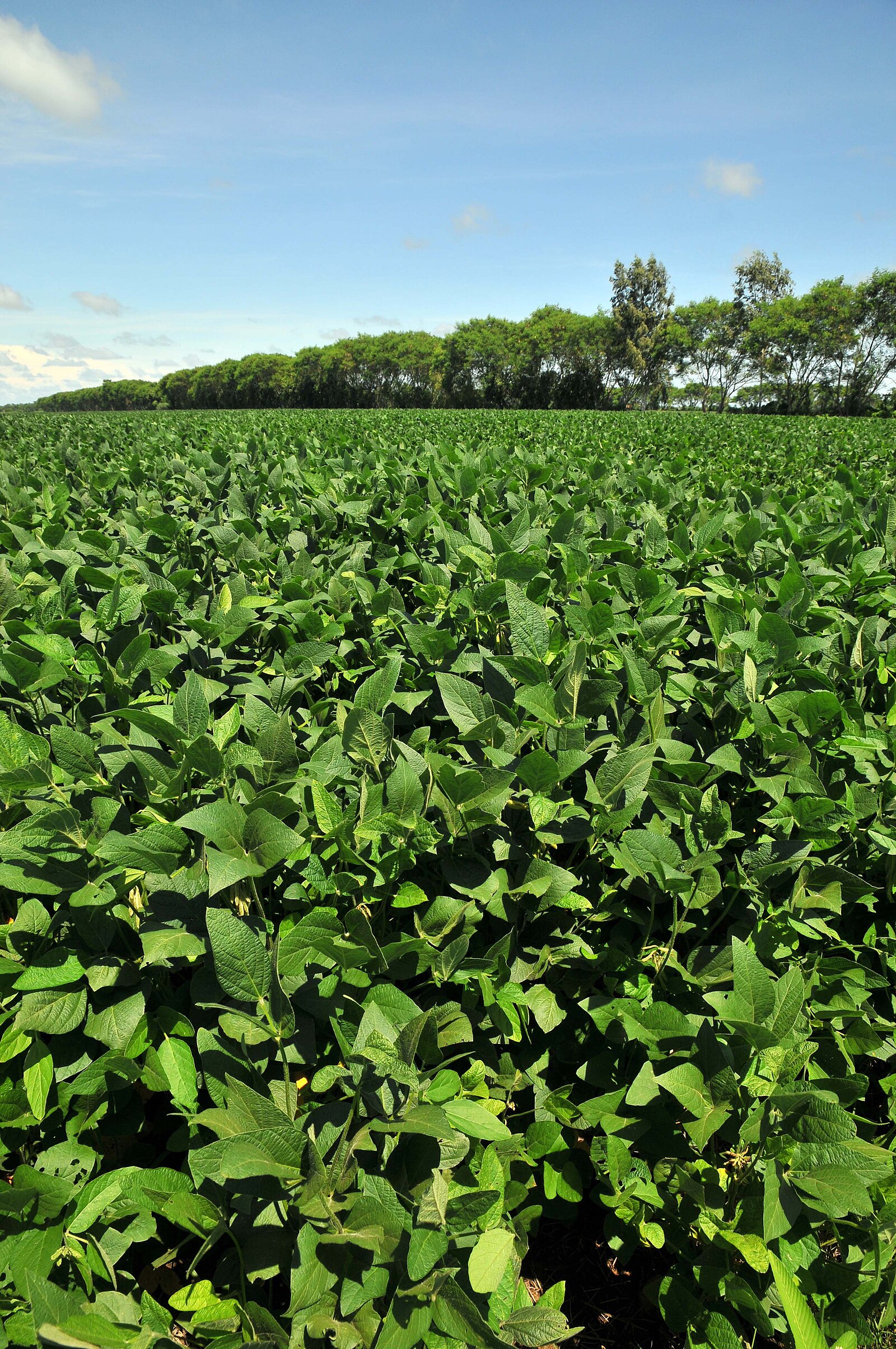
- South American supply is expanding Brazil’s 2026/27 soybean planting reached 1.2%, ahead of 0.9% this time last year, while first-crop corn planting hit 27% versus 25% a year earlier.
- Currency still matters a weaker Brazilian real or Argentine peso would boost local-currency returns for exporters and encourage more aggressive selling of dollar-priced grain.
Today’s Focus
Grain tracker funds slipped on Tuesday, September 22, 2026, giving back part of a sharp rally as traders paused before fresh signals on Chinese demand. SOYB settled at US$28.08, off 0.14%, while CORN dropped 1.43% to US$19.98 and WEAT eased 1.22% to US$25.99.
The pullback looks like classic profit-taking. The day before had carried soybeans and corn sharply higher on optimism over Chinese buying and the prospect of a Trump-Xi meeting. A step back in US export sales chatter and harvest progress in the Northern Hemisphere shifted attention toward supply.
For Latin America, the calculus remains that Brazil and Argentina are the world’s export engine. Brazil’s soybean planting is running ahead of last year, and Argentina’s harvest is effectively complete, which keeps ample South American supply near the front of global pricing.
What matters today. China’s follow-through buying, not today’s modest dip, will decide whether the grain complex has legs.
01 The session in one read
Grain tracker funds pulled back on Tuesday, September 22, 2026, with corn taking the heaviest hit. CORN settled at US$19.98, down 1.43%, while WEAT lost 1.22% to US$25.99 and SOYB slipped a modest 0.14% to US$28.08.
The moves read as profit-taking after a jump in the previous session, not a shift in the broader story. Traders are squaring positions before more clarity on Chinese demand and US harvest progress.
The declines across SOYB, CORN and WEAT are small, and the drivers are recent enough to read as traders taking profits after a strong prior session. The test is whether Chinese buying and Black Sea risk keep giving reasons to re-enter. Watch the next round of US export sales data and any concrete signal from the expected Trump-Xi talks.
02 The board
SOYB, the soybean-tracking fund, held up best among the three, settling at US$28.08 and giving back a fraction of its recent gain. The small decline suggests confidence in Chinese soybean demand is still underpinning the market.
CORN dropped most sharply, settling at US$19.98 as the advance of the US harvest encouraged selling. WEAT settled at US$25.99, easing 1.22%, with Black Sea export uncertainty still preventing a steeper fall.
| Asset | Level | Change |
|---|---|---|
| Soybeans (SOYB) | US$28.08 | -0.14% |
| Corn (CORN) | US$19.98 | -1.43% |
| Wheat (WEAT) | US$25.99 | -1.22% |
Source: RT close, 2026-09-22. Where a commodity has no spot feed, an exchange-traded tracker or leading producer is shown as a labelled proxy.
Live Market IntelligenceThe live market board
Rio Times · Live Market Intelligence
Latin America — Cross-Market Board
| Instrument | Last | Change | YoY | Prev. | High | Low | Volume |
|---|---|---|---|---|---|---|---|
| IBOV | 187,422.92 | +0.44% | +21.85% | 186,595.60 | 168,310 | 167,142 | — |
| IPSA | 11,426.83 | +0.61% | — | 11,357.82 | 11,210 | 10,984 | 1,513,213,483 |
| IPC MEX | 63,646.88 | +0.17% | +12.17% | 63,536.96 | 66,121 | 65,405 | 108,886,187 |
| MERVAL | 2,997,659 | -0.04% | +30.51% | 3,022,485 | 3,042,365 | 2,991,150 | — |
| COLCAP | 2,588.64 | +0.90% | — | 9.04 | 9.05 | 9.02 | 4,133 |
| BVL PERÚ | 59,529.36 | +1.84% | — | — | — | — | — |
| USD/BRL | 5.16 | +0.01% | -5.13% | 5.16 | 5.18 | 5.14 | — |
| EUR/BRL | 5.95 | +1.01% | -5.83% | 5.89 | 5.98 | 5.94 | — |
| USD/MXN | 17.06 | -0.24% | -8.58% | 17.10 | 17.08 | 17.01 | — |
| USD/CLP | 913.98 | +0.04% | -5.67% | 913.65 | 915.11 | 906.68 | — |
| USD/COP | 3,140 | +0.03% | -22.04% | 3,139 | 3,141 | 3,105 | — |
| USD/PEN | 3.36 | -0.66% | -4.82% | 3.38 | 3.38 | 3.35 | — |
| USD/ARS | 1,493 | +0.10% | +12.96% | 1,491 | 1,494 | 1,480 | — |
| USD/UYU | 40.27 | +1.24% | +1.80% | 39.77 | 40.27 | 40.23 | — |
| USD/PYG | 5,939 | +1.68% | -19.54% | 5,841 | 5,939 | 5,925 | — |
| USD/BOB | 11.64 | -0.76% | +72.04% | 11.73 | 11.72 | 11.64 | — |
| USD/DOP | 58.34 | +1.25% | -3.44% | 57.62 | 58.34 | 58.04 | — |
| USD/CRC | 445.92 | +0.89% | -9.71% | 441.97 | 448.50 | 445.92 | — |
03 What moved it
The pullback followed a strong rally built on optimism that China will keep buying American soybeans. China had already purchased more than half its stated 25 million metric-ton commitment, with recent US export sales near 1.7 million metric tons.
Attention is now on a possible meeting between Donald Trump and Xi Jinping, which could clarify the pace of future Chinese purchases. Meanwhile, harvest progress in the United States is adding a bit of supply-side pressure, especially for corn.
Wheat is caught between that same profit-taking impulse and lingering worry about Black Sea export flows. The result on Tuesday was a modest step back rather than any decisive move.
04 The Latin American read
Brazil and Argentina remain the engine of global soybean and corn exports. Brazil’s 2026/27 soybean planting reached 1.2%, up from 0.4% a week earlier and ahead of the 0.9% seen this time last year.
First-crop corn planting in Brazil is at 27%, versus 25% a year ago, while Argentina’s 2026 soybean harvest is reported at 98.2% complete. That means large South American supplies are now arriving just as US harvest pressure builds.
Currency remains a silent driver. Export contracts are priced in US dollars. Any weakening of the Brazilian real or Argentine peso raises local returns and can push exporters to sell harder.
05 The names to watch
The three tracker funds offer a direct read on sentiment: SOYB for soybeans, CORN for corn and WEAT for wheat. All three eased on Tuesday, with CORN the weakest.
On the corporate side, the next earnings or export commentary from major South American agribusinesses will show how this large Brazilian supply is being handled. Keep an eye on any announcements tied to Chinese tenders or port logistics in Paraná and Santos.
06 The outlook
The grain complex looks set for a choppy finish to the month. Chinese buying, US harvest data and South American planting progress are all competing for traders’ attention.
A bounce in soybean purchases from China or a new Black Sea supply disruption could quickly pull SOYB, CORN and WEAT back upward. Until then, modest pullbacks like Tuesday’s are likely part of normal two-way trade.
07 What to watch
- China soybean purchases: Any new flash sale or weekly export number will confirm whether the rally has more fuel.
- Trump-Xi talks: A concrete statement on trade would set the tone for corn and soybeans immediately.
- US harvest pace: Faster corn and soybean harvest progress could keep a lid on prices for now.
- Brazilian real and Argentine peso: A weaker real or peso could trigger heavier South American selling and pressure global values.
Frequently Asked Questions
Why did corn fall more than soybeans or wheat?
Harvest progress in the United States encouraged profit-taking in corn, pushing CORN down 1.43% while soybeans and wheat slipped far less.
Are Brazil and Argentina still the main export engine for grains?
Yes, Brazil’s soybean planting is ahead of last year and Argentina’s harvest is nearly complete, keeping South American supply central to global pricing.
What role does China play in soybean prices?
China is the major buyer, and purchases already exceed half of a stated 25 million metric-ton commitment, so any sign of slowing or accelerating buying moves the soybean market.
How does the currency link affect grain exports from Latin America?
A weaker Brazilian real or Argentine peso raises the local value of dollar-denominated sales, which encourages exporters to sell more grain abroad.
Market data: RT
This article was produced by The Rio Times’ automated newsroom system. How we use AI · Report an error
LatAm Markets: Live Signals → — real-time movers, turnover leaders and FX across Latin America.
Read More from The Rio Times